
Barrel jellyfish
Rhizostoma pulmo
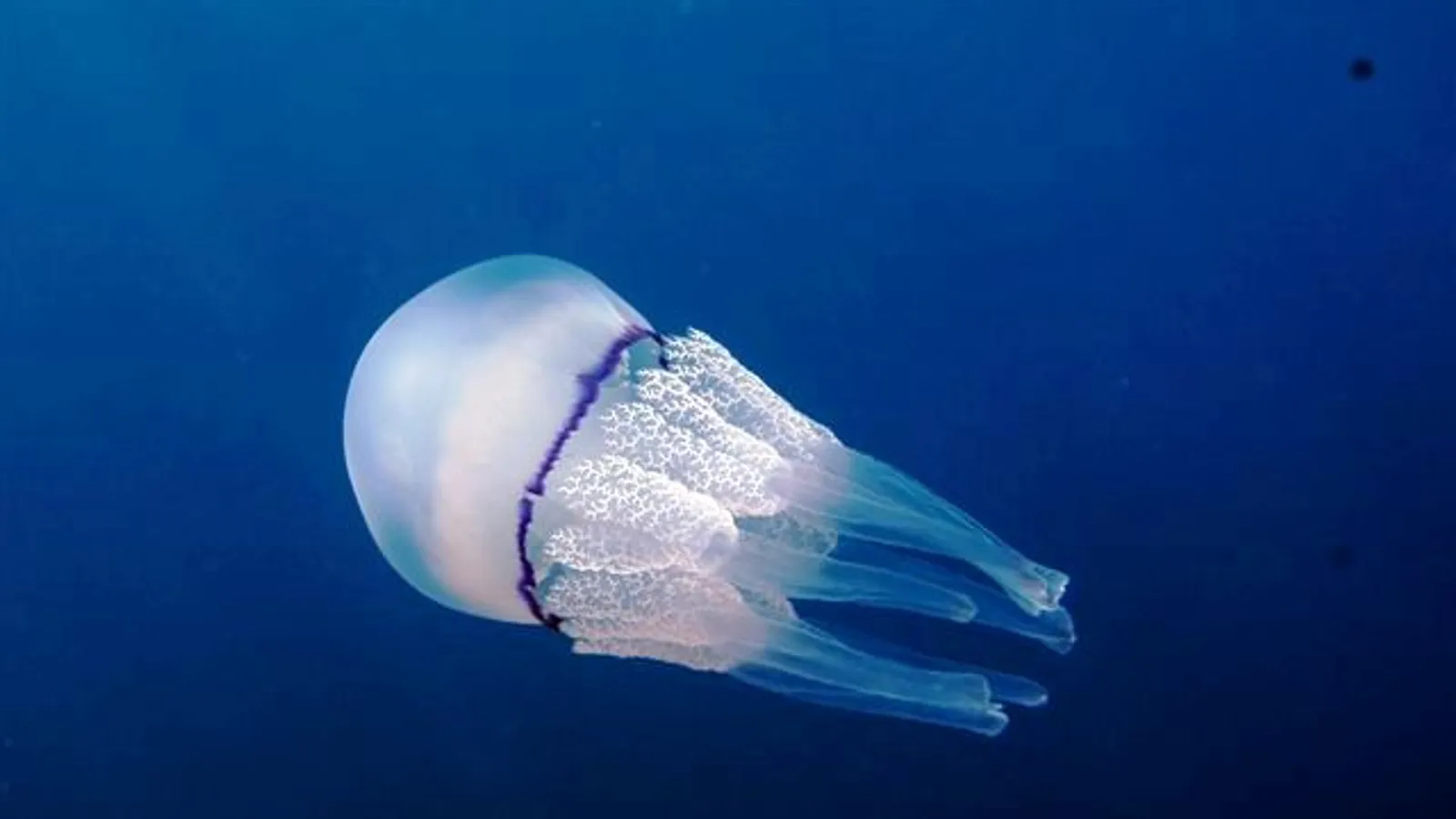
— Where the name comes from
Rhizostoma is “root mouth”, from rhíza and stóma: this jellyfish has not one mouth but hundreds of small openings scattered over oral arms branched like roots, and it feeds by filtering through all of them at once. Pulmo is the lung, for the shape of the pulsing bell and for the spongy texture — the same image gives the Italian name.
— Facts
- Group
- Cnidarians · Cnidaria
- Order
- Root-mouthed jellyfish
- Habitat
- Coastal waters and lagoons, often in swarms
- Range
- Mediterranean, Black Sea, eastern Atlantic
- Size
- Bell 30–60 cm, up to 90; over 10 kg
- Diet
- Plankton filtered by the oral arms
- Lifespan
- 1 year
— Characteristics
- 01
It has no marginal tentacles and is nearly harmless to humans.
- 02
It is the largest jellyfish in the Mediterranean.
- 03
Shoals of small fish shelter permanently beneath its bell.
— What sets it apart
It is a floating refuge. Beneath its bell young horse mackerel and other fish live permanently, swimming among the oral arms and darting out to feed: the jellyfish offers protection and they, in return, keep off some parasites — and now and then nibble a piece of it. Having no stinging tentacles along the margin, contact with humans is at worst a nuisance. In China and South-East Asia species like this have been food for centuries, dried and treated with alum until they turn crisp, and in recent years Italian research has been studying their use as food too — given that in the Mediterranean there are more jellyfish every year.
