
Greater short-nosed fruit bat
Cynopterus sphinx
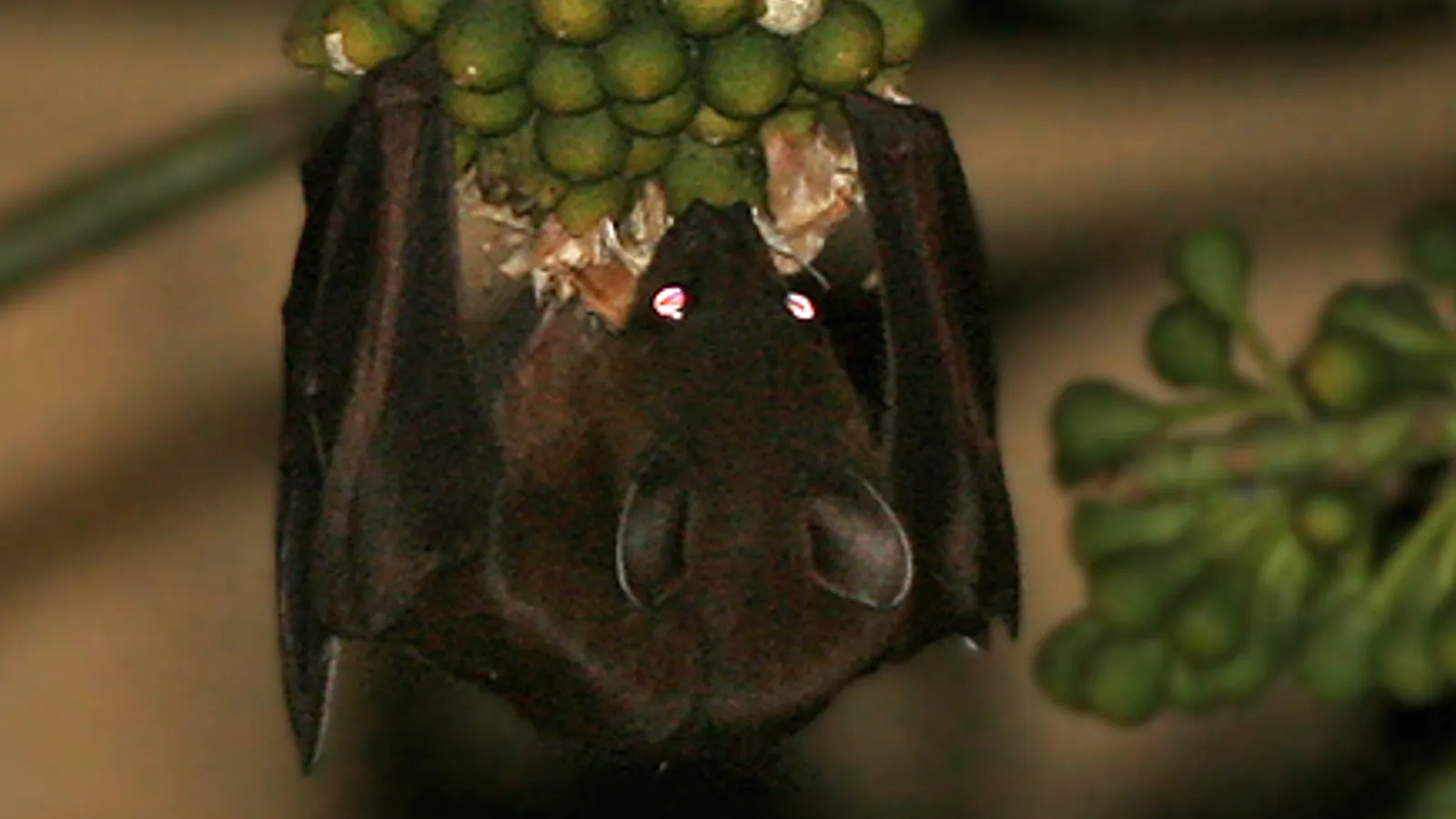
— Where the name comes from
Cynopterus is “winged dog”, from the Greek kýōn and pterón, for the short, puppyish face typical of fruit bats. Sphinx recalls the sphinx, perhaps for the impassive expression, perhaps for the 19th-century taste for evocative names: it is one of many cases in which the specific epithet describes nothing and serves only to sound well.
— Facts
- Group
- Mammals · Mammalia
- Order
- Bats
- Habitat
- Forest, plantations, gardens, palm groves, anywhere with fruit
- Range
- South and South-East Asia, from Pakistan to Vietnam and Indonesia
- Size
- 9–13 cm of body, 38–48 cm wingspan, 40–100 g
- Diet
- Fruit and nectar feeder — fruit, nectar, pollen, leaves
- Lifespan
- 8–10 years
— Characteristics
- 01
It gnaws the veins of palm leaves until they fold down into a tent.
- 02
A male defends the tent and gathers a small group of females beneath it.
- 03
It pollinates the Asian baobab and several species of palm.
— What sets it apart
It builds itself a house, and it is one of the few animal architectures made by demolishing rather than assembling. It picks a palm frond or a hanging inflorescence and gnaws the veins to a precise pattern until the outer part collapses downward into a waterproof tent to hang beneath. It works at it for weeks and maintains it for months. It is always the male who builds it, and the quality of the tent seems to count as much as he does in the females’ choice.
