
Jamaican fruit bat
Artibeus jamaicensis
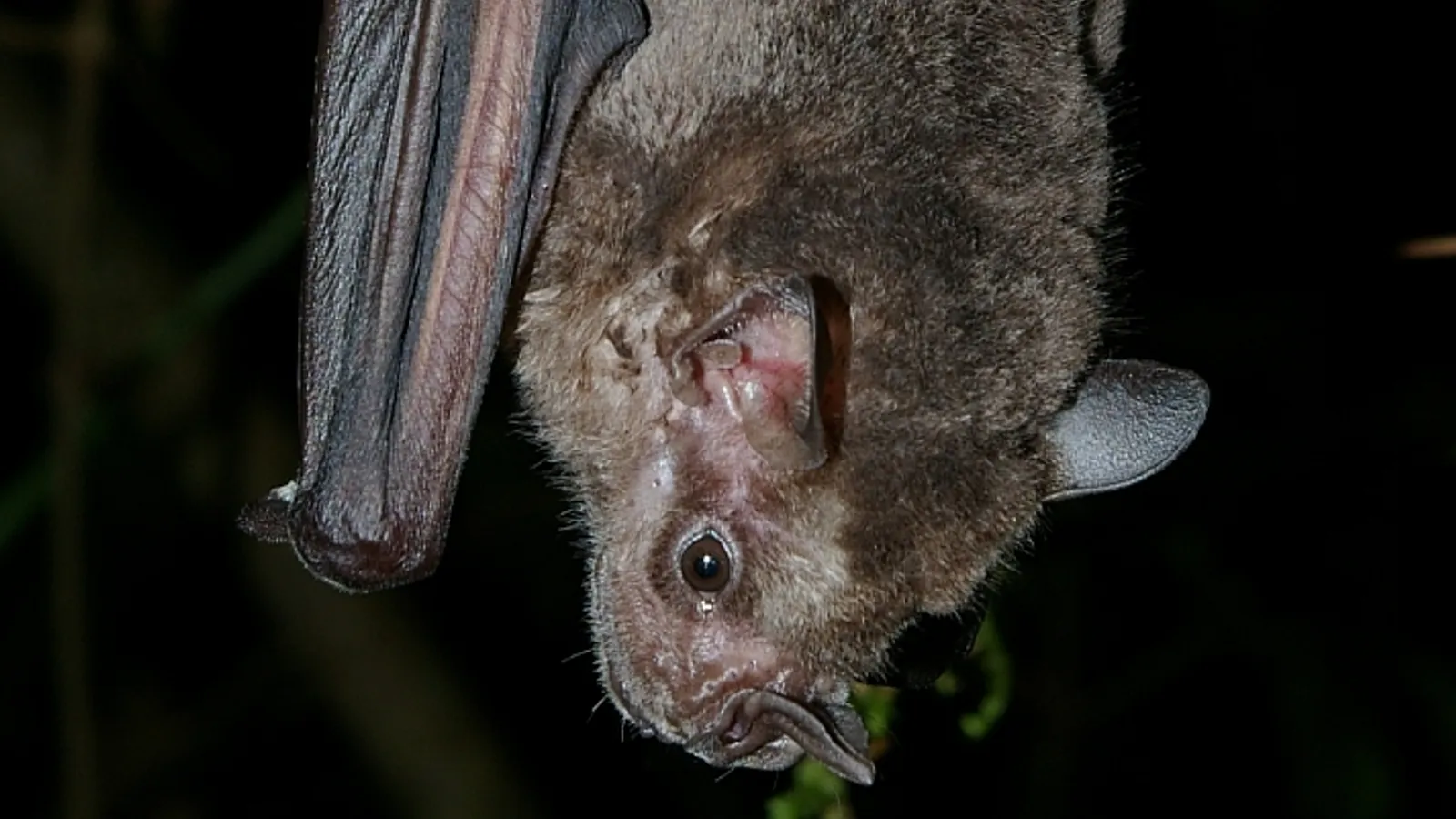
— Where the name comes from
Artibeus is one of those names Leach coined in 1821 without leaving any note of where it came from, and over which lexicographers give up: no Greek or Latin root explains it convincingly. Jamaicensis names Jamaica, where the first specimen was taken, though the species lives from Mexico to Brazil and is among the commonest on the continent.
— Facts
- Group
- Mammals · Mammalia
- Order
- Bats
- Habitat
- Rainforest, secondary forest, orchards, gardens
- Range
- From Mexico to northern Brazil, the Greater and Lesser Antilles
- Size
- 7–8.5 cm of body, 45 cm wingspan, 40–60 g
- Diet
- Frugivore — figs above all, then mango, papaya, nectar
- Lifespan
- 9 years in the wild
— Characteristics
- 01
It has four white stripes on the face, two above and two below the eyes.
- 02
It picks the fruit and carries it away from the tree to eat in peace.
- 03
This species too cuts leaves into tents to roost beneath.
— What sets it apart
It does not eat where it picks, and that is why the forest regrows. It takes the fig and flies with it to a perch as much as a hundred metres away, where it chews and spits out the seeds: the result is that the seeds end up far from the parent tree, where competition is lower and soil pathogens less concentrated. Fruit-eating birds mostly defecate while sitting in the tree; bats, by moving, do the work the birds do not.
