
Allen's big-eared bat
Idionycteris phyllotis
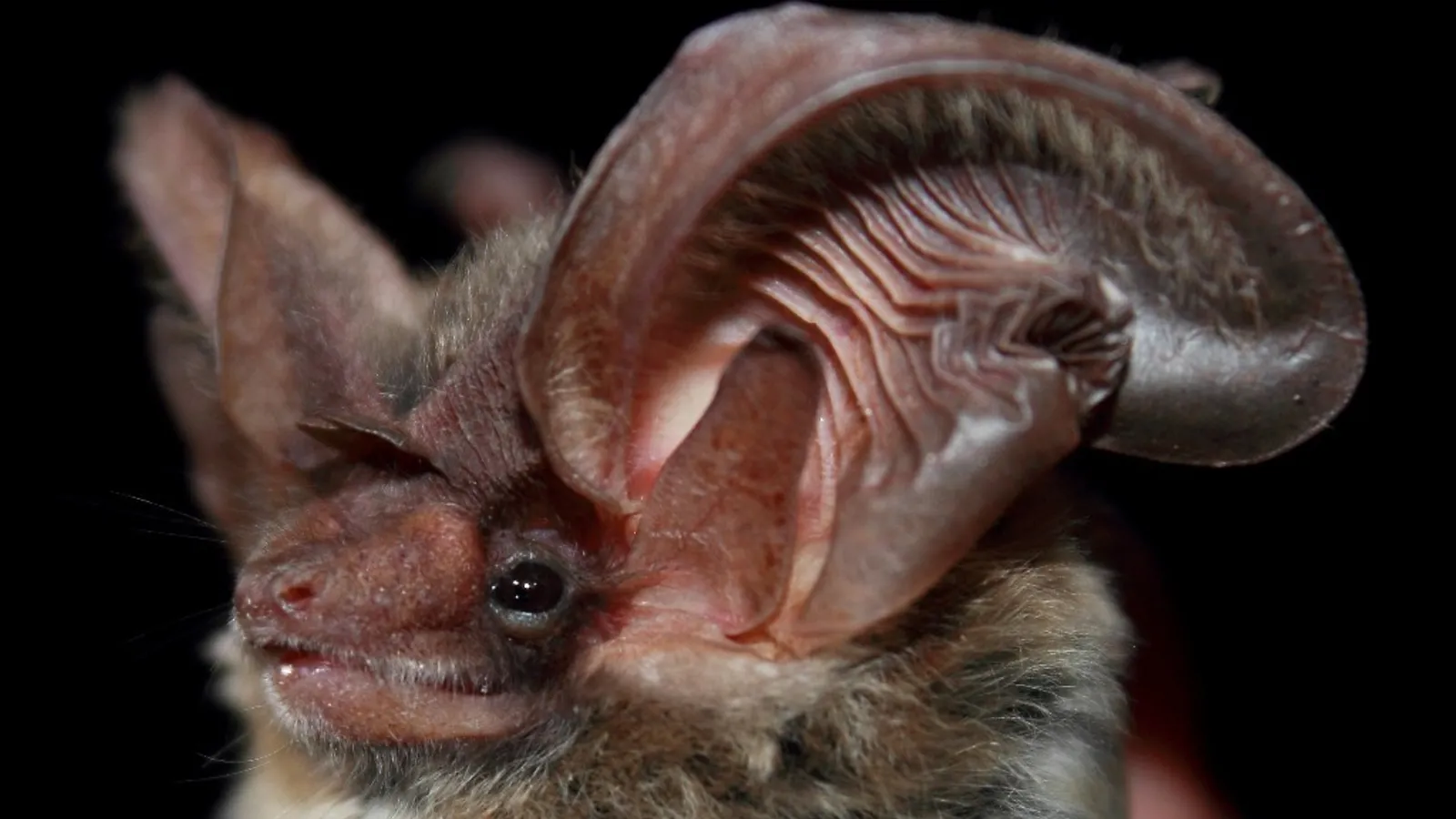
— Where the name comes from
Idionycteris is “peculiar bat”, from the Greek ídios, “one’s own, distinctive”, and nykterís: the describer isolated it in a genus of its own because he could not place it anywhere else. Phyllotis is “leaf ear”, from phýllon and oûs, for the two flaps of skin that project at the base of the ears and that no other American bat has.
— Facts
- Group
- Mammals · Mammalia
- Order
- Bats
- Habitat
- Rocky canyons, pine and oak woodland, crevices in lava flows
- Range
- The south-western United States and Mexico
- Size
- 10–11.8 cm including tail, 31 cm wingspan, 8–16 g
- Diet
- Insectivore — chiefly small moths
- Lifespan
- Little known
— Characteristics
- 01
It has two fleshy lobes at the base of the ears, unique among American bats.
- 02
In flight it holds its ears thrust forward like two sails.
- 03
It was discovered late and remains one of the least observed bats on the continent.
— What sets it apart
It stayed a ghost of the literature for nearly a century. Described in 1916 from very few specimens, for decades it was known only from a handful of individuals scattered through museums, and its biology was pure conjecture; the first breeding colonies were found in the 1960s. Even today it remains one of the least studied species in North America, not because it is rare — it is widespread — but because it roosts in inaccessible rock crevices and hunts high, where no net catches it.
