
Fringe-lipped bat
Trachops cirrhosus
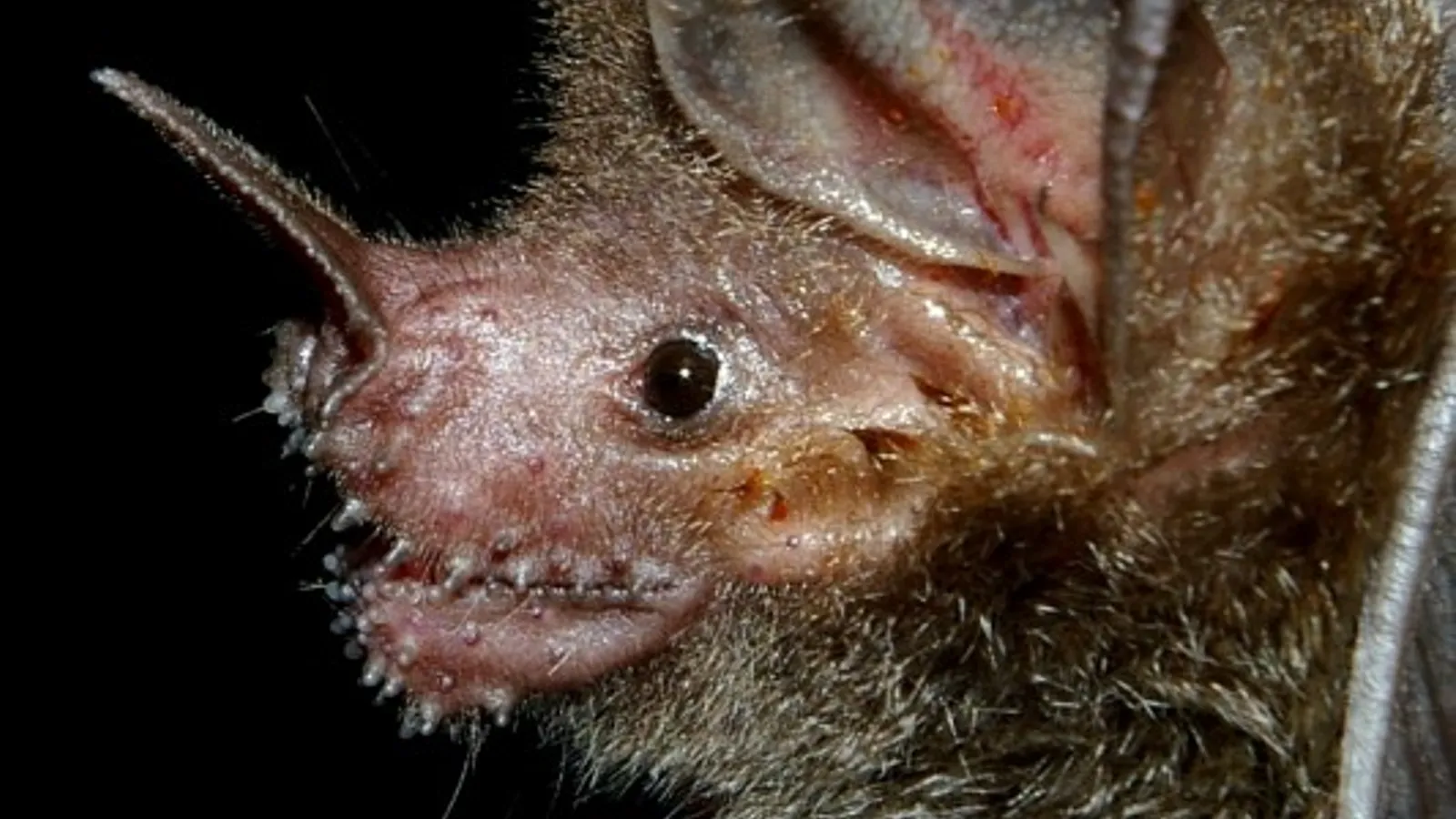
— Where the name comes from
Trachops is “rough face”, from the Greek trachýs and óps; cirrhosus is the Latin “furnished with cirri”, from cirrus, a curl or wattle. Both look at the same thing: lips and muzzle are covered in conical warts arranged in regular rows, which give the animal an unpleasant look and whose function, after two centuries, remains unknown.
— Facts
- Group
- Mammals · Mammalia
- Order
- Bats
- Habitat
- Tree hollows and caves in rainforest, near ponds and marshes
- Range
- From southern Mexico to Brazil and Bolivia
- Size
- 7.5–8.8 cm of body, 35 cm wingspan, 32–45 g
- Diet
- Carnivore — frogs above all, then lizards, large insects, other bats
- Lifespan
- Little known
— Characteristics
- 01
It finds frogs by listening to their mating song, not by echolocation.
- 02
It tells edible species from poisonous ones by ear.
- 03
It learns by watching: an inexperienced animal takes up new prey by observing another.
— What sets it apart
It has turned the frogs’ love song into an address. It hangs listening, recognises the species from the call — avoiding poisonous toads and going for the good ones — and drops onto the singer. The túngara frog of Panama consequently lives a much-studied dilemma: the more elaborate its song, the more the females like it and the easier it is for the bat to locate. It is one of the best-documented cases of a sexual signal that the predator has learnt to read better than the intended recipient.
