
Ghost-faced bat
Mormoops megalophylla
— Where the name comes from
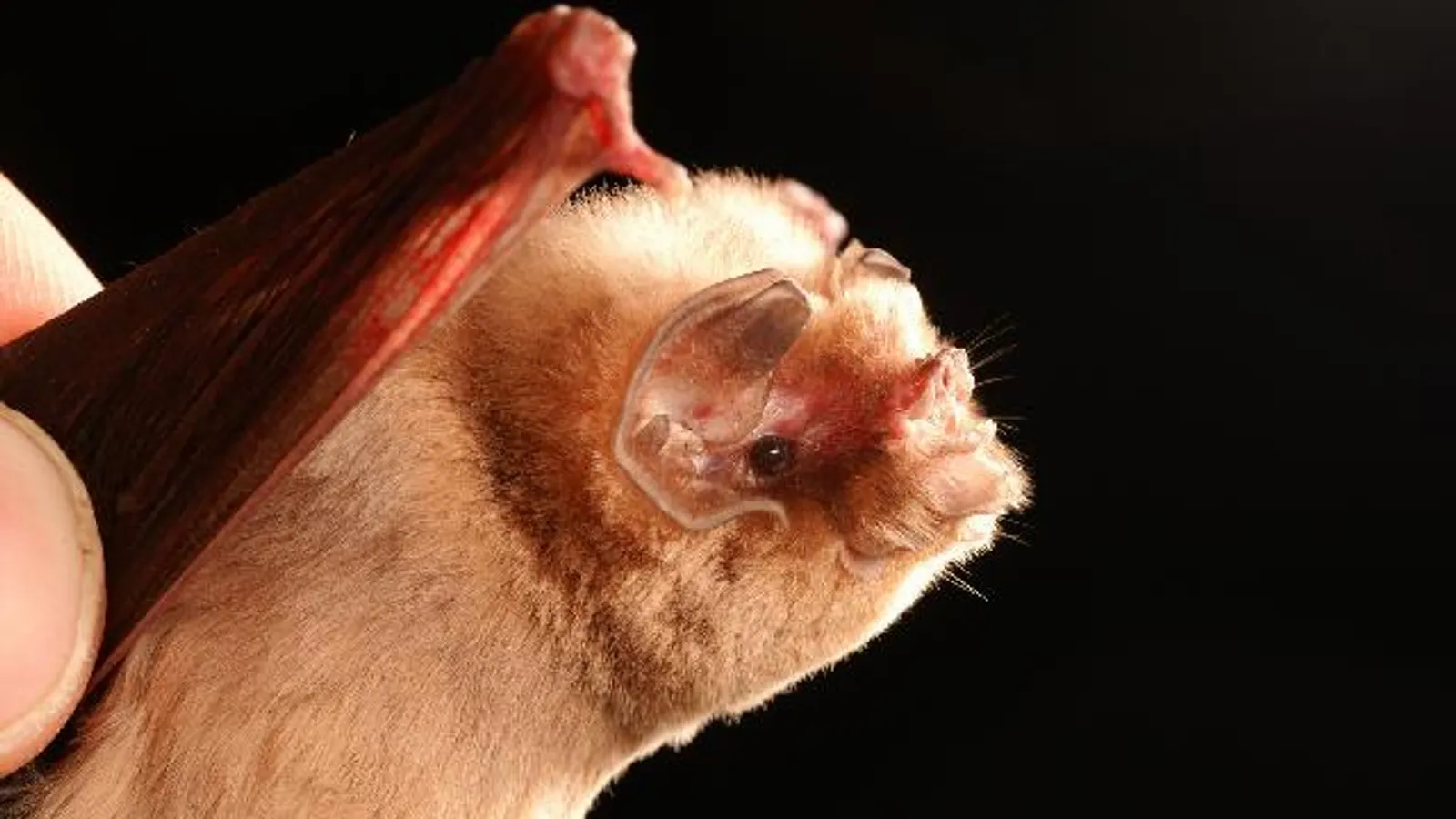
Mormoops joins Mormṓ, the bogey of Greek myth — the creature with which nurses frightened children — and óps, “face”: “bogey face”. Megalophylla is “great leaf”, from the Greek mégas and phýllon, for the enormous flaps of skin that rise from its chin. The result is a face in which the ears curl forward until they surround the eyes, and it is no longer clear where one thing ends and another begins.
— Facts
- Group
- Mammals · Mammalia
- Order
- Bats
- Habitat
- Hot caves and mines, in arid and semi-arid country
- Range
- From the south-western United States to Venezuela and Ecuador
- Size
- 5.3–6.3 cm of body, 35 cm wingspan, 12–19 g
- Diet
- Insectivore — chiefly moths
- Lifespan
- Little known
— Characteristics
- 01
The ears curl forward and join above the forehead, surrounding the eyes.
- 02
The chin carries raised flaps of skin that form a cup around the mouth.
- 03
The colonies occupy a few very hot caves, where they pack in by the tens of thousands.
— What sets it apart
It lives in caves nobody else wants. Its colonies occupy chambers where the heat the animals themselves produce and the poor ventilation drive the temperature past thirty degrees at near-saturated humidity — conditions that would leave other species dehydrated. The advantage is that the young grow without spending energy on staying warm, and that very few predators go in there. The drawback is dependence: the species occupies a handful of caves across its whole range, and to lose one is to lose an entire population.
