
West African lungfish
Protopterus annectens
— Where the name comes from
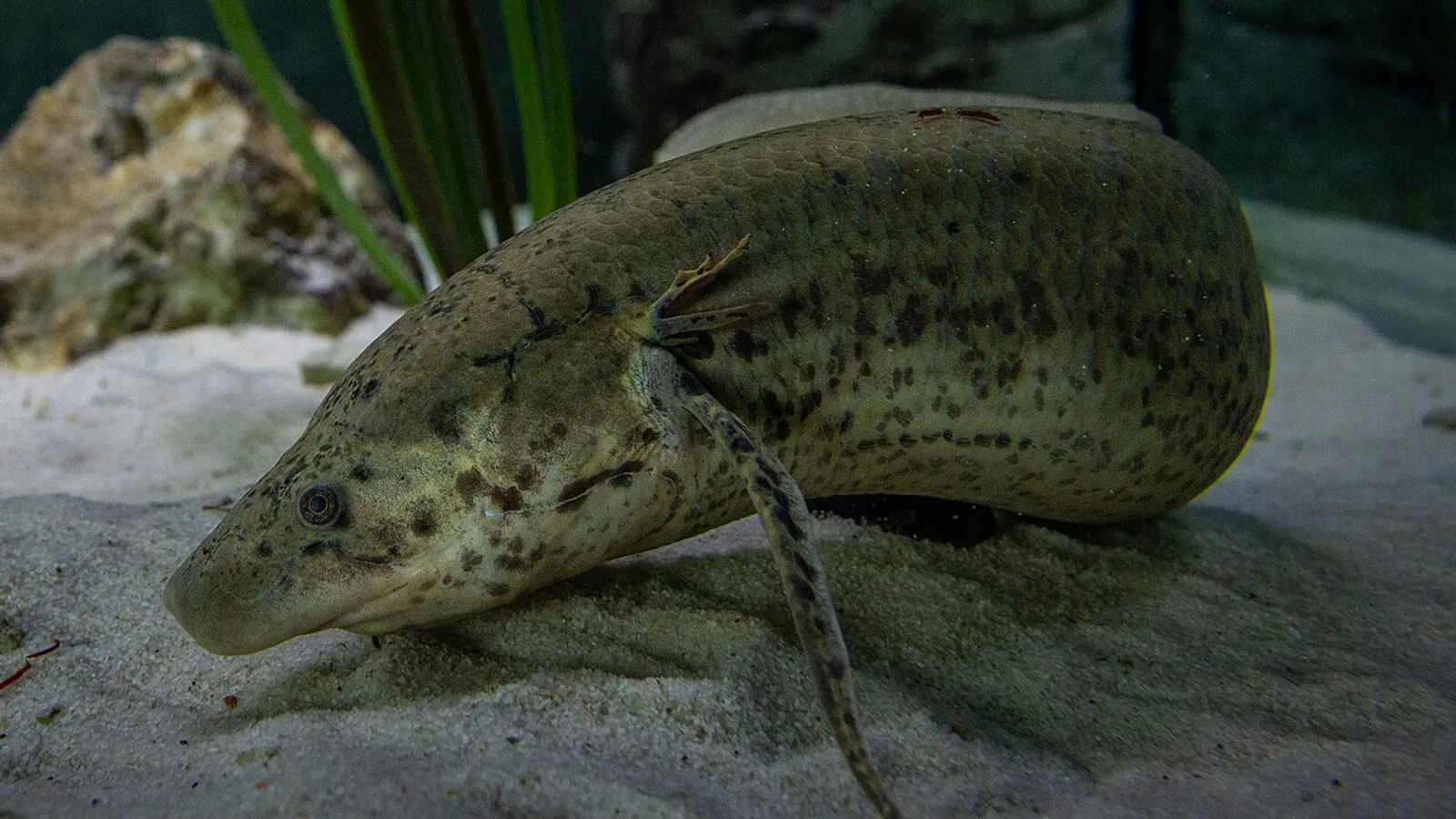
Protopterus is “first fin”, from prôtos and pterón, alluding to the thread-like fins that look like the sketch of a limb; annectens means “connecting”, because when it was described these fish seemed the missing link between fish and amphibians. The scientific name therefore contains, entire, a theory of evolution.
— Facts
- Group
- Fish · Actinopterygii · Chondrichthyes
- Order
- African and South American lungfishes
- Habitat
- Swamps, temporary pools and floodplains of the savannah
- Range
- Western and central Africa, from Senegal to Chad
- Size
- 60–100 cm, 1–4 kg
- Diet
- Molluscs, crustaceans, fish, plant matter
- Lifespan
- 20 years, up to 40 in captivity
— Characteristics
- 01
It has two true lungs and drowns if kept from the surface.
- 02
The paired fins are reduced to sensory filaments.
- 03
It spawns in a Y-shaped burrow dug in the mud, guarded by the male.
— What sets it apart
When the pool dries out it works into the mud, coils up and secretes a mucus cocoon that hardens, leaving a small tube open to the surface: inside that shell it drops its metabolism to a sixtieth and can stay for up to four years, breathing air. In the nineteenth century specimens arrived in Europe shipped inside blocks of dried mud, like bricks, and woke up when somebody put them in a basin of water.
