
Neon tetra
Paracheirodon innesi
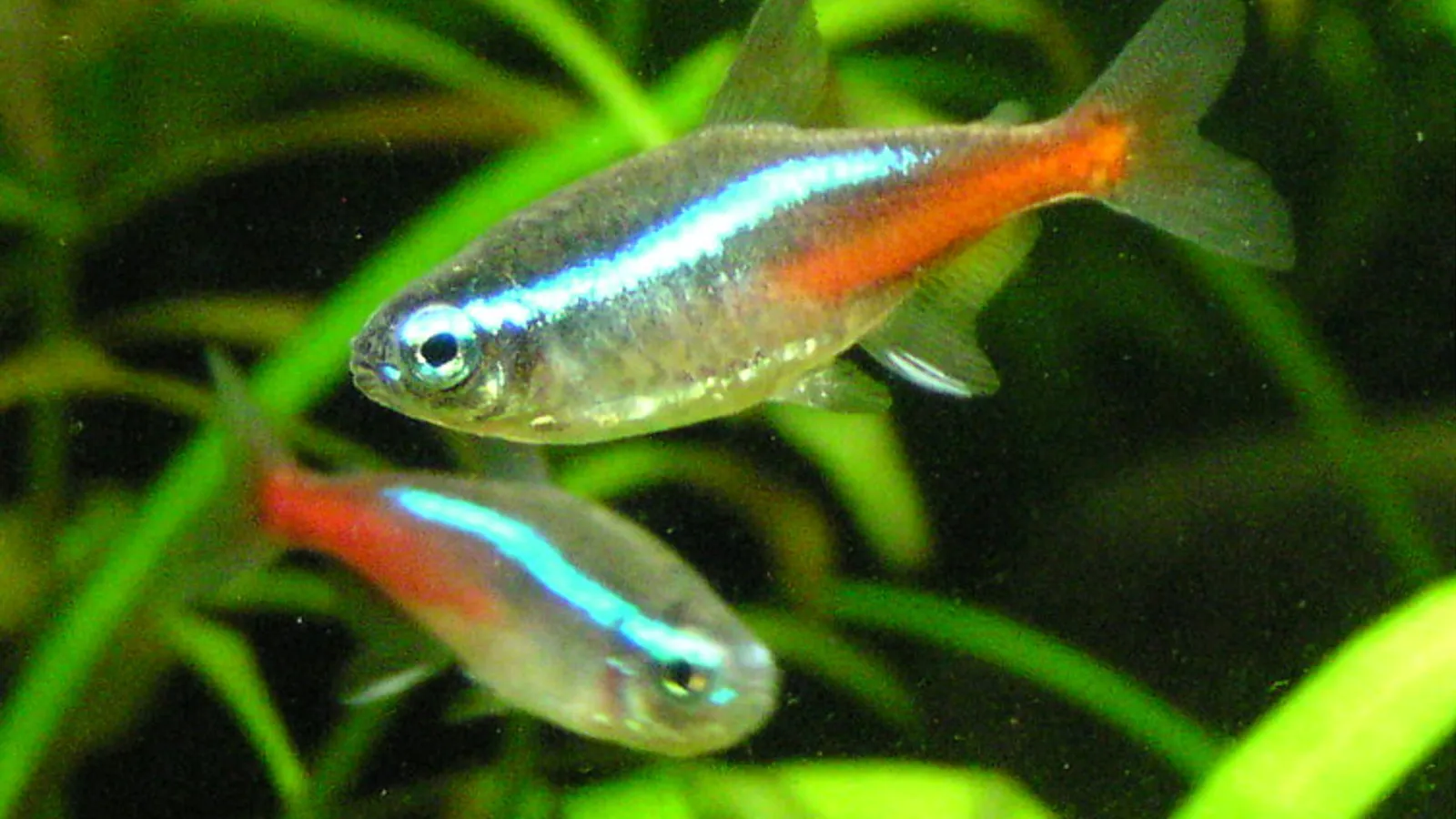
— Where the name comes from
Paracheirodon means roughly “beside Cheirodon”, the related genus, following the taxonomists’ habit of naming by proximity; innesi recalls William T. Innes, the American publisher whose magazine gave rise to modern fishkeeping. The common name comes from neon tubes, then a novelty: the blue stripe glows in the same way.
— Facts
- Group
- Fish · Actinopterygii · Chondrichthyes
- Order
- Characins
- Habitat
- Shaded acidic blackwater of small Amazonian tributaries
- Range
- The upper Amazon, Peru, Colombia, western Brazil
- Size
- 2.5–3.5 cm, under 1 g
- Diet
- Insect larvae, minute crustaceans, algae
- Lifespan
- 5 years
— Characteristics
- 01
The blue stripe is not a pigment: it is light reflected by crystals in the skin.
- 02
At night the stripe goes out and the fish becomes almost colourless.
- 03
It lives in shoals of hundreds in water as dark as tea.
— What sets it apart
In 1936 the first specimens arrived in Paris by aeroplane, then an extraordinary thing, and caused a sensation: within a few years demand was such that collecting expeditions were organised along the Rio Napo and attempts made to breed them, which succeeded only in the 1950s. It is the fish that created tropical fishkeeping as an industry, and tens of millions are still sold every year, nearly all tank-bred — but the wild species goes on being caught in the forest by communities that live on it.
