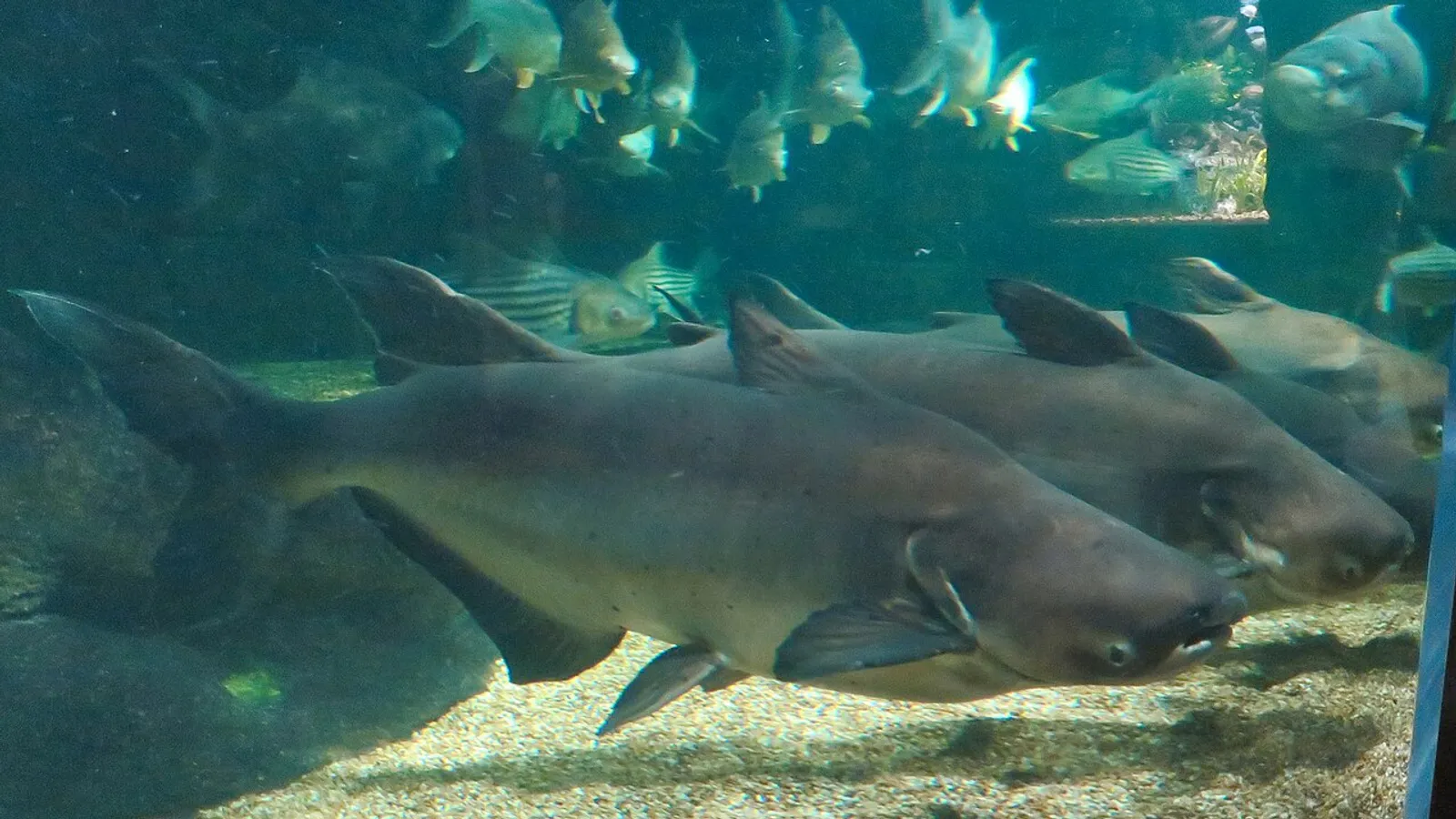
Mekong giant catfish
Pangasianodon gigas
— Where the name comes from
Pangasianodon joins pangasius, a name of Khmer or Vietnamese origin for these catfish, to anodon, “toothless”: adults lose their teeth entirely. Gigas says the rest. It is one of the largest freshwater fish in the world and one of very few river giants that live on algae.
— Facts
- Group
- Fish · Actinopterygii · Chondrichthyes
- Order
- Catfishes
- Habitat
- The main channel of the Mekong, deep pools and rapids
- Range
- The Mekong basin: China, Laos, Thailand, Cambodia, Vietnam
- Size
- 2–2.5 m, up to 3 m; 150–250 kg, record 293 kg
- Diet
- Algae and water plants as an adult; plankton as a juvenile
- Lifespan
- 30 years
— Characteristics
- 01
As an adult it has neither teeth nor developed barbels.
- 02
It runs hundreds of kilometres upriver to spawn.
- 03
It grows to two hundred kilos on a diet of algae.
— What sets it apart
Its survival depends on a single river, and that river has been dammed. The dams built on the Mekong’s main stem and its tributaries have cut the routes to the upstream spawning grounds, and recorded catches have fallen from several dozen a year in the 1990s to a handful today. In 2005 a specimen of two hundred and ninety-three kilos caught in Thailand was for years the largest freshwater fish ever documented: it was a female full of eggs, and it was sold at market.