
Largemouth bass
Micropterus salmoides
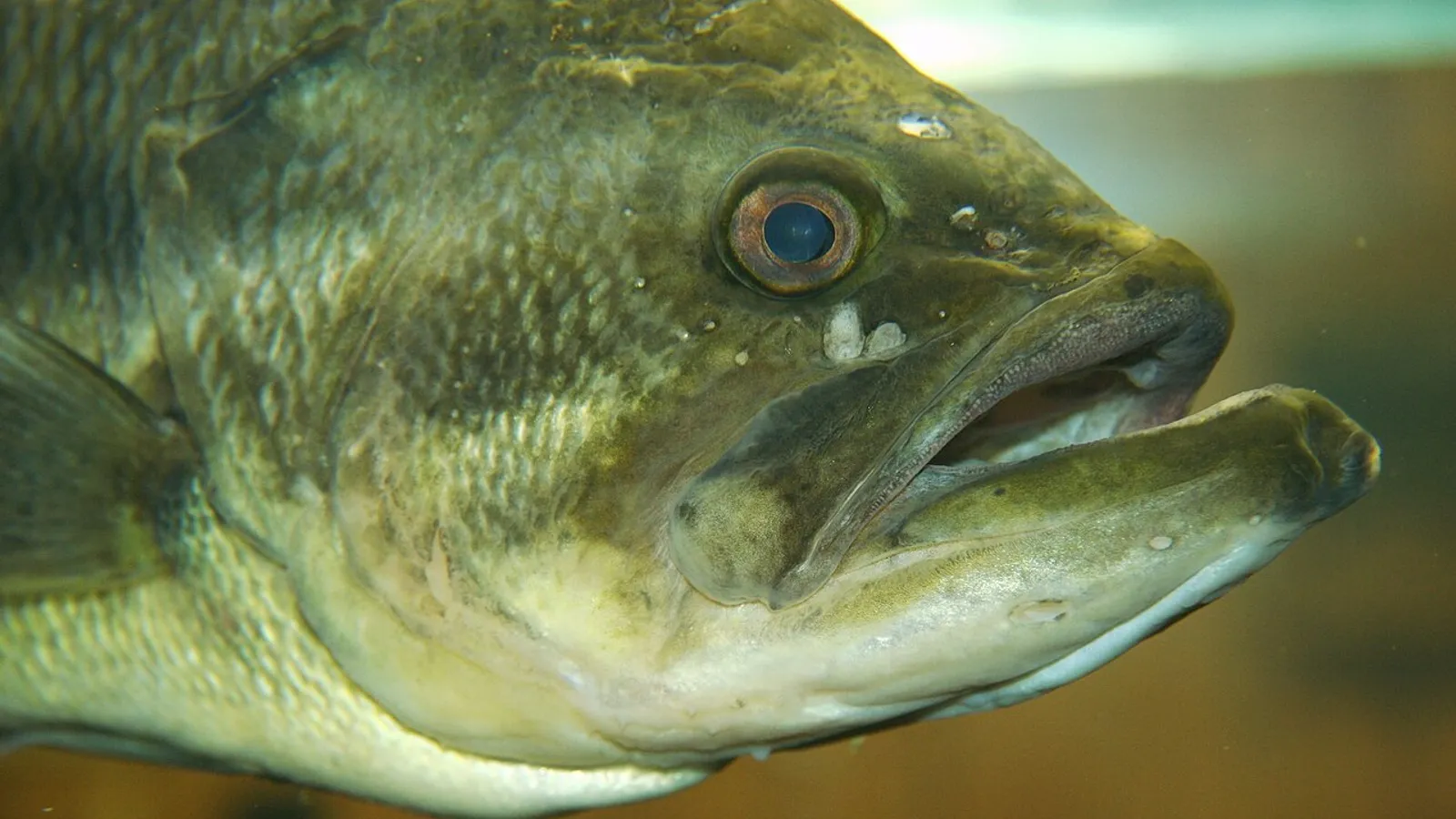
— Where the name comes from
Micropterus is “small fin”, and it arose from a mistake: the specimen on which the French naturalist Lacépède based his description in 1802 had a damaged dorsal fin with a detached portion that looked like a tiny extra fin. The species’ fin is entirely normal, but the wrong name stuck. Salmoides means “salmon-like”, which it is not in the least.
— Facts
- Group
- Fish · Actinopterygii · Chondrichthyes
- Order
- Sunfishes and allies
- Habitat
- Lakes, reservoirs, slow rivers with weed and submerged timber
- Range
- Eastern North America; introduced to every continent
- Size
- 30–55 cm, up to 97 cm; 1–4 kg, record 10 kg
- Diet
- Fish, crayfish, frogs, insects, small birds
- Lifespan
- 15 years
— Characteristics
- 01
The male digs a circular nest and guards the eggs and then the fry.
- 02
It sucks prey in by opening its huge mouth in a hundredth of a second.
- 03
It ambushes from among sunken trunks and plants.
— What sets it apart
It is the most widespread sport fish on the planet, and it has been carried everywhere for that: to Europe, Japan, Africa and South America. In the United States black bass fishing moves tens of billions of dollars a year in tackle, boats and televised tournaments, and is one of the country’s largest recreational industries. In the lakes where it has been introduced, though, it has often wiped out the local fish: in Japan and South Africa it is now classed among the invasive species to be eradicated.
