
Numbat
Myrmecobius fasciatus
— Where the name comes from
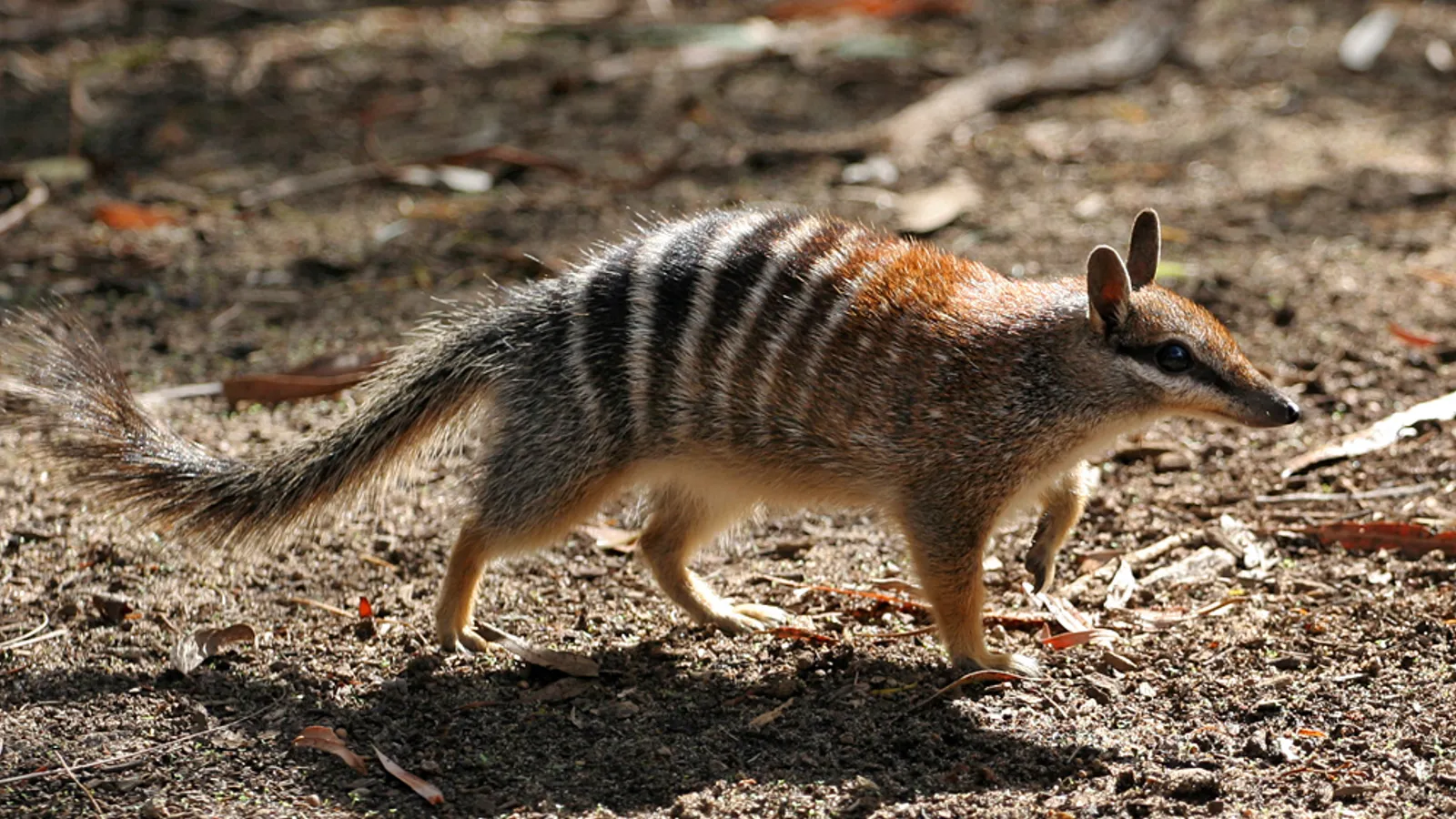
Numbat comes from Noongar, the Aboriginal language of south-western Australia. Myrmecobius is Greek — mýrmēx, “ant”, and bíos, “life”: that lives on ants — and fasciatus is Latin, “banded”, for the white cross-stripes on the back. The scientific name gets the insect wrong, though: the numbat eats almost nothing but termites, which are not ants.
— Facts
- Group
- Mammals · Mammalia
- Order
- Carnivorous marsupials
- Habitat
- Eucalyptus woodland with plenty of fallen hollow logs
- Range
- South-western Australia, in two remaining natural populations and several reintroduced ones
- Size
- 20–29 cm long plus 12–21 of tail, 280–700 g
- Diet
- Termite eater — up to twenty thousand termites a day
- Lifespan
- 5–6 years
— Characteristics
- 01
It is the only strictly diurnal marsupial: it follows the hours when termites move up into their galleries.
- 02
The tongue passes ten centimetres, half the length of the body.
- 03
It has no pouch: the young cling to the teats protected only by a fringe of hair.
— What sets it apart
Its timetable is set by termites, not by predators. Being diurnal out of dietary necessity, it exposes itself to raptors and foxes on a continent where the red fox was introduced by Europeans: the species has crashed from millions to a few hundred in under a century. Today it survives in fenced and guarded areas, where the imported predator is kept out. It is the emblem of Western Australia, and it stays alive only inside a perimeter.
