Common potoo
Nyctibius griseus
— Where the name comes from
Nyctibius joins the Greek nýx, nyktós, “night”, and bíos, “life”: “living by night”. Griseus in medieval Latin means “grey”. The English name potoo imitates the call of a Caribbean relative; in Brazil and Paraguay it is called urutau, and Guaraní legends of lovers turned into a bird weeping in the dark have grown up around its mournful song.
— Facts
- Group
- Birds · Aves
- Order
- Potoos
- Habitat
- Forest edges, open woodland, wooded savannah
- Range
- Central and South America
- Size
- 33–38 cm, 145–200 g
- Diet
- Large flying insects caught at night
- Lifespan
- Not precisely known
— Characteristics
- 01
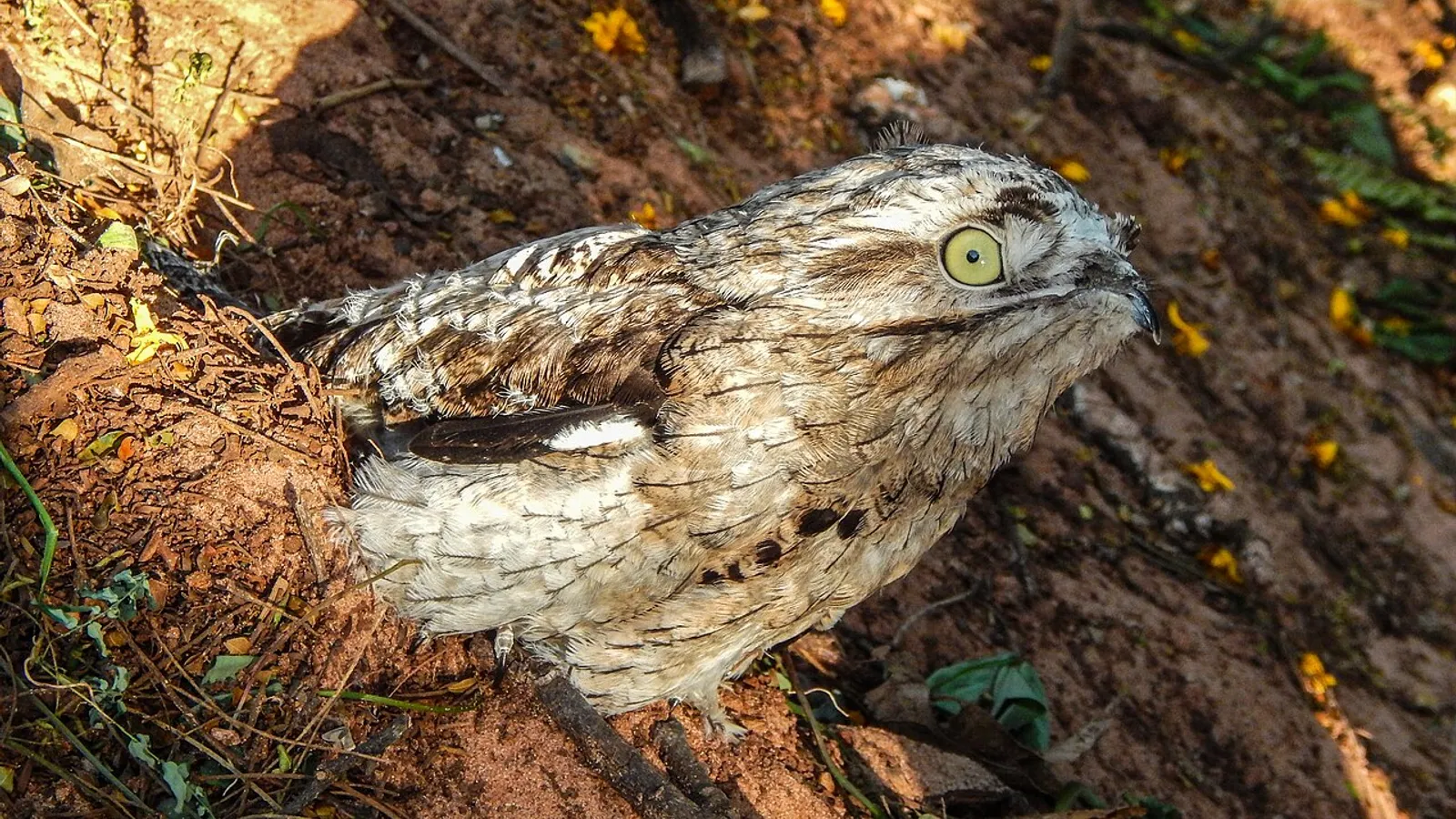
By day it sits motionless and upright on top of a broken branch, whose colour it imitates.
- 02
It has an enormous mouth that opens like a sack.
- 03
It lays a single egg straight into a small hollow in a branch, without a nest.
— What sets it apart
Its camouflage requires keeping its eyes shut, because two big yellow eyes would give away the disguise as a stump of wood. But a bird with its eyes shut cannot see danger coming, and the potoo has solved the problem in a unique way: its upper eyelid has two small slits, and through them it keeps watch on what is happening even with its eyes closed. That is why in some regions it is called the bird with “magic eyes”. If a predator comes too close, it stretches its neck upwards and stiffens even more.