
Proboscis monkey
Nasalis larvatus
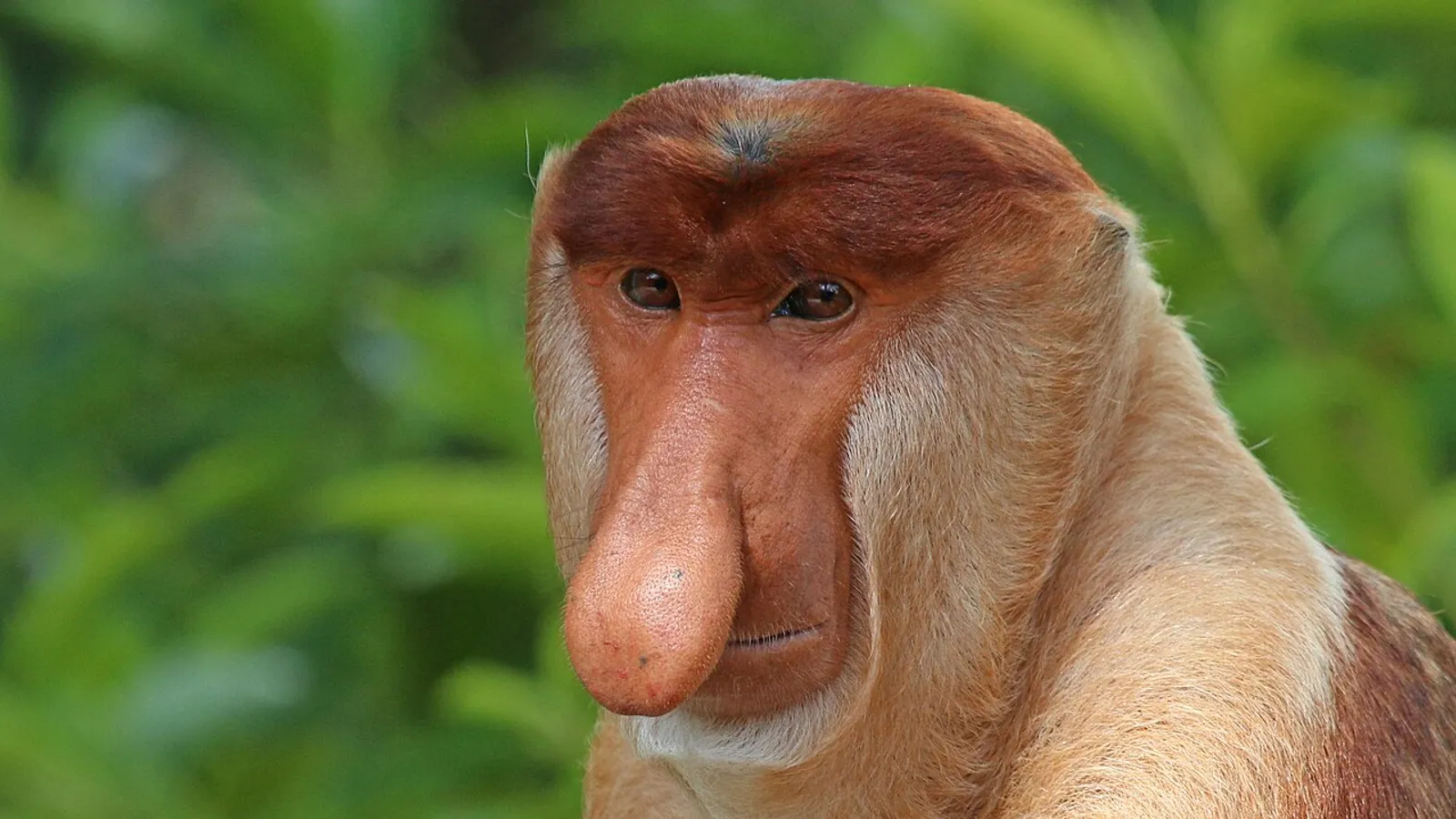
— Where the name comes from
Nasalis comes from the Latin nasus, “nose”, and alludes without ceremony to the enormous appendage that marks the males. The epithet larvatus means in Latin “masked”, from larva, both the mask and the ghost: a nod to the animal’s singular face. The Italian nasica likewise comes from Latin, where it described someone with a pronounced nose and served as a nickname, as in the case of Scipio Nasica.
— Facts
- Group
- Mammals · Mammalia
- Order
- Primates
- Habitat
- Mangrove forest and lowland riverine woodland.
- Range
- Endemic to the island of Borneo.
- Size
- 66–76 cm (head-body), 10–24 kg; males twice the size of females
- Diet
- Herbivore — young leaves, unripe fruit and seeds
- Lifespan
- About 20 years, up to 25
— Characteristics
- 01
The adult male has a huge pendulous nose, which can pass ten centimetres and amplifies his calls.
- 02
The stomach is chambered and inhabited by bacteria that ferment leaves, as in ruminants, giving the monkey a swollen, jutting belly.
- 03
It is among the best swimmers of any primate: it has webbed toes and crosses rivers by swimming, even underwater.
— What sets it apart
The proboscis monkey’s swollen belly hides a curious hazard: the bacterial fermentation that lets it digest tough leaves is thrown into chaos by sugar. A meal of over-ripe fruit can set off a violent fermentation and a potentially fatal bloating, which is why these primates prefer unripe fruit. As for the male’s outsized nose, a study in 2018 showed that the larger it is, the deeper his call resounds and the larger his harem: an ornament of sound before it is one of sight.
