
Old World swallowtail
Papilio machaon
— Where the name comes from
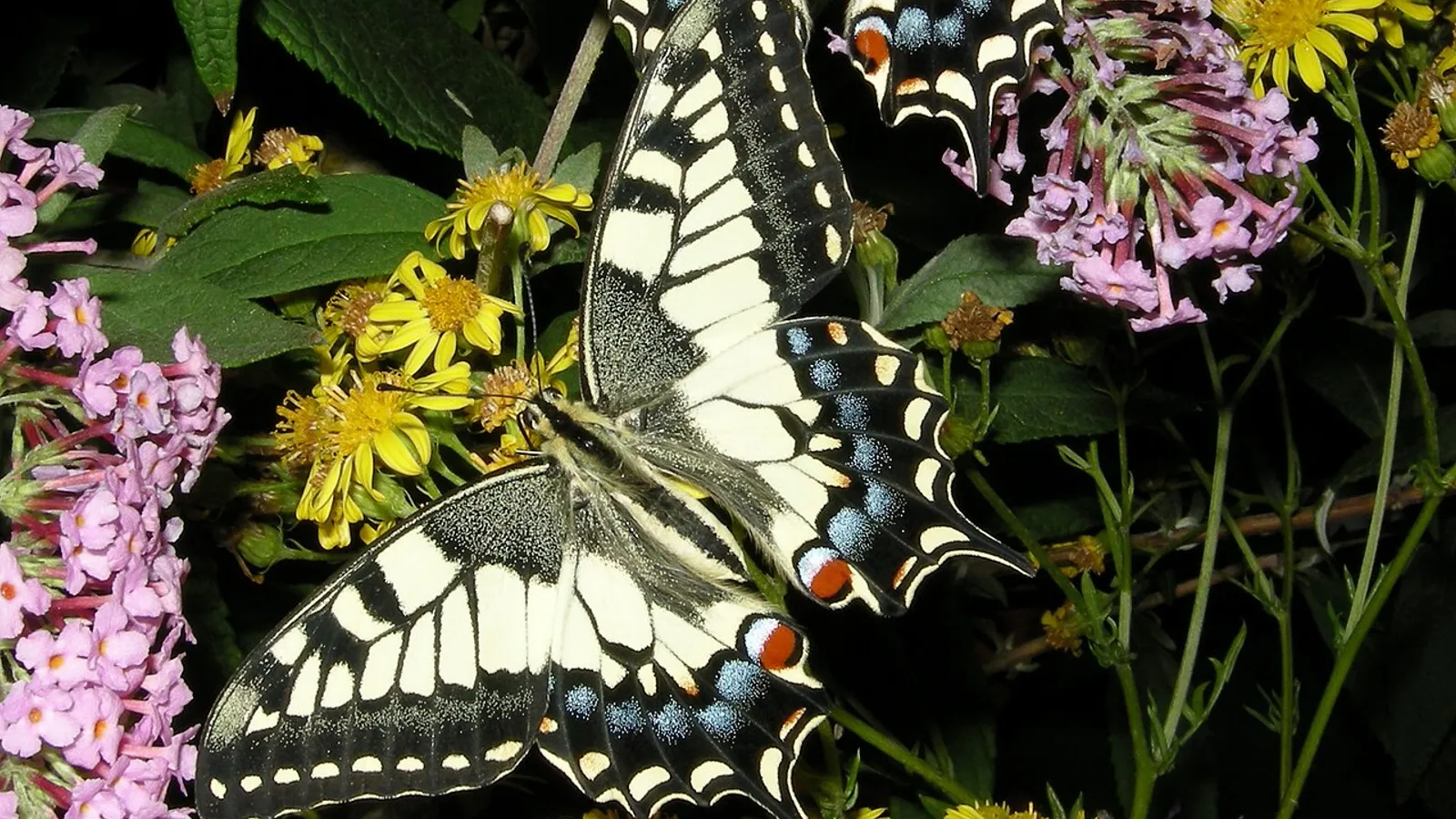
Papilio is the Latin for “butterfly”; machaon is the name of a hero of the Iliad, son of Asclepius and physician to the Greek army. Linnaeus named many showy butterflies after Homeric characters. It is one of the largest and most regal butterflies in Europe, yellow banded with black and blue.
— Facts
- Group
- Insects · Insecta
- Order
- Butterflies and moths
- Habitat
- Flowery meadows, fields, sunny slopes up into the mountains
- Range
- Europe, Asia, North America, North Africa
- Size
- 6.5–8.5 cm wingspan
- Diet
- Nectar as an adult; the larva eats umbellifers such as fennel and wild carrot
- Lifespan
- A few weeks as an adult
— Characteristics
- 01
The hindwings end in two “tails” that mimic antennae, to mislead predators.
- 02
The caterpillar, if threatened, everts an orange, foul-smelling organ behind its head.
- 03
It flies powerfully, often gliding, and frequents high vantage points on hillsides.
— What sets it apart
The swallowtail caterpillar has a cartoon defence: behind its head it hides a forked organ, the osmeterium, which it suddenly everts like two orange horns when disturbed, releasing a sharp smell of fennel that repels ants and predators. Withdrawn, it disappears entirely. And the adults practise “hilltopping”: males and females meet on hilltops, the most visible points in the landscape, to find one another and mate.
