
Eastern emerald elysia
Elysia chlorotica
— Where the name comes from
Elysia comes from Elysium, the fields where the Greeks placed the blessed dead: a name chosen for beauty, not for biology. Chlorotica is descriptive and means “greenish”, from chlōrós, pale green — the same root as chlorophyll. And this animal’s green really is chlorophyll, something its namer could not have guessed.
— Facts
- Group
- Molluscs · Mollusca
- Order
- Sap-sucking sea slugs
- Habitat
- Salt marshes and shallow pools
- Range
- Atlantic coast of North America, from Nova Scotia to Florida
- Size
- 2–6 cm
- Diet
- An alga when young; then sunlight
- Lifespan
- 10–12 months
— Characteristics
- 01
It steals chloroplasts from the alga it eats and keeps them alive in its cells.
- 02
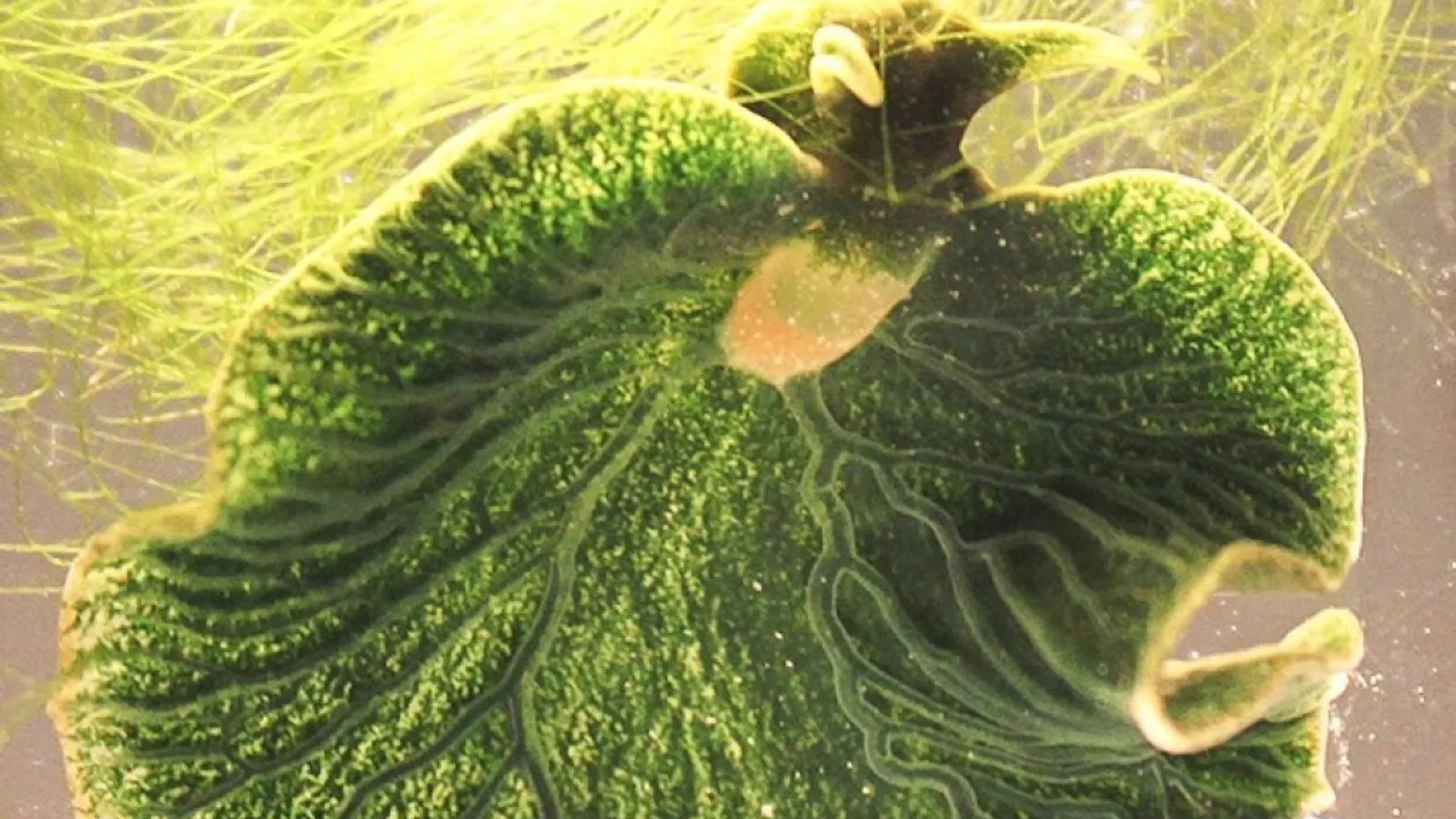
It is shaped like a leaf, wavy margins included.
- 03
After its first weeks of life it can survive months without eating.
— What sets it apart
It is an animal that photosynthesises. When young it sucks out the contents of a filamentous alga and retains its chloroplasts instead of digesting them, arranging them in the cells of its branched gut: from then on it lives on light, and can go months without eating anything. The remarkable part is that the chloroplasts keep working for the animal’s whole life, even though most of the proteins they need are encoded by the alga’s nucleus, which the slug does not possess. How it manages is still debated, and it is one of the most studied cases of biological theft across kingdoms.
