
Common glow-worm
Lampyris noctiluca
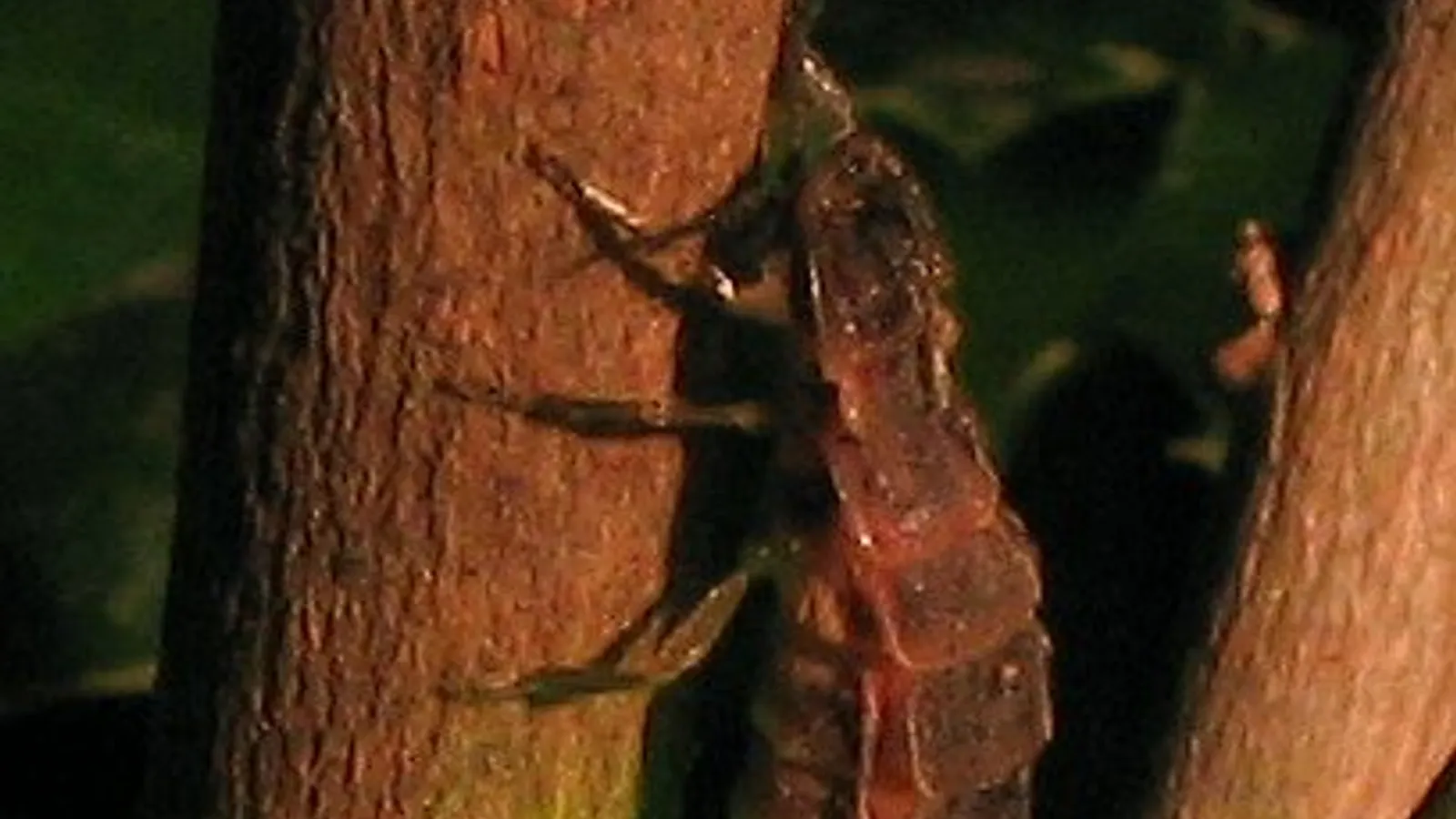
— Where the name comes from
Lampyris comes from lámpō, to shine — the same root as the lamp. Noctiluca is Latin for “that gives light by night”, from nox and lucere. The name says the light twice, in Greek and in Latin, and could hardly do otherwise: there is nothing to tell about this animal that does not start there. The Italian lucciola is likewise a diminutive of luce, light.
— Facts
- Group
- Insects · Insecta
- Order
- Beetles
- Habitat
- Meadows, hedgerows, damp woodland edges
- Range
- Europe and western Asia
- Size
- Female 15–25 mm, male 10–12 mm
- Diet
- Snails and slugs as a larva; nothing as an adult
- Lifespan
- 2–3 years as a larva, a few weeks as an adult
— Characteristics
- 01
The female is wingless and looks like a larva all her life.
- 02
The male flies and has huge eyes, but emits very little light.
- 03
The larva injects snails with a fluid that predigests them.
— What sets it apart
The light seen in June meadows is almost always a female: she has no wings, stays on the ground among the grass and bends her abdomen upwards to be found by males in flight. It is cold light, produced by the oxidation of luciferin at an efficiency close to a hundred per cent — almost no energy is lost as heat, and no human bulb comes near it. The larva, which lives two or three years, is a hunter of snails: it follows the slime trail, bites, injecting enzymes that dissolve the tissues, and then drinks. The adult has no working mouth left: it lives on what it stored and goes out within weeks.
