
Giant otter
Pteronura brasiliensis
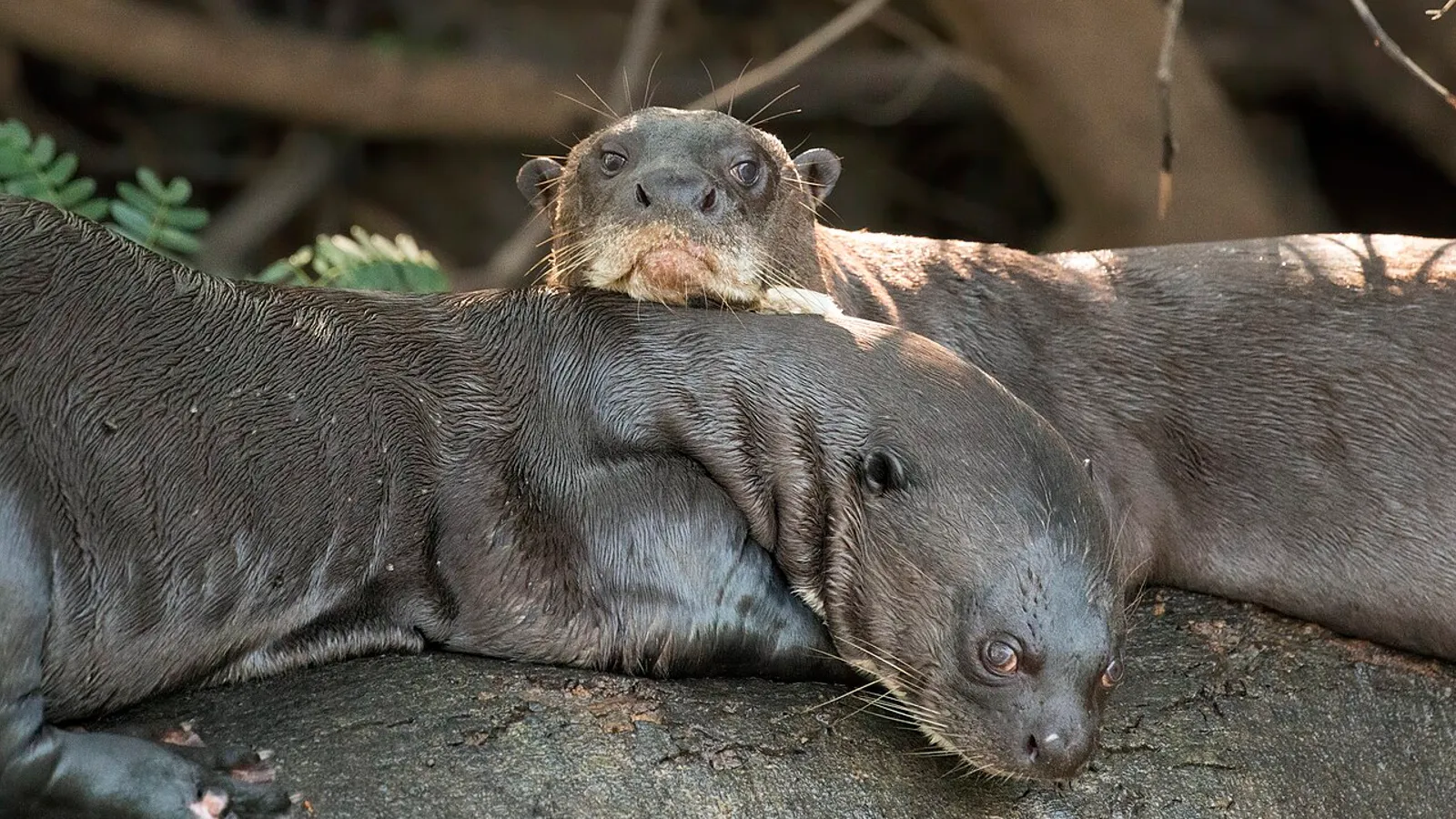
— Where the name comes from
Pteronura is Greek: pterón, “wing”, and ourá, “tail” — the winged tail, because it is flattened sideways into a blade that works as a rudder. Brasiliensis names the country from which the first described specimens came. In Amazonian Portuguese it is the ariranha, and in Spanish the lobo de río, “river wolf”: a name that catches the group, the voice and the way it hunts all at once.
— Facts
- Group
- Mammals · Mammalia
- Order
- Carnivores
- Habitat
- Slow rivers, oxbow lakes and rainforest lagoons
- Range
- The Amazon and Orinoco basins and the Pantanal; gone from much of its historical range
- Size
- 150–180 cm long, 22–32 kg
- Diet
- Carnivore — fish, mostly characins and catfish; occasionally young caimans
- Lifespan
- 12 years in the wild
— Characteristics
- 01
It is the longest mustelid in the world and lives in family groups of up to twenty.
- 02
It has a repertoire of at least nine distinct calls, among the richest of any carnivore.
- 03
The pale throat patch differs in every individual and serves for mutual recognition.
— What sets it apart
It hunts as a team, and that makes the group one of the few animals able to stand up to a caiman: packs have been documented surrounding and killing two-metre caimans. That same sociability, however, handed it to the fur hunters of the 20th century — a noisy, daytime group tied to one stretch of river is found and wiped out in a day. Between 1960 and 1970 tens of thousands of pelts were traded in Amazonia, and the species has never returned to its former numbers.
