
Iberian lynx
Lynx pardinus
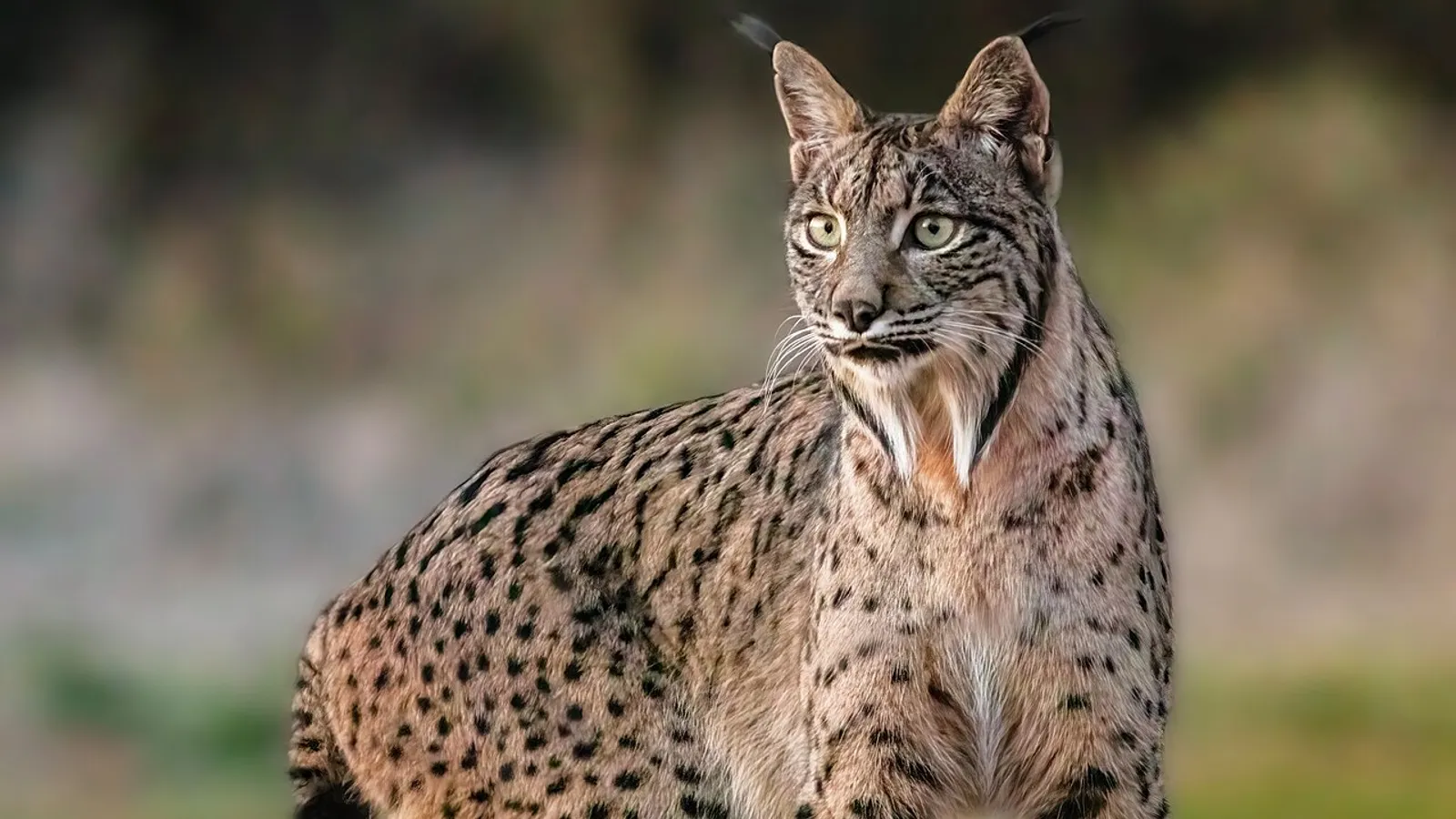
— Where the name comes from
Pardinus means “like the pardus”, that is spotted as a leopard: it is the densely dotted coat that separates it from the Eurasian lynx, which is far plainer. The genus name is the same as that of light, from *leuk-. In Spanish it is the lince ibérico; in the Sierra Morena and at Doñana, where it survived, the old people also called it gato clavo.
— Facts
- Group
- Mammals · Mammalia
- Order
- Carnivores
- Habitat
- Open Mediterranean scrub of mastic and cistus, broken by clearings
- Range
- Southern Spain and Portugal only; reintroduced at several sites since 2009
- Size
- 68–100 cm of body, 9–13 kg
- Diet
- Carnivore — almost exclusively wild rabbit
- Lifespan
- About 13 years in the wild
— Characteristics
- 01
Wild rabbit can make up over 90% of its diet: no other cat is so specialised.
- 02
It has long legs, a very short tail and conspicuous whiskers at the sides of the face.
- 03
In 2002 fewer than a hundred remained, in two isolated populations.
— What sets it apart
It is the cat that came back from the edge. In 2002 ninety-four were counted, all in Andalusia, and extinction looked like a matter of years: it was the most threatened cat in the world. Twenty years of captive breeding, reintroductions and — above all — work on rabbits, its only prey, have taken the population past two thousand, and in 2024 the IUCN was able to downlist it from “endangered” to “vulnerable”. It is not safe, but it is the proof that it can be done.
