
Lion
Panthera leo
— Where the name comes from
From the Latin leo, from the Greek léōn, almost certainly borrowed from a Semitic language — compare the Hebrew lāḇî’ and the Akkadian labbu. The lion’s name travelled towards Europe alongside news of the animal itself.
— Facts
- Group
- Mammals · Mammalia
- Order
- Carnivores
- Habitat
- Savannah, open woodland, shrubby grassland
- Range
- Sub-Saharan Africa; one relict population in the Gir forest, in India
- Size
- 170–250 cm without the tail, 120–190 kg for the male
- Diet
- Carnivore — wildebeest, zebra, buffalo
- Lifespan
- 10–14 years in the wild
— Characteristics
- 01
The only truly social cat: it lives in family groups of related females.
- 02
Hunting is almost always done by the lionesses, in coordinated formation.
- 03
The roar carries 8 km and serves to mark the boundaries of the territory.
— What sets it apart
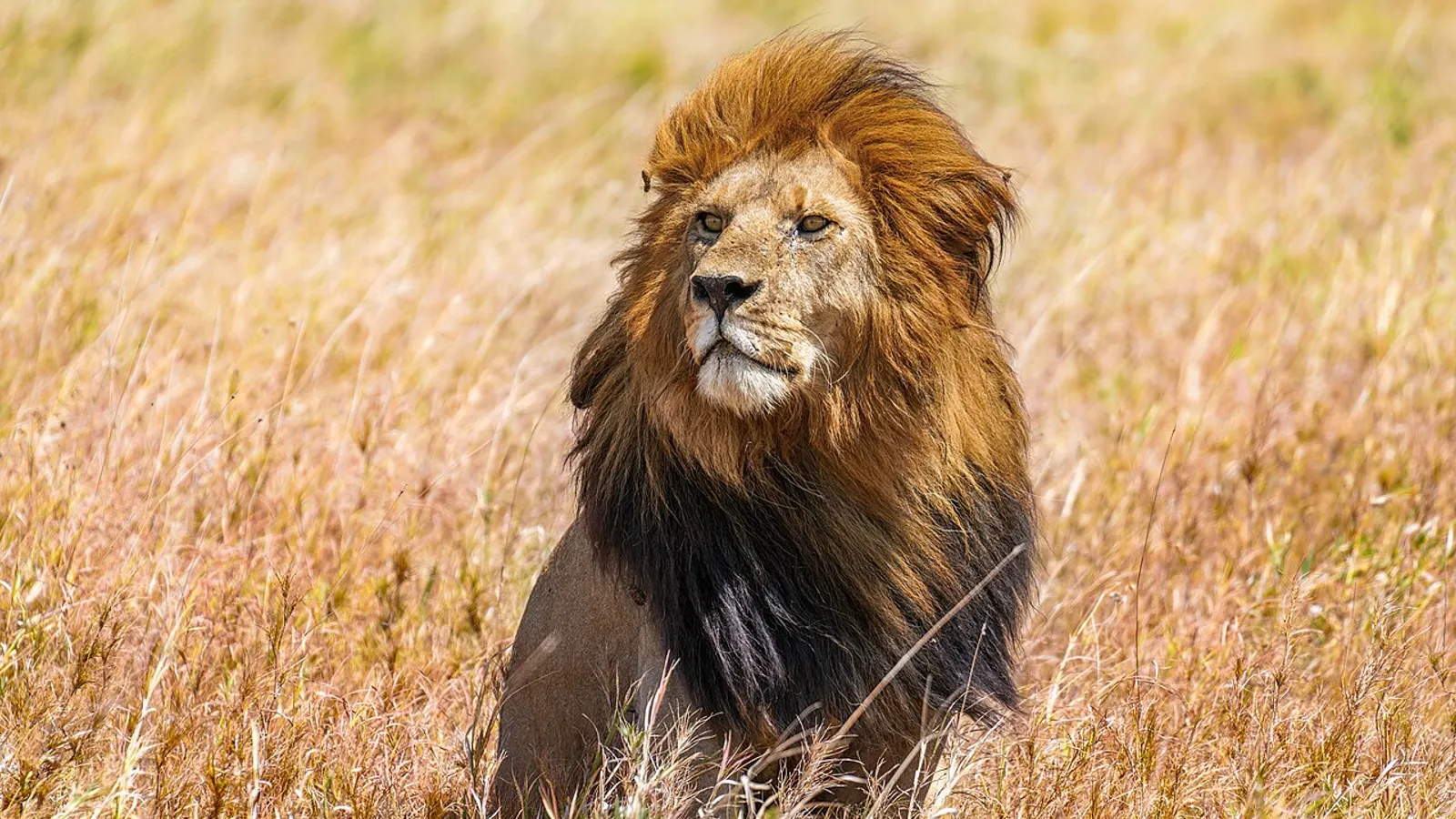
The mane is a billboard: the darker it is, the higher the testosterone and the better the animal’s condition. Females choose the males with the darkest manes, and rival males avoid challenging them. In extreme heat, though, that same mane is a thermal handicap — in Tsavo the lions are often nearly hairless.
