Kagu
Rhynochetos jubatus
— Where the name comes from
Rhynochetos joins the Greek rhís, rhinós, “nose”, and ochetós, “channel”: its nostrils are covered by flaps of skin no other bird has, perhaps to keep soil out while it forages. Jubatus in Latin means “crested”, for the long crest it fans out. Kagu is its name in the Kanak language of New Caledonia.
— Facts
- Group
- Birds · Aves
- Order
- Sunbittern and kagu
- Habitat
- Humid mountain forest and scrub
- Range
- Endemic to New Caledonia
- Size
- 55 cm, about 900 g
- Diet
- Earthworms, snails, insects, small lizards
- Lifespan
- Up to 30 years in captivity
— Characteristics
- 01
It barely flies, but uses its wings to glide and to display.
- 02
Its dawn call sounds like a barking dog.
- 03
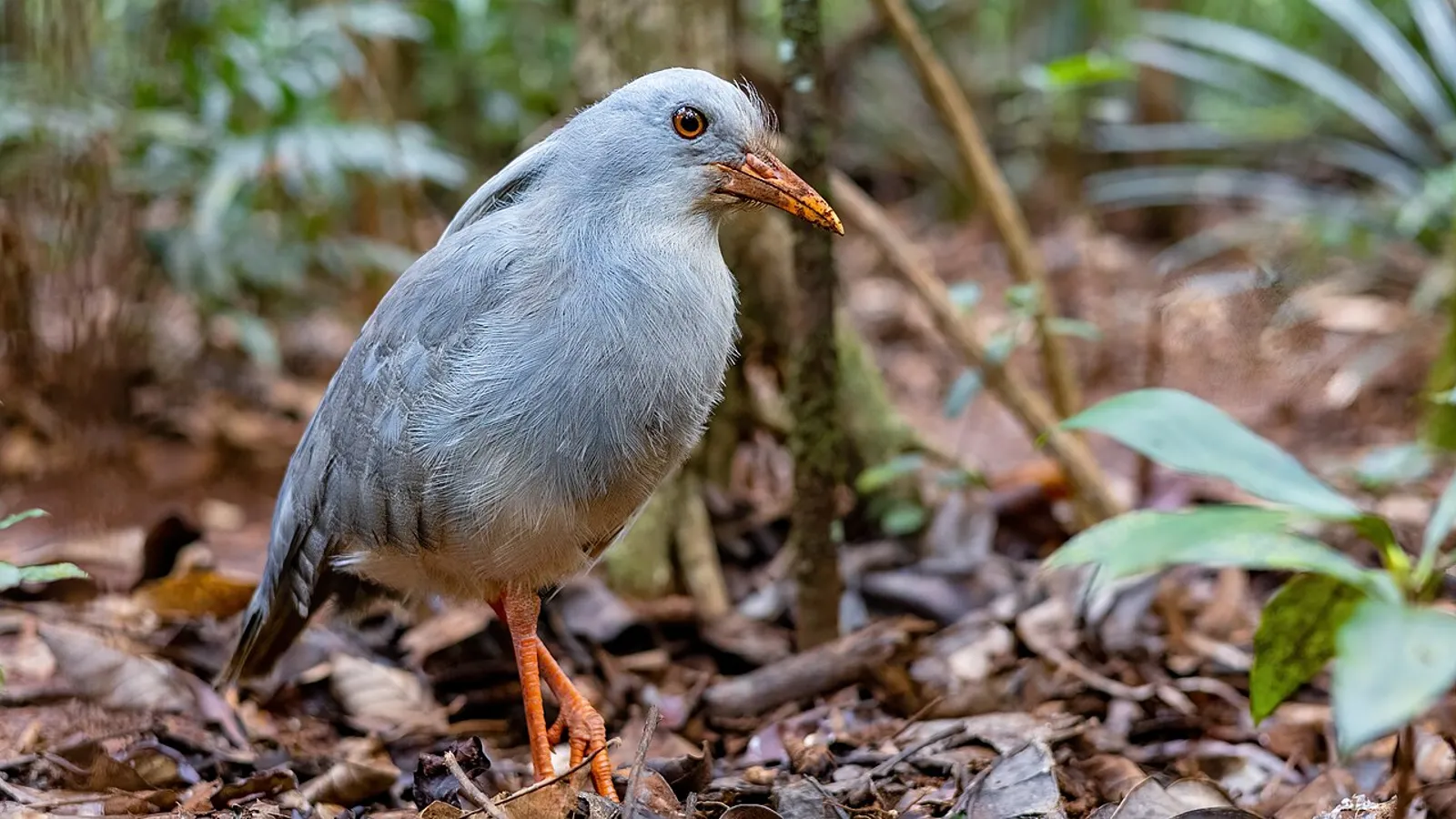
It is pale grey, almost white, with a crest that rises when it is agitated.
— What sets it apart
It is the only member of its family, and its closest relative lives on the other side of the Pacific: the sunbittern of the South American forests, with which it shares the habit of flinging open its wings to show striking patterns. Having evolved on an island without predatory mammals, the kagu nests on the ground and does not know how to flee: the dogs and cats that came with people wiped it out from much of New Caledonia. It is the country’s emblem, and thanks to dog control in protected areas its population has begun to grow again.