
Pygmy hippopotamus
Choeropsis liberiensis
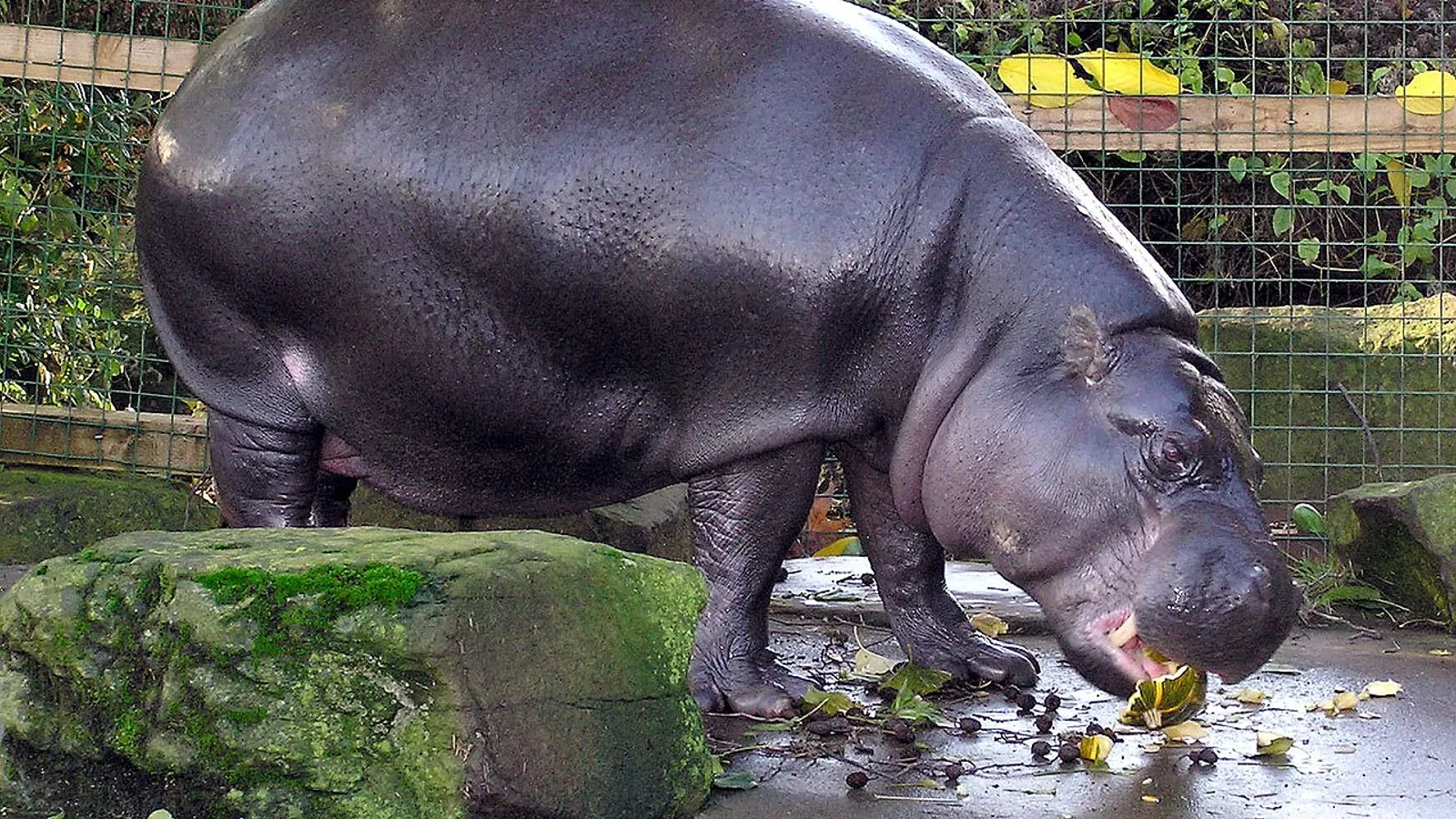
— Where the name comes from
Choeropsis is Greek: choîros, “pig”, and ópsis, “appearance” — of pig-like aspect, which is precisely what the naturalist saw. Hippopotamus, for its large cousin, means instead “river horse”: two animals of the same family named one pig and the other horse, and neither is related to either. Liberiensis points to Liberia, whence came the first specimens known to science.
— Facts
- Group
- Mammals · Mammalia
- Order
- Even-toed ungulates
- Habitat
- Rainforest with watercourses, forest swamps
- Range
- West Africa: Liberia above all, then Sierra Leone, Guinea and Côte d’Ivoire
- Size
- 150–175 cm long, 180–275 kg
- Diet
- Herbivore — ferns, broad leaves, fallen fruit
- Lifespan
- 30–40 years
— Characteristics
- 01
It weighs a tenth of the common hippo and is solitary, not gregarious.
- 02
It spends far less time in water than its cousin: it is above all a forest animal, nocturnal and shy.
- 03
Its skin secretes a pinkish fluid that acts as an antiseptic and a natural sunscreen.
— What sets it apart
In the wild it is so elusive that almost everything we know of its behaviour comes from zoos. Perhaps two thousand remain, in forests crossed by two civil wars and now by logging, and for decades the species has been studied almost solely through camera traps and tracks. In 1927 Harvey Firestone, the tyre magnate, gave one to President Coolidge: that hippo, named Billy, now has several hundred descendants in zoological gardens around the world.
