
Giant prickly stick insect
Extatosoma tiaratum
— Where the name comes from
Extatosoma recalls the Greek for “body out of the ordinary”; tiaratum, from the Latin tiara, for the crown-like projections on the head. The order Phasmatodea comes from phásma, “ghost, apparition”: insects that make themselves spectral, imitating twigs and leaves until they disappear.
— Facts
- Group
- Insects · Insecta
- Order
- Stick insects
- Habitat
- Forests and eucalyptus woodland
- Range
- Eastern Australia and New Guinea
- Size
- Up to 20 cm for the female
- Diet
- Herbivore — leaves, eucalyptus above all
- Lifespan
- 12–18 months
— Characteristics
- 01
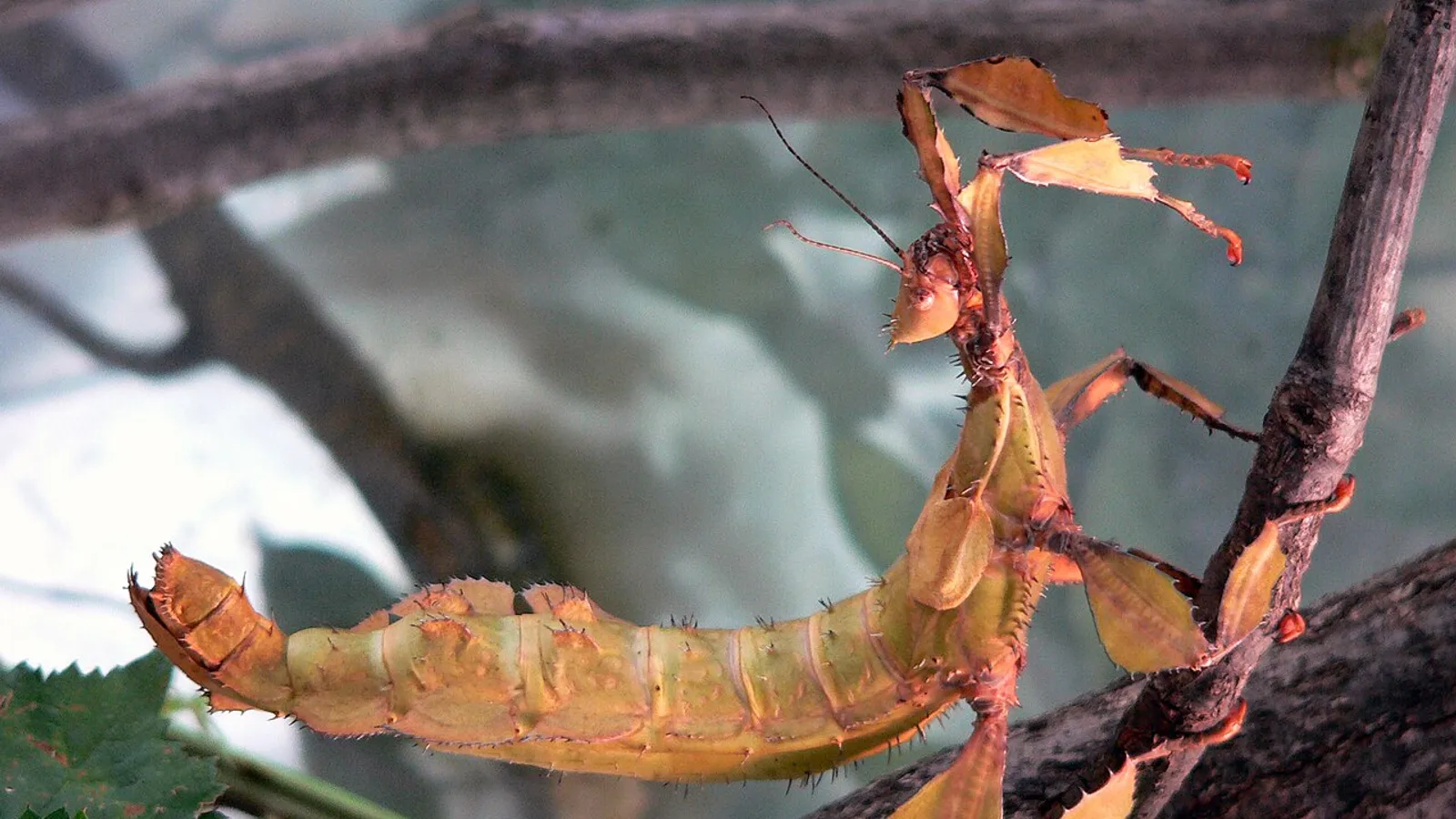
It mimics a dry leaf or twig to perfection, thorns included.
- 02
Threatened, it curls its abdomen over its head in the pose of a scorpion.
- 03
The eggs resemble seeds and are collected and “planted” by ants.
— What sets it apart
The spiny leaf insect’s eggs travel by deception: they look like seeds and carry a fatty, nutritious appendage, the same one certain plants offer ants to have themselves dispersed. The ants collect them, carry them into the nest, eat the appendage and abandon the egg intact and safe underground, where it later hatches. The hatchling, black and glossy, even imitates the running gait of an ant until it reaches the safety of the trees. It is an insect that has tricked an entire other species into nursing it.
