
Desmarest's hutia
Capromys pilorides
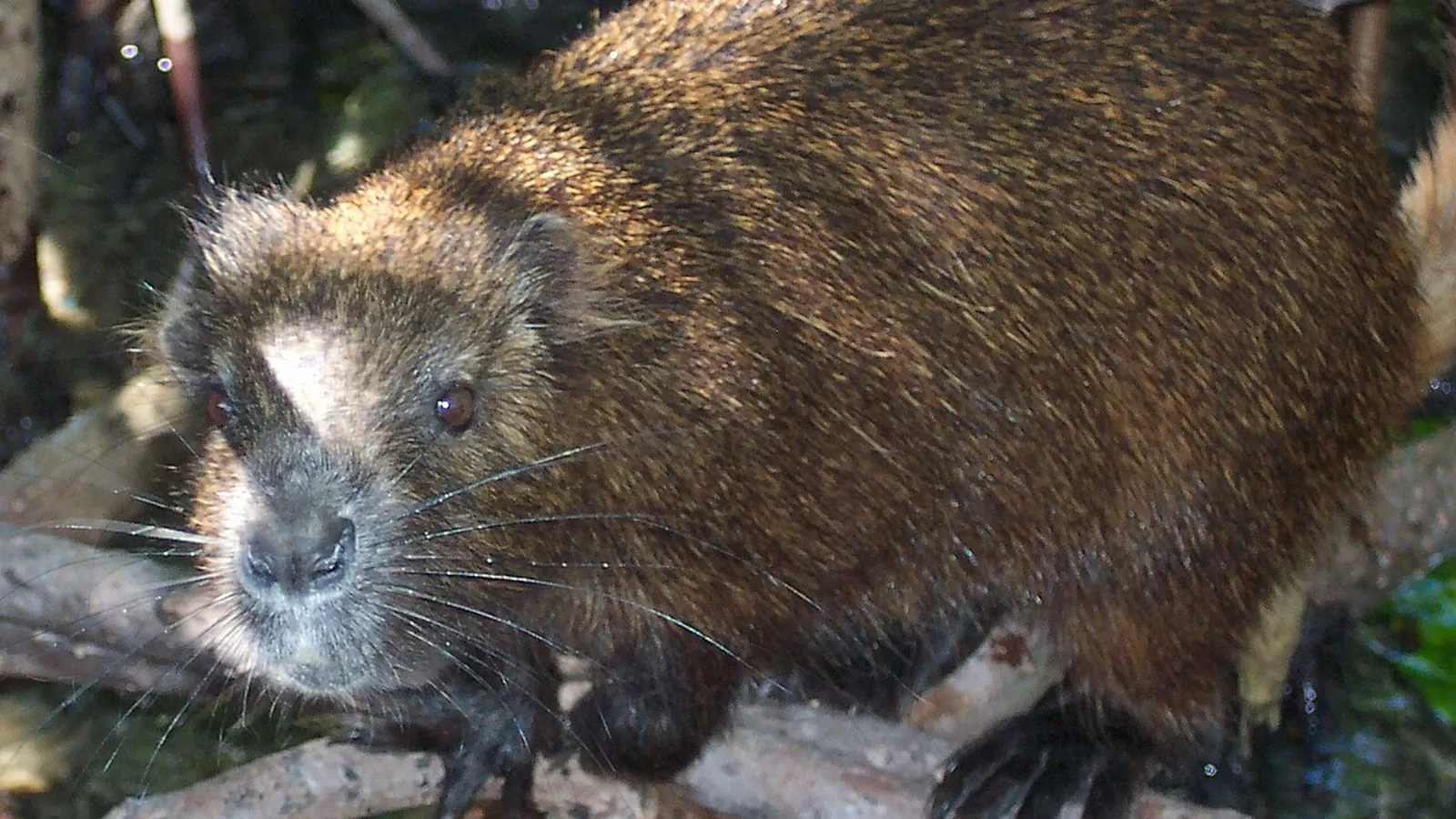
— Where the name comes from
Capromys is “boar mouse”, from kápros and mŷs, for its bulk and its snout. Hutía, though, is a Taíno word, the language of the first inhabitants of the Antilles, recorded by the Spanish chroniclers in the sixteenth century along with barbecue, hurricane and canoe: one of the very few words of that people, wiped out in two generations, to have reached us.
— Facts
- Group
- Mammals · Mammalia
- Order
- Rodents
- Habitat
- Forest, mangrove, coastal scrub, karst ground
- Range
- Cuba and the surrounding islets
- Size
- 30–50 cm, tail 15–30 cm, 3–7 kg
- Diet
- Leaves, bark, fruit, the occasional lizard and crab
- Lifespan
- 11 years
— Characteristics
- 01
It climbs trees and mangroves with the help of its semi-prehensile tail.
- 02
It is active by day, unusual for a rodent hunted by people.
- 03
It digests leaves in a complex, almost ruminant-like stomach.
— What sets it apart
It is the one abundant survivor of a fauna the Antilles have almost entirely lost. Before people arrived, the Caribbean held ground sloths, monkeys, giant rodents and dozens of species of hutia: nearly all went extinct between the coming of the Taíno and that of the Europeans with their rats and their mongooses. This species holds on, and its recent history has been political too — in the years of the Special Period, after 1991, hunting out of hunger cut its numbers back near the cities.
