
Guanaco
Lama guanicoe
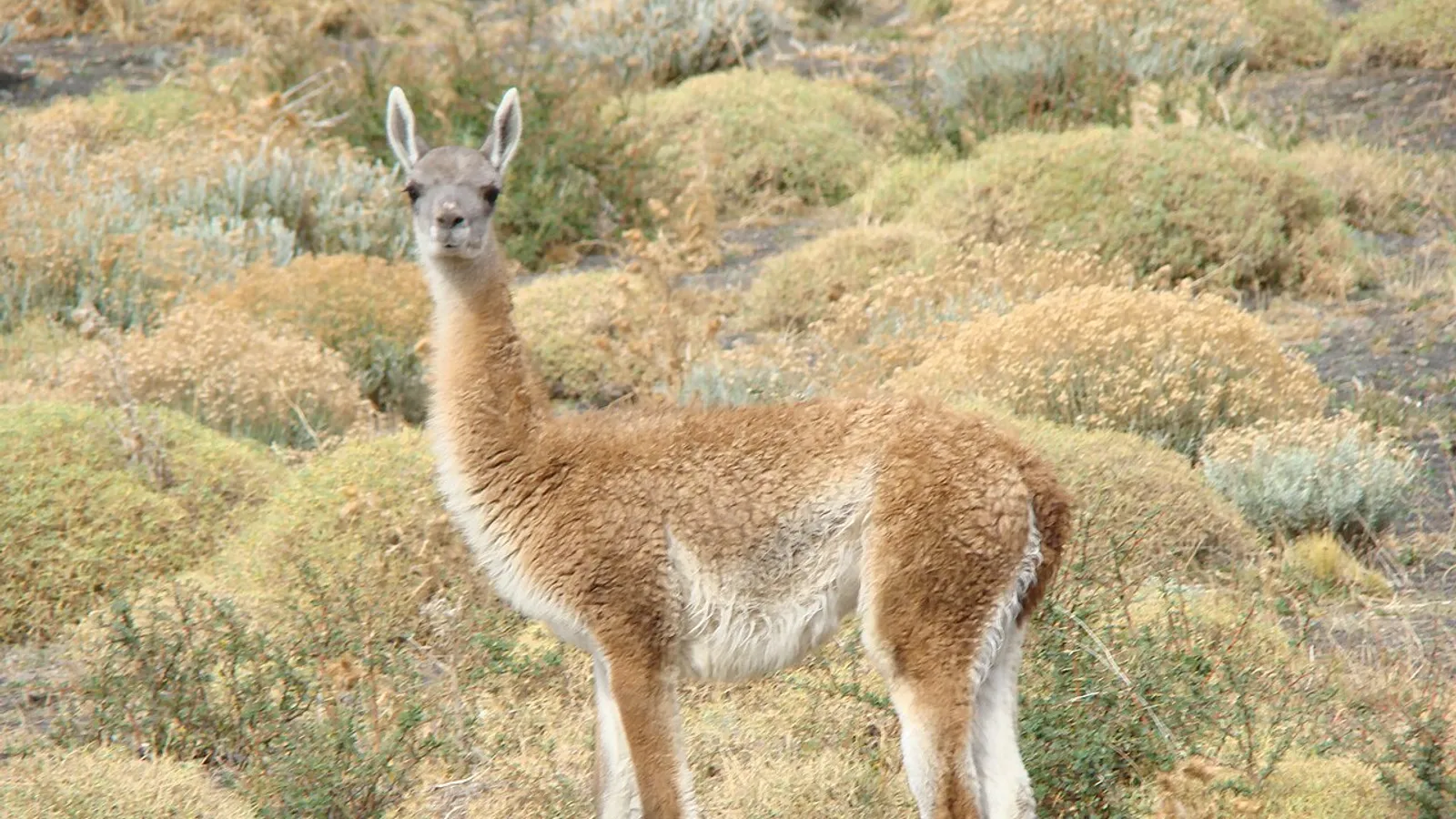
— Where the name comes from
Guanaco comes from the Quechua wanaku, and is one of the many Andean names to survive intact in science: the same holds for llama, alpaca and vicuña. The genus Lama is itself the Quechua word as transcribed by the Spanish. Four South American camelids, four indigenous names: it is one of the rare corners of nomenclature where Greek and Latin had no say.
— Facts
- Group
- Mammals · Mammalia
- Order
- Even-toed ungulates
- Habitat
- Patagonian steppe, Andean plateaus, cold deserts up to 4,000 metres
- Range
- Western South America: Peru, Bolivia, Chile, Argentina, Paraguay
- Size
- 190–220 cm long, 90–140 kg
- Diet
- Herbivore — tough grasses, shrubs, lichens
- Lifespan
- 20–25 years
— Characteristics
- 01
It is the wild ancestor of the llama, domesticated about five thousand years ago in the Andes.
- 02
Its blood holds four times the red cells of a human, an adaptation to thin air.
- 03
The young walk within an hour of birth and follow the group the same day.
— What sets it apart
It always deposits its droppings in the same places, communal latrines used across generations. In Patagonia those heaps have become archives: built up over centuries they have preserved pollen, seeds and spores, and palaeoecologists excavate them as one excavates a peat bog to reconstruct how the climate and vegetation of the steppe changed. A shy animal’s habit of tidiness has turned, with nobody designing it, into one of the best environmental records in southern South America.
