
European bee-eater
Merops apiaster
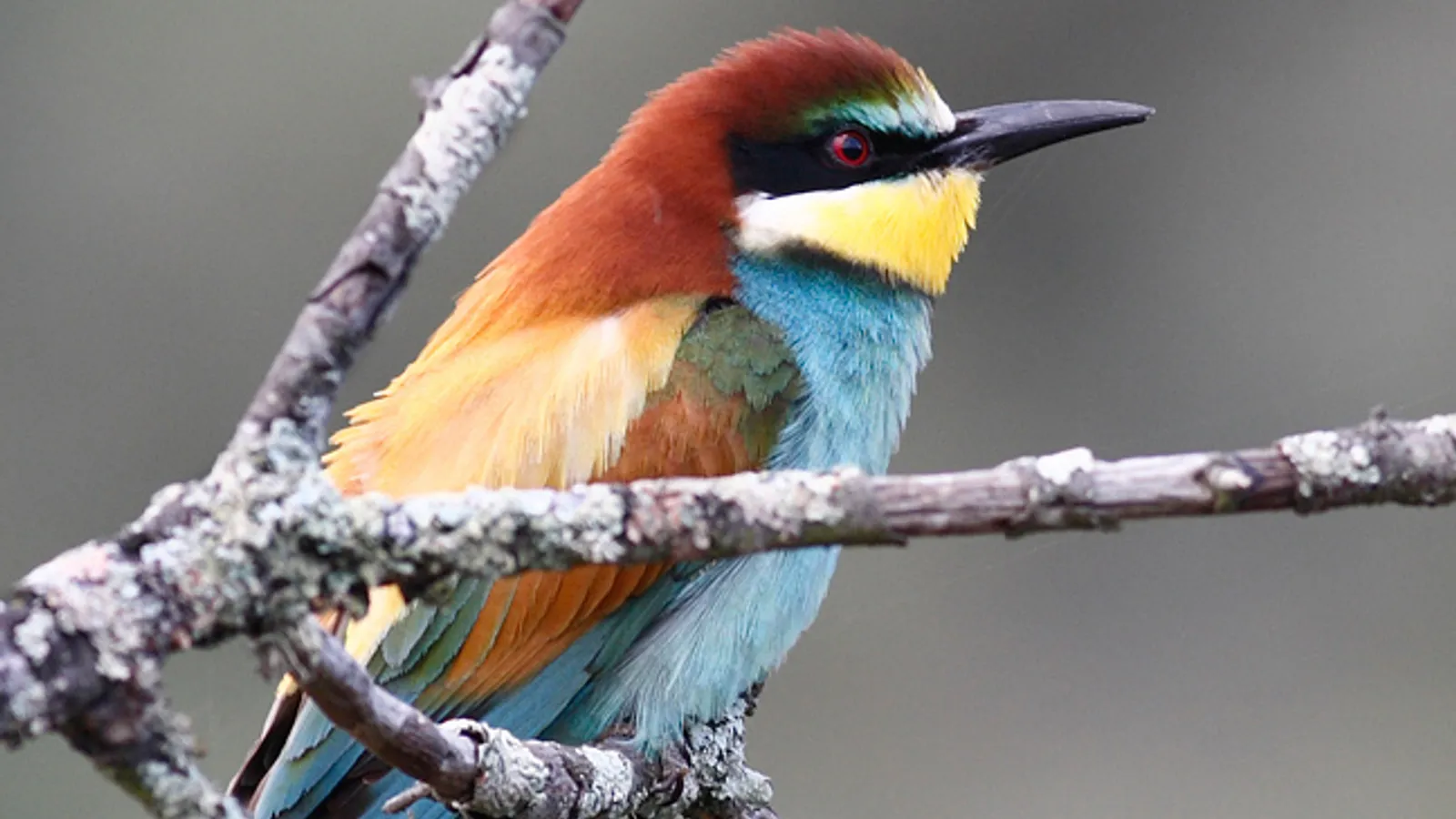
— Where the name comes from
Merops is the Greek name of the bird; apiaster is Latin, “bee eater”, from apis, bee. The scientific name declares its diet without ceremony. The Italian gruccione is a popular augmentative, perhaps from the call or from its lively air. It is perhaps the most vividly coloured bird that breeds in Europe.
— Facts
- Group
- Birds · Aves
- Order
- Rollers and kingfishers
- Habitat
- Open countryside, sandy banks, disused quarries
- Range
- Southern Europe, North Africa, western Asia; winters in Africa
- Size
- 27–29 cm, wingspan 44–49 cm
- Diet
- Insectivore — bees, wasps, dragonflies taken in flight
- Lifespan
- 5–6 years
— Characteristics
- 01
The plumage combines turquoise, yellow, chestnut and green: a living rainbow.
- 02
It digs nest tunnels up to two metres long into sandy banks.
- 03
It nests in colonies and hunts in groups, dashing about in aerial acrobatics.
— What sets it apart
The bee-eater eats bees and wasps, and has learnt to disarm them: it catches the insect in flight, returns to its perch and beats it repeatedly against the branch, then rubs it hard to squeeze the venom out of the sting before swallowing. It tells an armed bee from a harmless one on sight, and treats only the first. It is a hunter that has made the most dangerous prey a bird can take — the one that stings — its daily speciality.
