
European crayfish
Astacus astacus
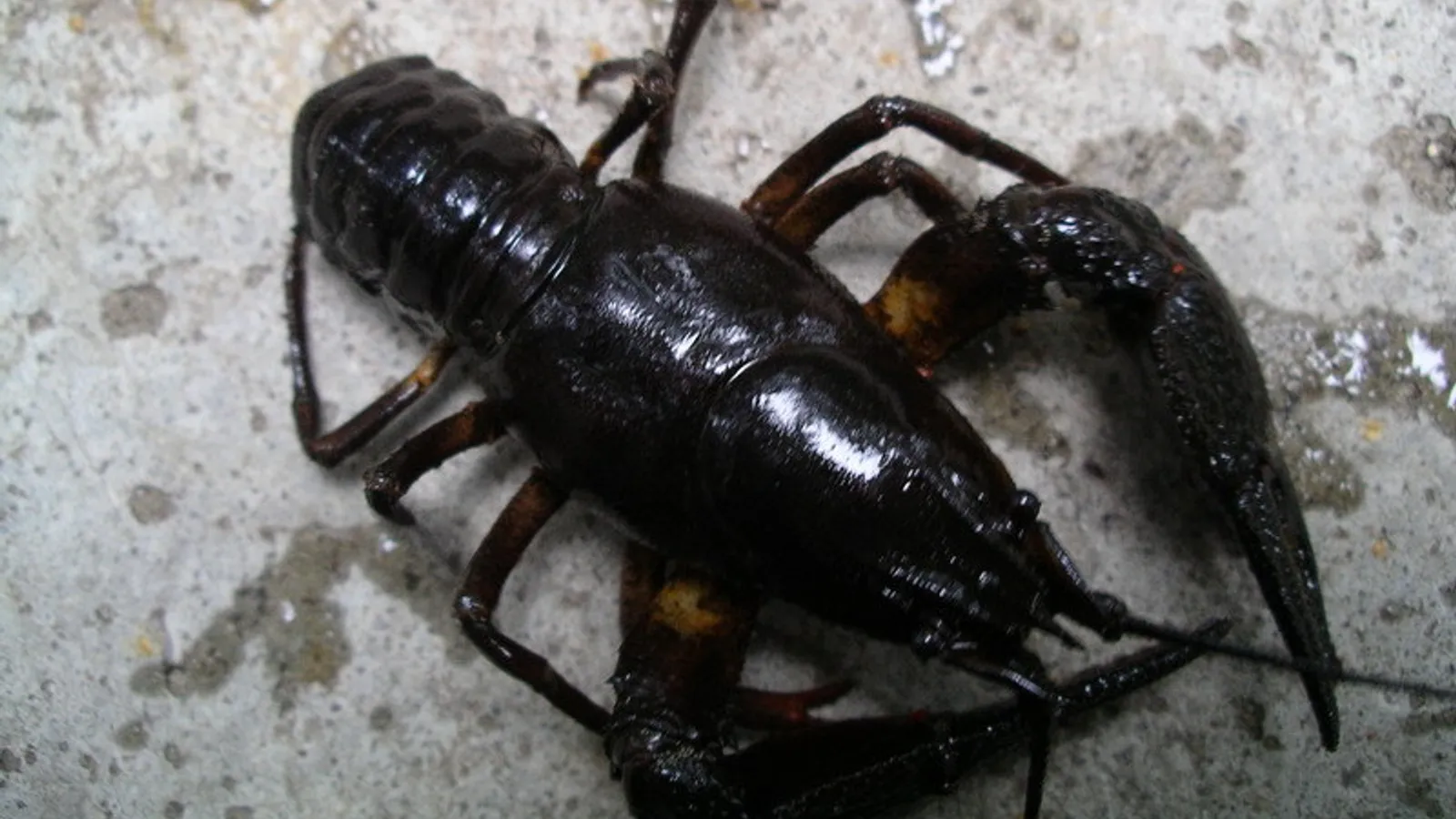
— Where the name comes from
Astacus is the Greek astakós, which meant both the sea lobster and the river crayfish: the ancients did not distinguish them, and one word served for both. Repeated twice, genus and species, it marks the type species, the one on which the word was fixed. The Italian gambero comes instead from the Latin cammarus, another road to the same animal.
— Facts
- Group
- Crustaceans · Malacostraca · Maxillopoda
- Order
- Crabs, lobsters and shrimps
- Habitat
- Clean rivers, streams and lakes, with a bottom to burrow into
- Range
- Continental Europe, from the Balkans to Scandinavia
- Size
- 10–16 cm, up to 20
- Diet
- Water plants, invertebrates, detritus, carrion
- Lifespan
- Over 20 years
— Characteristics
- 01
It breathes dissolved oxygen and vanishes where water is dirty or warm.
- 02
The female carries her eggs glued beneath her tail all winter.
- 03
It regrows lost claws over successive moults.
— What sets it apart
It is disappearing because of a disease brought by a relative. At the end of the nineteenth century American crayfish were introduced to Europe, immune carriers of a fungus, the crayfish plague: for European species, which had never met it, it is almost always fatal. Whole catchments emptied within seasons, and today the European crayfish survives mainly in high, isolated streams the intruder has not yet reached. It is the same pattern as the grey and red squirrels: competition does not decide it — what the newcomer brings with it does.
