
Northern fulmar
Fulmarus glacialis
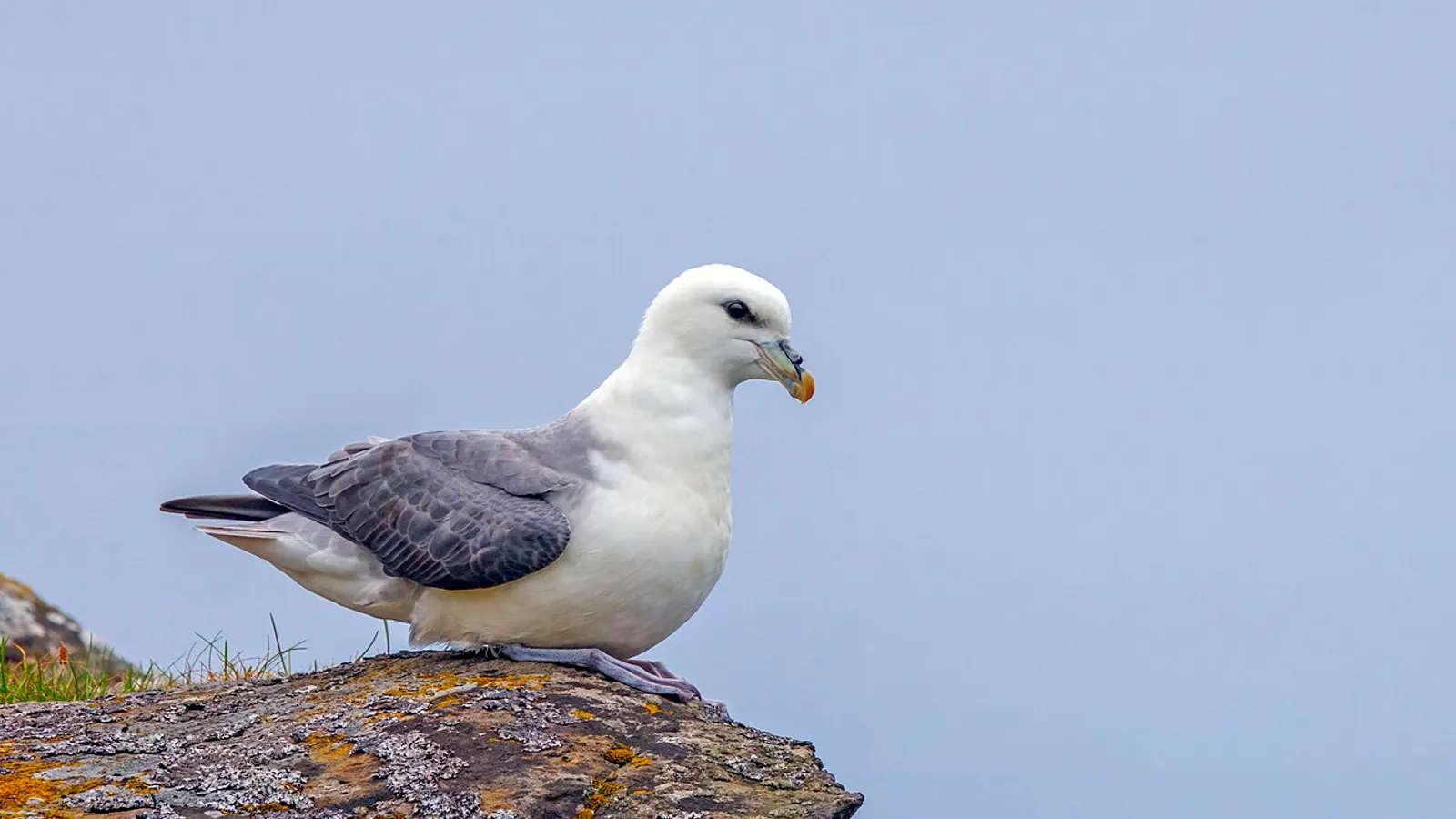
— Where the name comes from
Fulmarus comes from the Old Norse fúll már, “foul gull”, and it is no gratuitous insult: anyone who comes near the nest gets a jet of rancid stomach oil that never washes out. Glacialis names the sea it lives in. It is one of those scientific names in which the verdict of the Viking fishermen who first dealt with the bird survives intact.
— Facts
- Group
- Birds · Aves
- Order
- Tubenoses
- Habitat
- Sea cliffs for nesting, the open ocean for the rest
- Range
- The northern Atlantic and Pacific, the Arctic
- Size
- 43–52 cm, wingspan 101–117 cm, 450–1,000 g
- Diet
- Fish, squid, krill, fishery discards, carrion
- Lifespan
- 40 years in the wild
— Characteristics
- 01
It glides stiff-winged over the waves, hardly ever flapping.
- 02
It has tube nostrils above the bill and glands that excrete salt.
- 03
It starts breeding at about nine years old and lays a single egg.
— What sets it apart
The oil it spits is both food and weapon. It is a waxy ester enormously rich in energy with which it feeds its chick, but fired at a bird of prey it soaks the feathers, destroys their waterproofing and can kill by drowning or by cold: gulls and falcons are found dead this way around the colonies. On the Scottish island of St Kilda the hundred inhabitants lived off this species and took twelve thousand a year, using the meat, the feathers and the oil for their lamps — until 1930, when the island was evacuated.
