
Leafcutter ant
Atta cephalotes
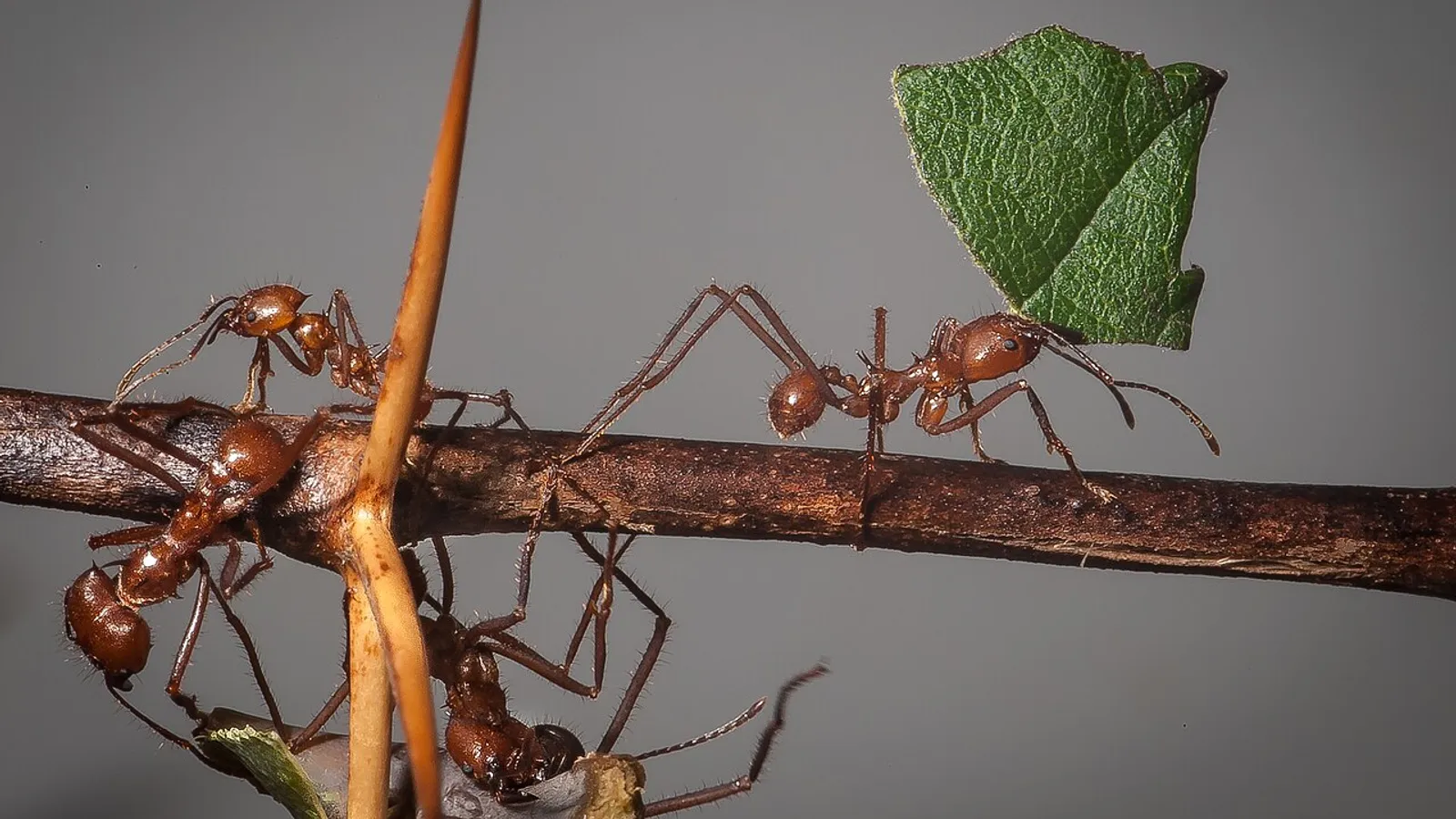
— Where the name comes from
Atta is a Latin name of obscure origin, perhaps from the Greek átta, an affectionate form of address for an elder. Cephalotes, Greek, means “large-headed”: the major workers have a head out of all proportion, to carry the mandibles.
— Facts
- Group
- Insects · Insecta
- Order
- Bees, wasps and ants
- Habitat
- Rainforest
- Range
- Central and South America
- Size
- 2–14 mm depending on caste
- Diet
- Fungivore — it eats a fungus it farms
- Lifespan
- 10–20 years for the queen
— Characteristics
- 01
The nest can hold millions of individuals and run 6 m down into the soil.
- 02
The castes have different bodies and different trades.
- 03
Carries fragments up to twenty times its own weight.
— What sets it apart
Leafcutter ants do not eat the leaves: they chew them, manure them and grow a fungus on them, the colony’s only food. They have been farming for some 50 million years. And they have a pest problem: a mould of the genus Escovopsis attacks the crop. On the cuticle of the workers live actinomycete bacteria that produce an antibiotic specific to that mould. They farm, they protect the harvest and they use antibiotics — 50 million years ahead of us.
