
Common earwig
Forficula auricularia
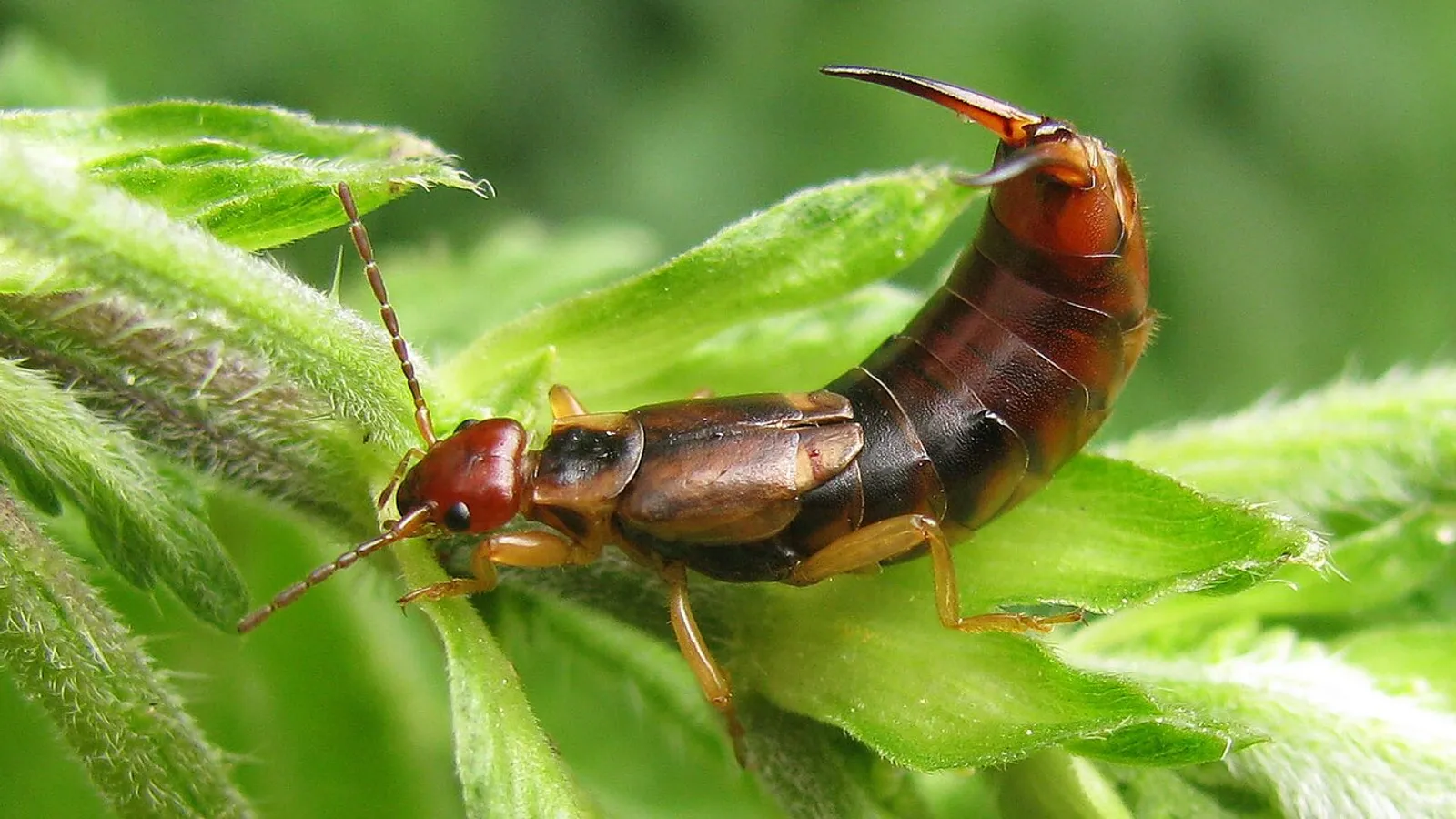
— Where the name comes from
Forficula is the “little pair of scissors”, from forfex: the two appendages at the end of the abdomen really are pincers. Auricularia means “of the ear”, and preserves a mediaeval belief all Europe shared — that the insect enters a sleeper’s ear to reach the brain. The English earwig says it, and so do the French perce-oreille, the German Ohrwurm and the scientific Latin: four languages, the same nightmare, and no foundation whatever.
— Facts
- Group
- Insects · Insecta
- Order
- Earwigs
- Habitat
- Under stones, bark and pots; anywhere dark and damp
- Range
- Europe and western Asia; introduced to America and Oceania
- Size
- 12–15 mm without the pincers
- Diet
- Omnivorous: petals, fruit, aphids, dead insects
- Lifespan
- 1 year
— Characteristics
- 01
The male’s pincers are curved, the female’s almost straight.
- 02
It has membranous wings folded forty times beneath two tiny plates.
- 03
The mother broods her eggs and tends her young, which is very rare in insects.
— What sets it apart
It has a pair of wings almost nobody has ever seen. Under the two stiff plates on its back is a membranous fan that, opened, is ten times larger than the space that holds it: it folds along a pattern of radial creases that engineers have studied for solar panels and stents, because it beats the limit thought to govern the folding of paper. And then there is the motherhood: the female lays her eggs in a small chamber dug in the soil, cleans them one by one of mould all winter, and stays with the young after they hatch. It is one of the very few non-social insects that tends its offspring.
