
Fennec fox
Vulpes zerda
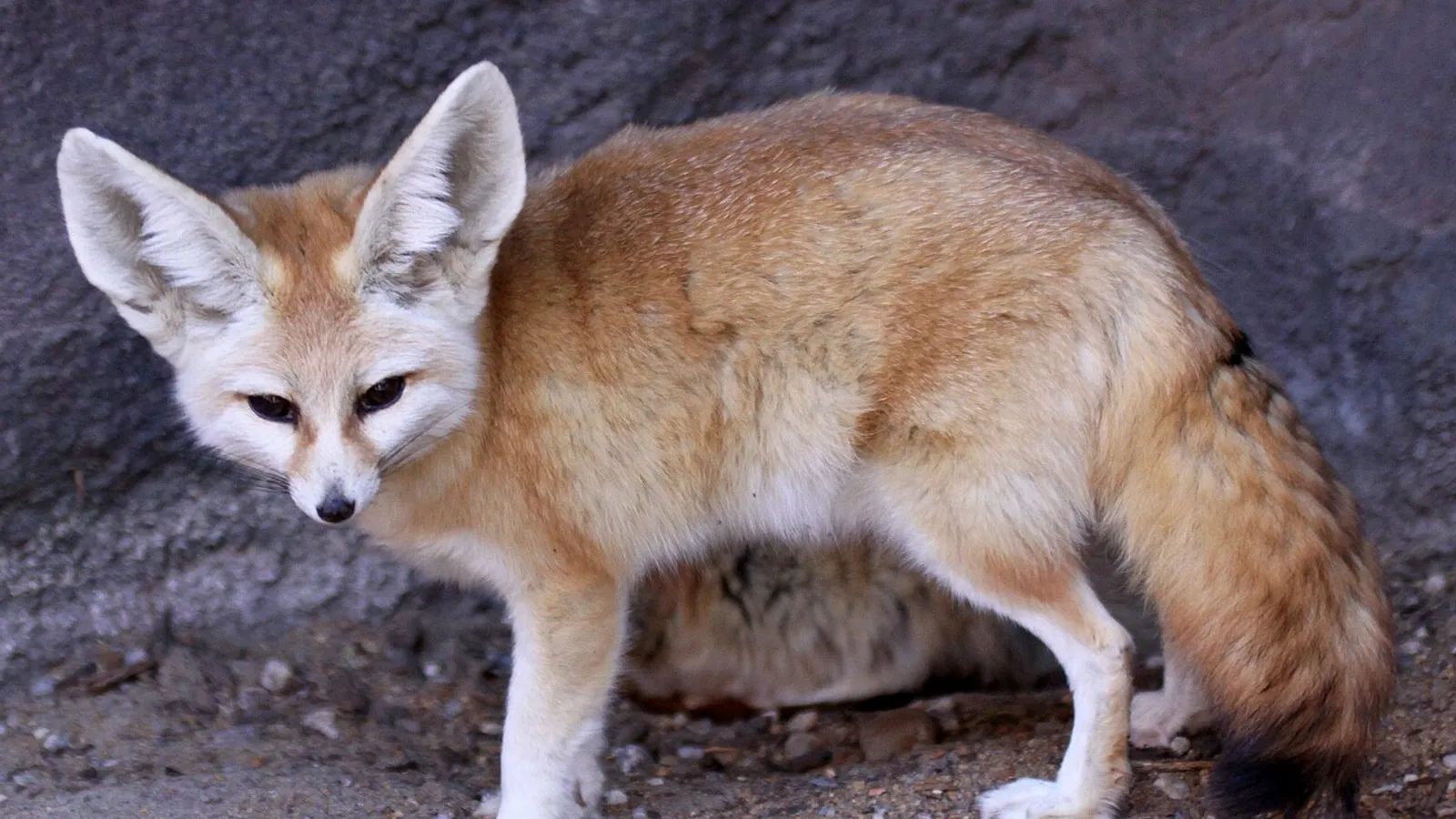
— Where the name comes from
Fennec is the Arabic fanak, which named any small desert fox: one of the few Arabic words to enter European zoology without passing through Latin. The epithet zerda goes back instead to the Greek xērós, “dry”, the same root as xerophile and as elixir — a nod to the desert that is at once its habitat and the explanation of nearly everything this animal is.
— Facts
- Group
- Mammals · Mammalia
- Order
- Carnivores
- Habitat
- Sandy deserts and semi-deserts with stable dunes
- Range
- The Sahara and the Sinai peninsula, from Morocco to Egypt and Sudan
- Size
- 35–40 cm long plus 25 of tail, 0.8–1.5 kg
- Diet
- Omnivore — insects, rodents, birds, roots and fruit
- Lifespan
- 10–14 years
— Characteristics
- 01
It is the smallest canid in the world and has, in proportion, the largest ears.
- 02
It can live without drinking: it takes its water from food and its kidneys concentrate urine to the extreme.
- 03
The soles of its feet are furred, insulating them from scorching sand and giving grip on dunes.
— What sets it apart
Those outsized ears are not mainly for hearing: they are radiators. Run through by a network of surface blood vessels, they shed heat into the air like the fins of an engine, and let the animal cool down without sweating — that is, without wasting water. It is Allen’s rule made visible: in hot climates the extremities lengthen, in cold ones they shorten. The fennec and the Arctic fox, whose ears are minute, are the same design read at the two ends of the thermometer.
