
Greater false vampire bat
Lyroderma lyra
— Where the name comes from
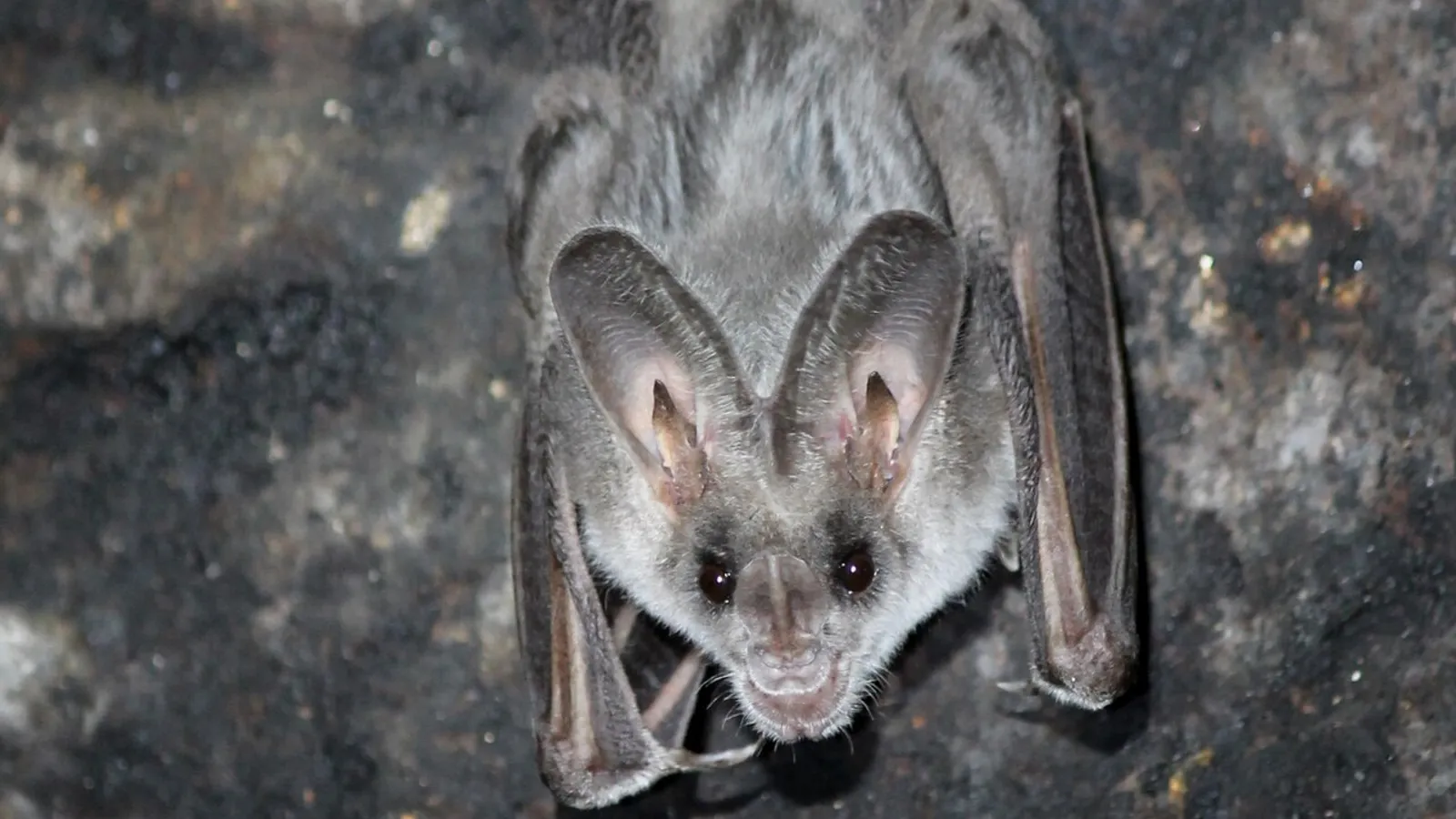
Lyroderma is “lyre skin”, from the Greek lýra and dérma: the nose leaf has two side lobes that widen upwards like the arms of an ancient lyre. Lyra repeats it in the epithet. The genus was called Megaderma, “great skin”, and has been split off recently; many texts and many photographs still carry the old name.
— Facts
- Group
- Mammals · Mammalia
- Order
- Bats
- Habitat
- Caves, wells, ruined temples, buildings; hunting in forest and over cropland
- Range
- The Indian subcontinent, Sri Lanka, southern China, Indochina
- Size
- 6.5–9.5 cm of body, 40 cm wingspan, 40–60 g
- Diet
- Carnivore — frogs, fish, rodents, birds, large insects, other bats
- Lifespan
- Little known in the wild
— Characteristics
- 01
It is carnivorous: it hunts vertebrates, other bats included.
- 02
It has enormous ears joined at the base, and large eyes: it uses sight and passive hearing too.
- 03
It flies very slowly, almost hovering, so as to drop onto prey on the ground.
— What sets it apart
It hears a frog walking. Its outsized ears do not merely gather the echo of its own sonar: they also work in passive listening, letting it locate prey by the noise it makes moving through leaves or by the call of a male frog. It is the same principle as the European greater mouse-eared bat’s, and it has the same consequence — in surroundings full of obstacles, echolocation returns a chaos of echoes, and it pays to switch the sonar off and simply listen.
