
Emu
Dromaius novaehollandiae
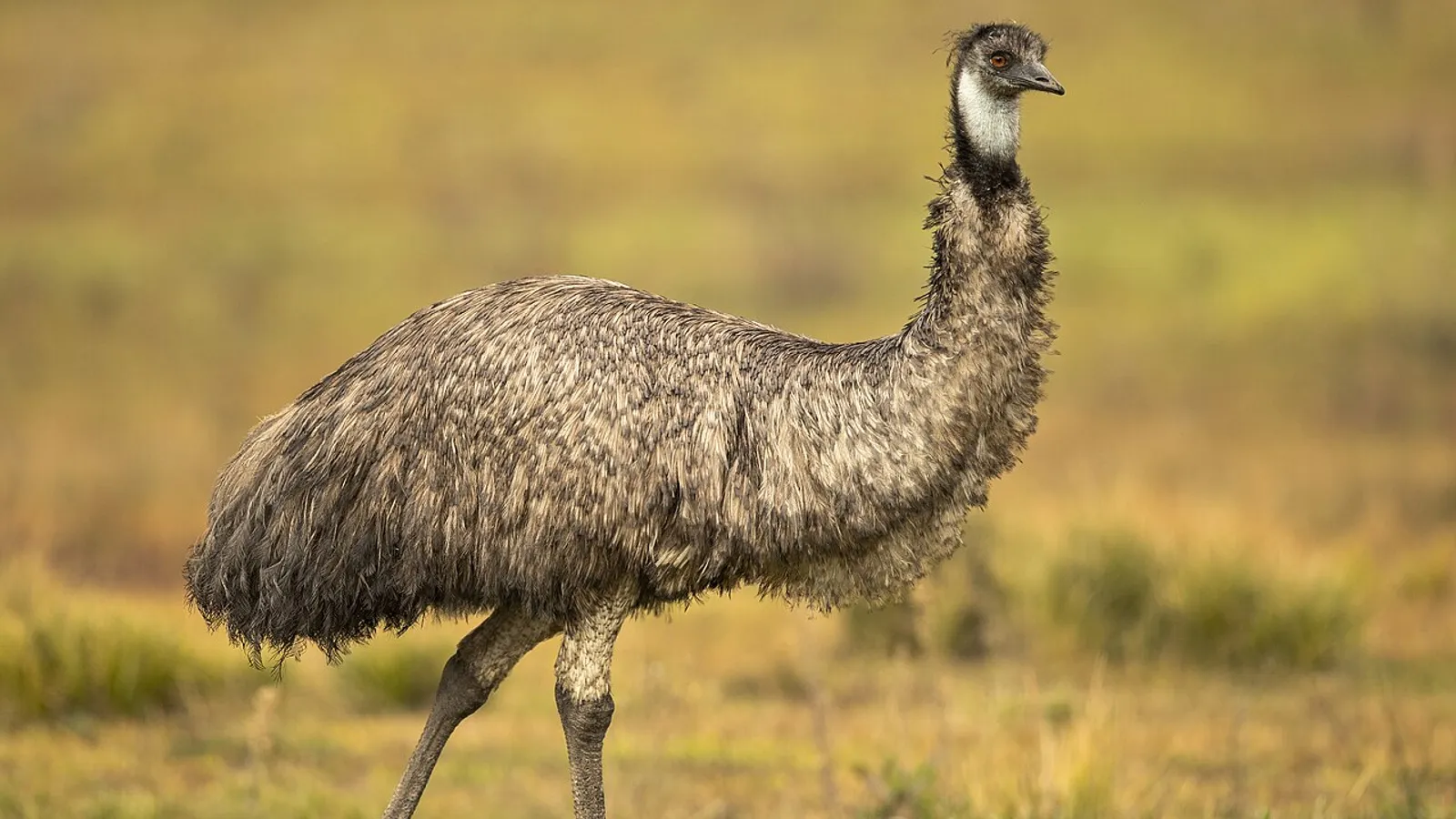
— Where the name comes from
Dromaius comes from the Greek dromaîos, “swift-running”, from drómos, the race — the same root as “dromedary” and “hippodrome”. Novaehollandiae is the old name of Australia. Emu is not an Aboriginal word: it comes from the Portuguese ema, which navigators used for the rhea and the ostrich, and which reached Australia along with the ships.
— Facts
- Group
- Birds · Aves
- Order
- Cassowaries and emus
- Habitat
- Savannah, scrub, grassland, interior deserts
- Range
- Mainland Australia
- Size
- 150–190 cm tall, 30–55 kg
- Diet
- Seeds, fruit, shoots, insects, small stones
- Lifespan
- 20 years in the wild
— Characteristics
- 01
It runs at fifty kilometres an hour with strides of nearly three metres.
- 02
The male incubates for eight weeks without eating, drinking or standing up.
- 03
It has two eyelids per eye: the second, transparent, keeps the sand out.
— What sets it apart
In 1932, in Western Australia, the army declared war on the emus. Twenty thousand of them were wrecking the fields of settlers who had come back from the Great War, and the government sent three soldiers with two Lewis guns and ten thousand rounds. The emus scattered into small, fast, unhittable parties, the first ambush failed and so did the second; after a month the military withdrew, having shot a few hundred and earned a place in military history as the losers of a war against birds. The problem was later solved with fences.
