
Common cuckoo
Cuculus canorus
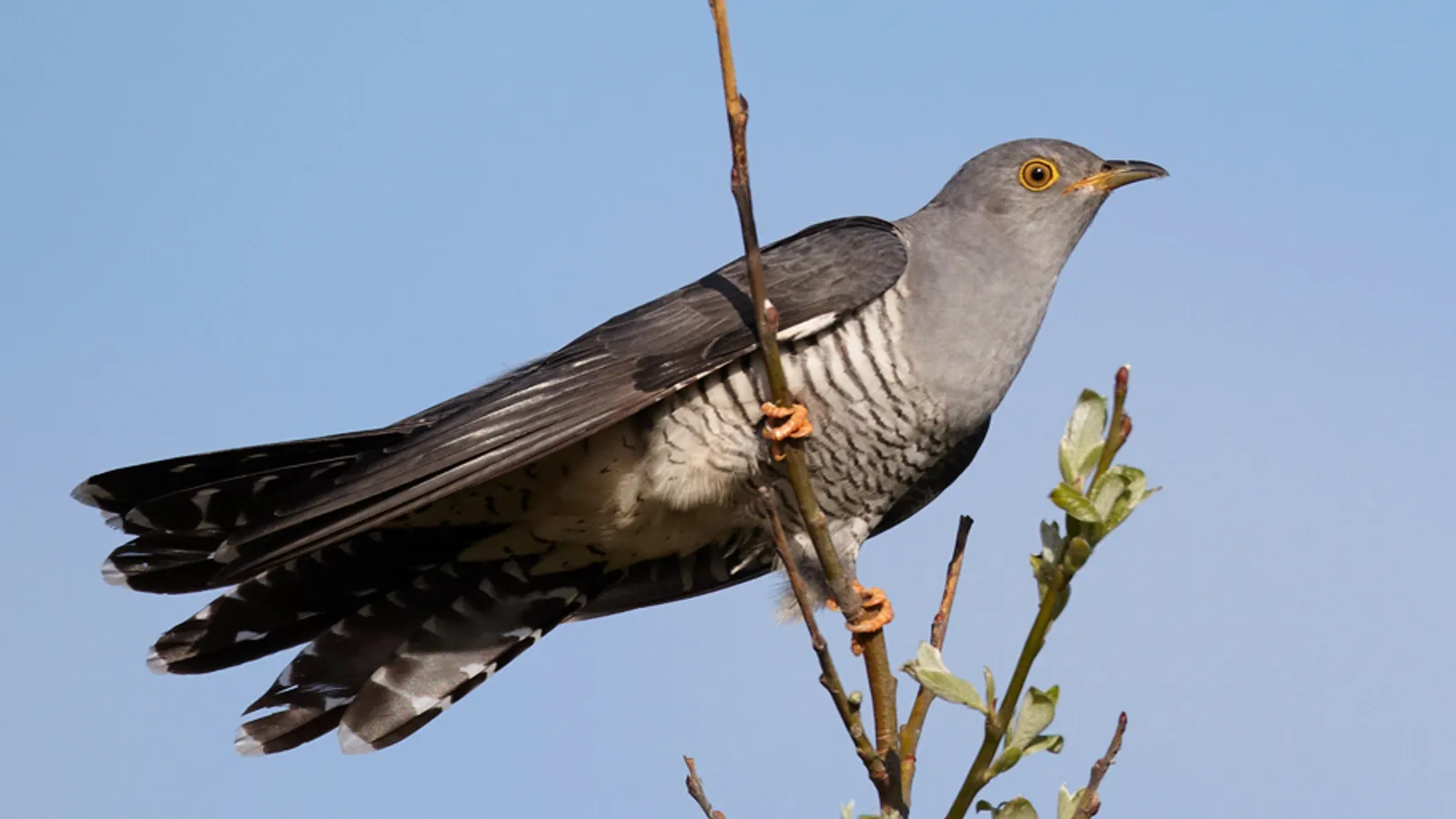
— Where the name comes from
Cuculus is the call itself, and the same happens in every European language: cuckoo, coucou, Kuckuck, cucù. Canorus means “tuneful”. From the same root, though, comes a less kindly word: the French cocu and the English cuckold, the deceived husband, because the female cuckoo lays in somebody else’s nest — the insult was born of a piece of natural history.
— Facts
- Group
- Birds · Aves
- Order
- Cuckoos
- Habitat
- Open woodland, reedbeds, heaths, wooded farmland
- Range
- Europe and Asia; winters in sub-Saharan Africa
- Size
- 32–36 cm, wingspan 54–60 cm, 105–130 g
- Diet
- Hairy caterpillars other birds will not touch, insects
- Lifespan
- 6 years in the wild
— Characteristics
- 01
In flight it resembles a sparrowhawk, and small birds mob it as one.
- 02
The newly hatched chick throws its foster parents’ eggs out of the nest.
- 03
A female lays in twenty-five different nests in one season.
— What sets it apart
There is no such thing as one cuckoo: there are lineages of females, each specialised on a host species, laying eggs that mimic that host’s in colour and pattern. A female raised in a reed warbler’s nest will lay all her life in reed warblers’ nests, reed warbler eggs. The trick passes only down the female line, because the genes governing eggshell colour sit on the sex chromosome a mother gives her daughters; males mate indifferently with all of them, and that keeps the cuckoo a single species while its females are already a dozen separate trades.
