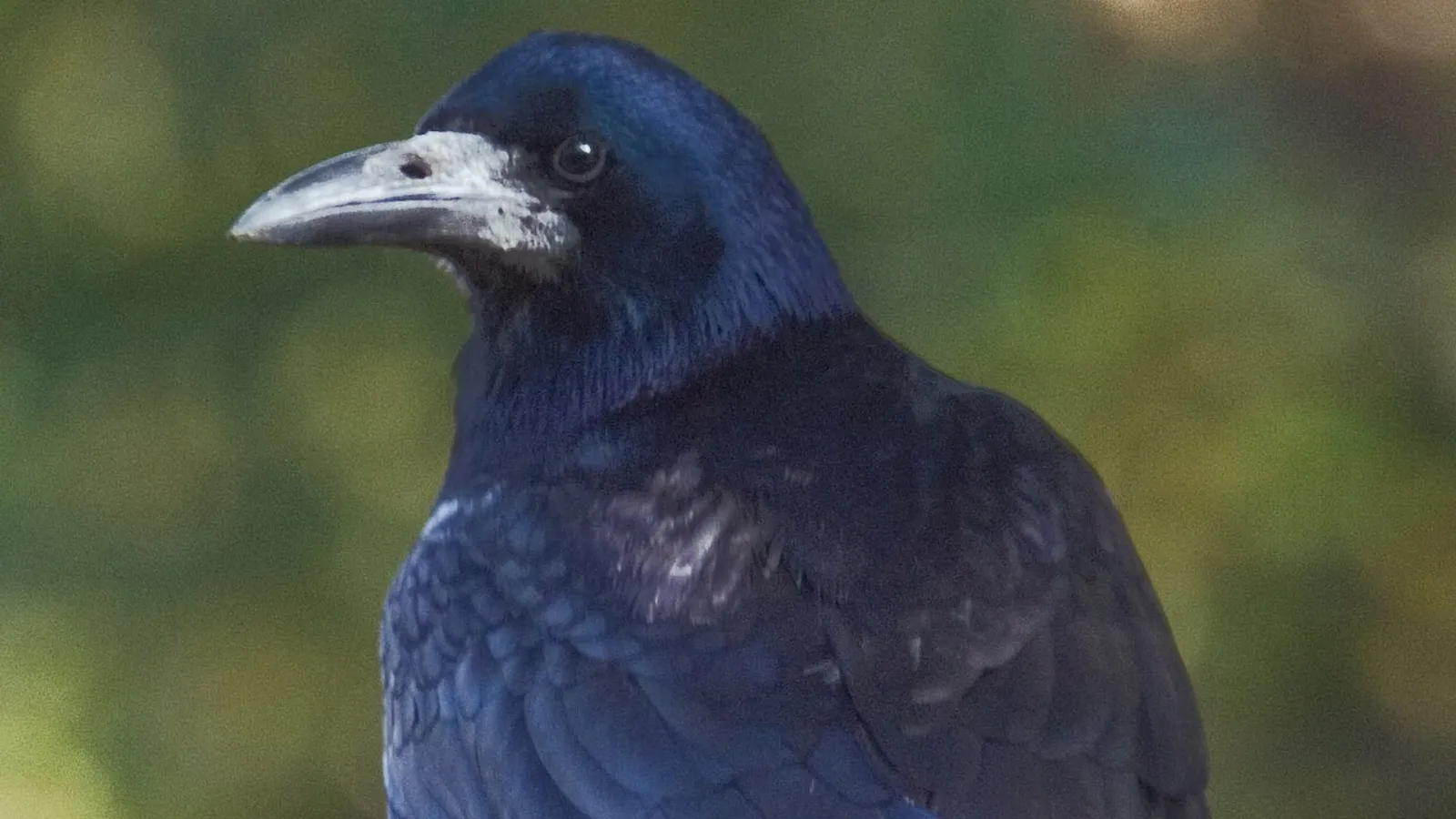
Rook
Corvus frugilegus
— Where the name comes from
Corvus is Latin for crow. Frugilegus joins frux, “crops, grain”, and legere, “to gather”: “the grain-gatherer”, for its habit of frequenting ploughed and sown fields. It should not be confused with the raven: it is smaller, sociable, and lives in colonies.
— Facts
- Group
- Birds · Aves
- Order
- Passerines
- Habitat
- Farmland with tree rows and copses, parks
- Range
- Europe and Asia; in winter it arrives in large numbers on the Po plain
- Size
- 44–47 cm, 280–340 g
- Diet
- Grain, larvae and earthworms from the soil, seeds
- Lifespan
- A few years on average, over 20 the record
— Characteristics
- 01
Adults have a bare, whitish base to the bill.
- 02
It nests in noisy colonies in the treetops, the rookeries.
- 03
In winter it forms roosts of thousands of birds.
— What sets it apart
It solved one of Aesop’s fables. In the tale a thirsty crow drops stones into a pitcher to raise the water to its beak, and in 2009 two Cambridge researchers put rooks to the test: they offered them a tube with a worm floating too low, and some stones beside it. The rooks dropped the stones in one after another until the worm was within reach, choosing the larger stones into the bargain. In the same experiments they bent a piece of wire into a hook to fish out a bucket, a tool they never use in the wild.