
Great cormorant
Phalacrocorax carbo
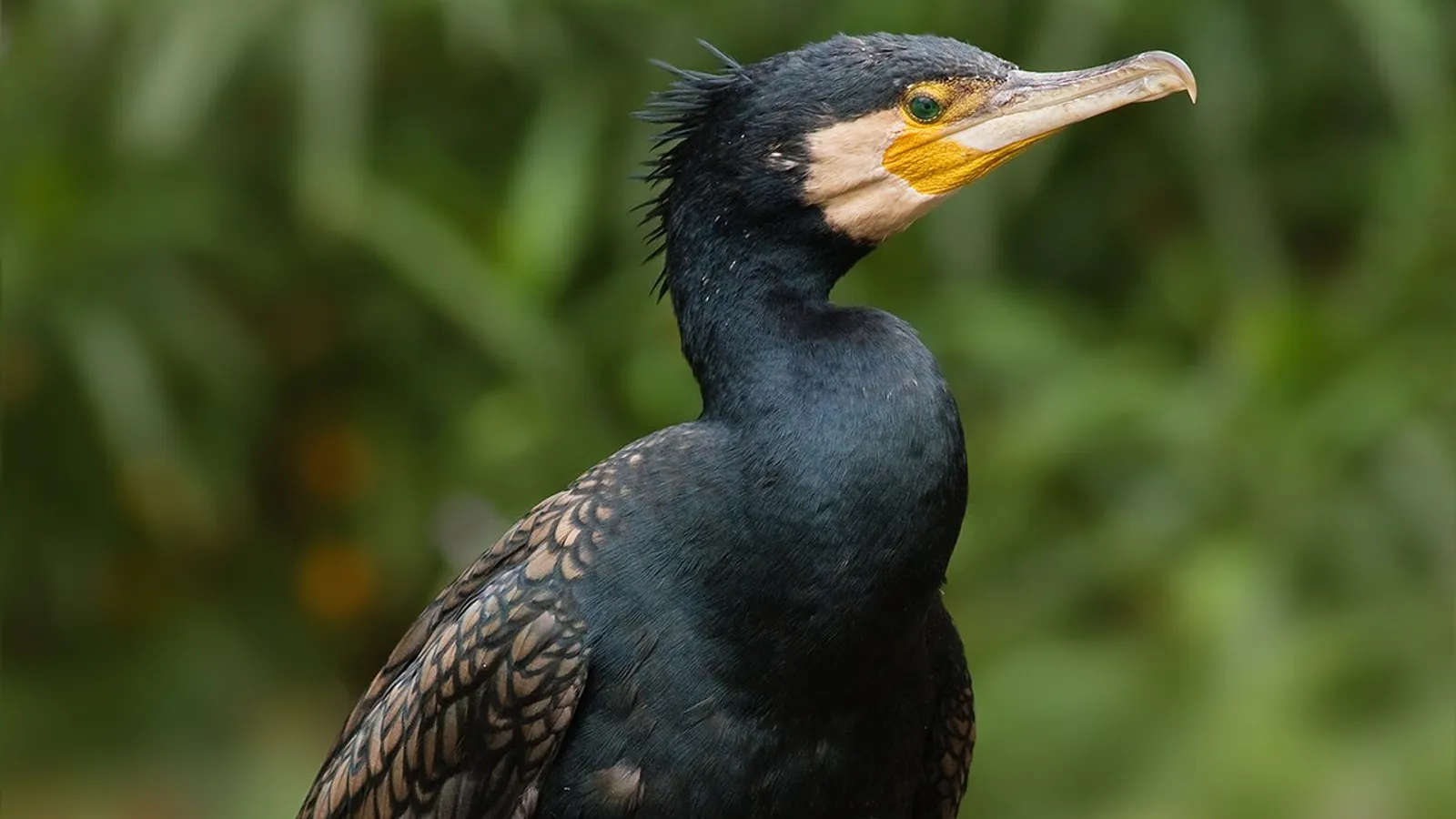
— Where the name comes from
Phalacrocorax is “bald raven”, from phalakrós and kórax, for the pale patch some populations carry on the head; carbo is coal, for the colour. The English cormorant comes instead from the Latin corvus marinus, “sea raven”, by way of the French cormoran: three different languages looked at the same animal and all three saw a crow.
— Facts
- Group
- Birds · Aves
- Order
- Cormorants and boobies
- Habitat
- Rocky coasts, lakes, rivers, lagoons, harbours
- Range
- Europe, Asia, Africa, Australia, eastern North America
- Size
- 77–94 cm, wingspan 121–149 cm, 2.1–2.5 kg
- Diet
- Fish, pursued underwater
- Lifespan
- 11 years in the wild
— Characteristics
- 01
It stands with wings spread in the sun: the plumage is not fully waterproof.
- 02
It dives to thirty metres and can stay under for a minute.
- 03
It nests colonially in trees that the guano eventually kills.
— What sets it apart
The plumage that soaks up water, which looks like a defect, is why it is such a good diver: absorbing water it loses buoyancy and sinks without effort. On this species and its relatives rests a very old trade — on the Nagara river in Japan, fishing with cormorants has been practised for thirteen hundred years, using a soft ring around the neck that lets the small fish through and holds the large ones. The fishermen are officials of the Imperial Household, and the post is hereditary.
