
Sunda flying lemur
Galeopterus variegatus
— Where the name comes from
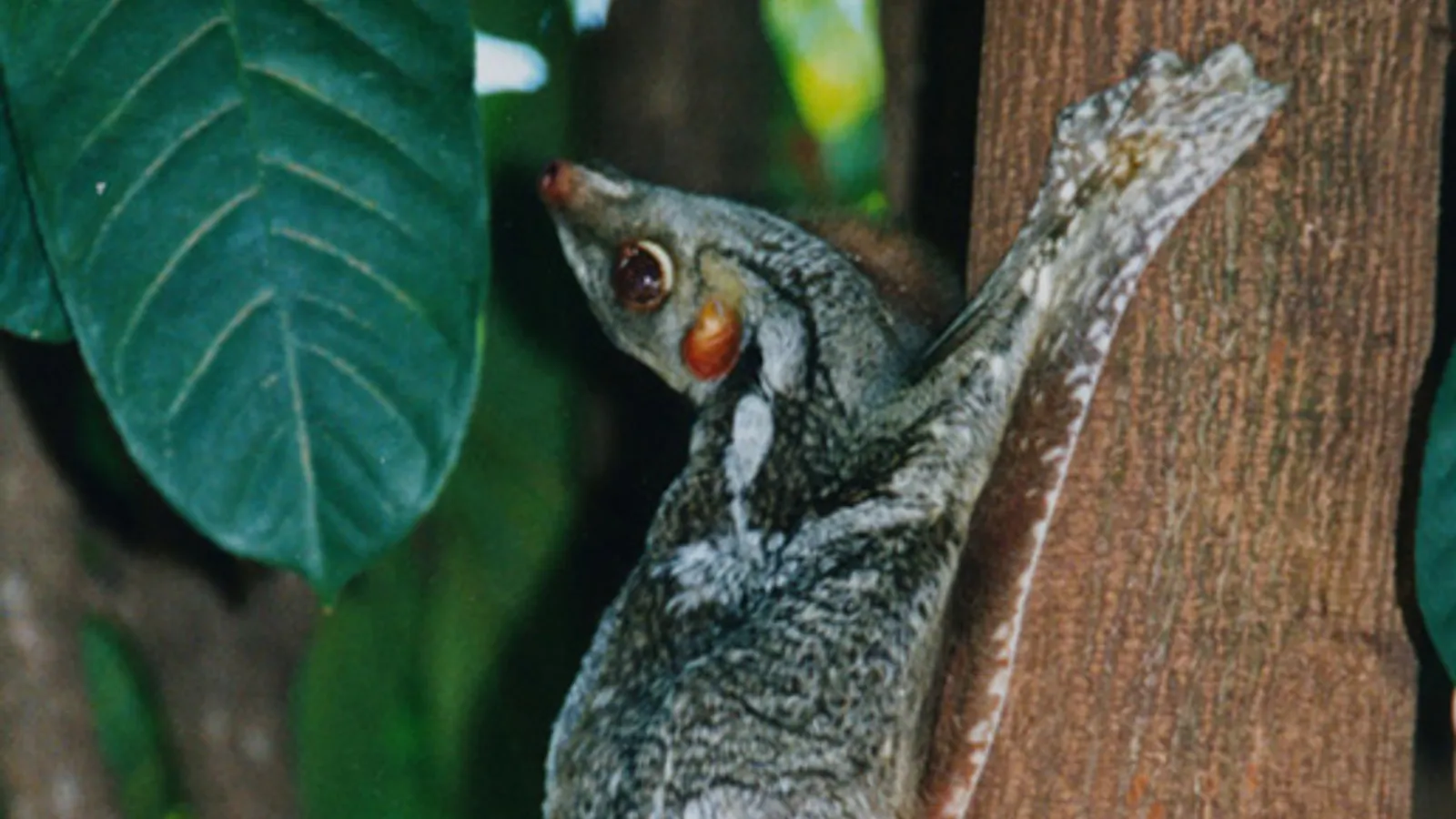
Galeopterus is “winged weasel”, from the Greek galéē and pterón; variegatus describes the mottled coat that hides it against bark. The old common name, “flying lemur”, is doubly false: it does not fly and it is not a lemur. Colugo is of uncertain origin, perhaps Malay. The order, Dermoptera, means “skin wings”, and is the only part of the name that describes reality.
— Facts
- Group
- Mammals · Mammalia
- Order
- Colugos
- Habitat
- Rainforest and plantations, always high among the trunks
- Range
- South-East Asia: Indochina, the Malay peninsula, Sumatra, Borneo, Java
- Size
- 34–38 cm of body, 0.9–1.3 kg
- Diet
- Herbivore — young leaves, shoots, flowers, fruit
- Lifespan
- Little known; over 17 years in captivity
— Characteristics
- 01
It has the most extensive gliding membrane of any mammal: it reaches between the fingers and around the tail.
- 02
It glides up to 150 metres losing very little height.
- 03
On the ground it is nearly helpless: it hauls itself along clumsily and cannot walk well.
— What sets it apart
It is the closest living relative of the primates, and therefore of ours. Genomic analysis places the order Dermoptera as sister group to the primates, nearer to us than treeshrews, rodents or rabbits are: to look at a colugo hanging from a trunk is to look at the branch that split from ours just before ours began. It has used those seventy million years to do one thing, to take a membrane of skin to its extreme, and it is today the finest glider among mammals.
