
Saltwater crocodile
Crocodylus porosus
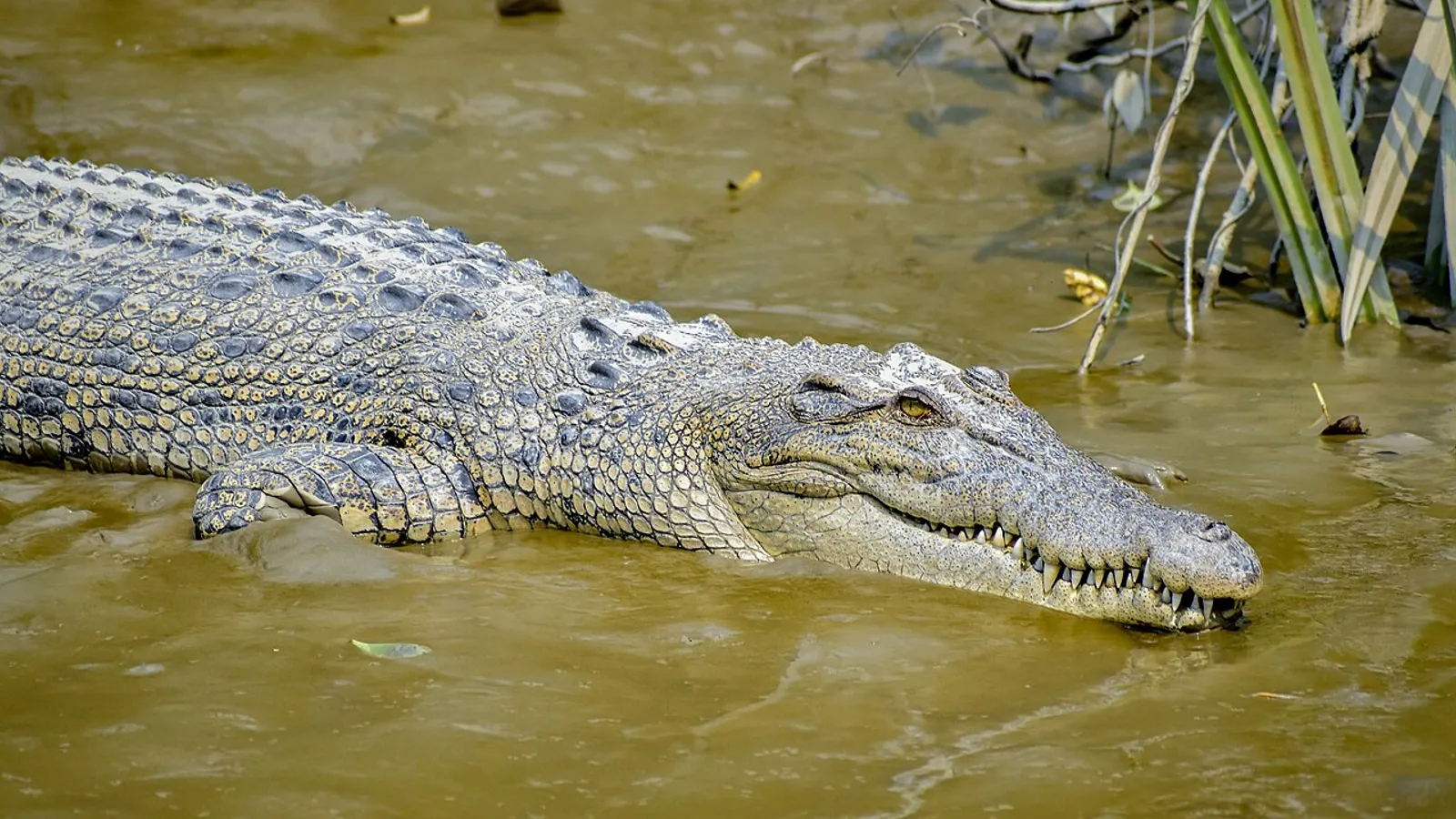
— Where the name comes from
Crocodylus is from the Greek krokódeilos, “worm of the pebbles”, the name the Greeks gave to lizards basking on stones and later extended to the reptile of the Nile. Porosus, “full of pores”, from the bumps on the snout. It is the largest living reptile and the most imposing land-and-water predator on the planet.
— Facts
- Group
- Reptiles · Reptilia
- Order
- Crocodilians
- Habitat
- Estuaries, mangroves, coasts, rivers; it tolerates salt water
- Range
- From south-eastern India to northern Australia
- Size
- 4–6 m, up to 1,000 kg and more
- Diet
- Carnivore — any animal it can seize, up to buffalo
- Lifespan
- 70 years and more
— Characteristics
- 01
It has the most powerful bite ever measured in a living animal.
- 02
Glands on the tongue expel surplus salt: it can live and travel in the open sea.
- 03
It attacks with the “death roll”, spinning to tear pieces from its prey.
— What sets it apart
The saltwater crocodile crosses the open sea without really swimming: it lets the ocean currents carry it like a living raft, staying at the surface and changing course only when the current turns. That is how it has colonised islands hundreds of kilometres apart. One has been tracked covering over five hundred kilometres at sea, waiting patiently for the right tide: a reptile that makes a conveyor belt of the ocean.
