
American crocodile
Crocodylus acutus
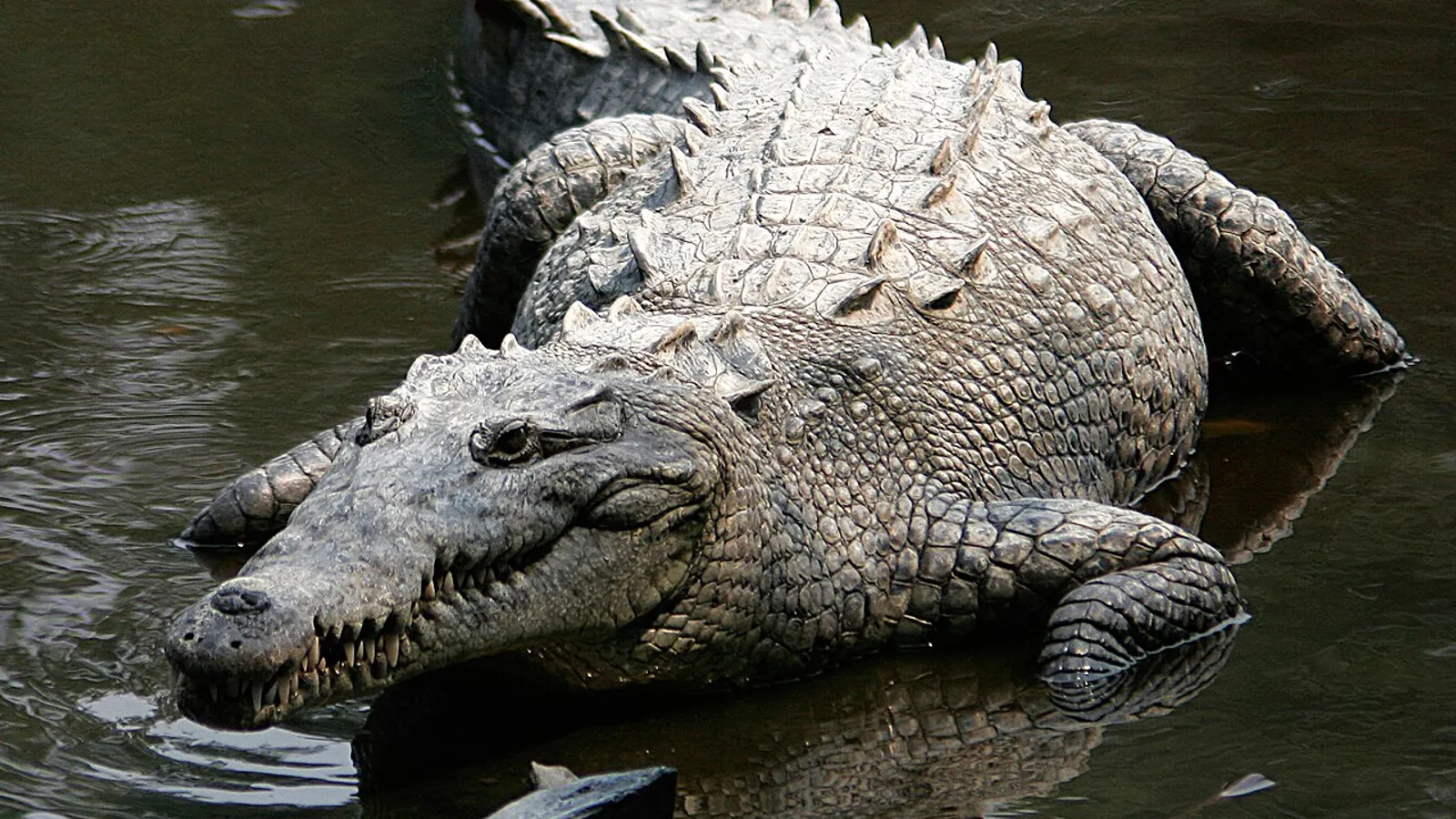
— Where the name comes from
Acutus means “sharp”, and refers to the snout, narrower and more tapered than that of the alligator it shares Florida with. It is the only place in the world where the two families meet, and the simplest way to tell them apart is precisely this: the crocodile has a V-shaped snout and lower teeth that stay visible when the mouth is closed.
— Facts
- Group
- Reptiles · Reptilia
- Order
- Crocodilians
- Habitat
- Estuaries, mangroves, brackish lagoons, coasts
- Range
- From Florida to Peru and Venezuela, including the Antilles
- Size
- 4–5 m, up to 6 m; 400–500 kg
- Diet
- Fish, crabs, birds, turtles, mammals
- Lifespan
- 60 years
— Characteristics
- 01
It has salt glands on the tongue and is at home in the open sea.
- 02
It crosses arms of sea: it has colonised islands tens of kilometres out.
- 03
It nests by digging a hole in sand rather than building a mound.
— What sets it apart
Its recovery in Florida is owed to a nuclear power station. The two hundred kilometres of cooling canals at the Turkey Point plant, built in the 1970s, turned out to be perfect habitat — warm water, sandy banks, nobody around — and dozens of females now nest there, watched over by biologists employed by the electricity company. Thanks partly to that population the species has been downgraded in the United States from endangered to threatened.
