
Indian cobra
Naja naja
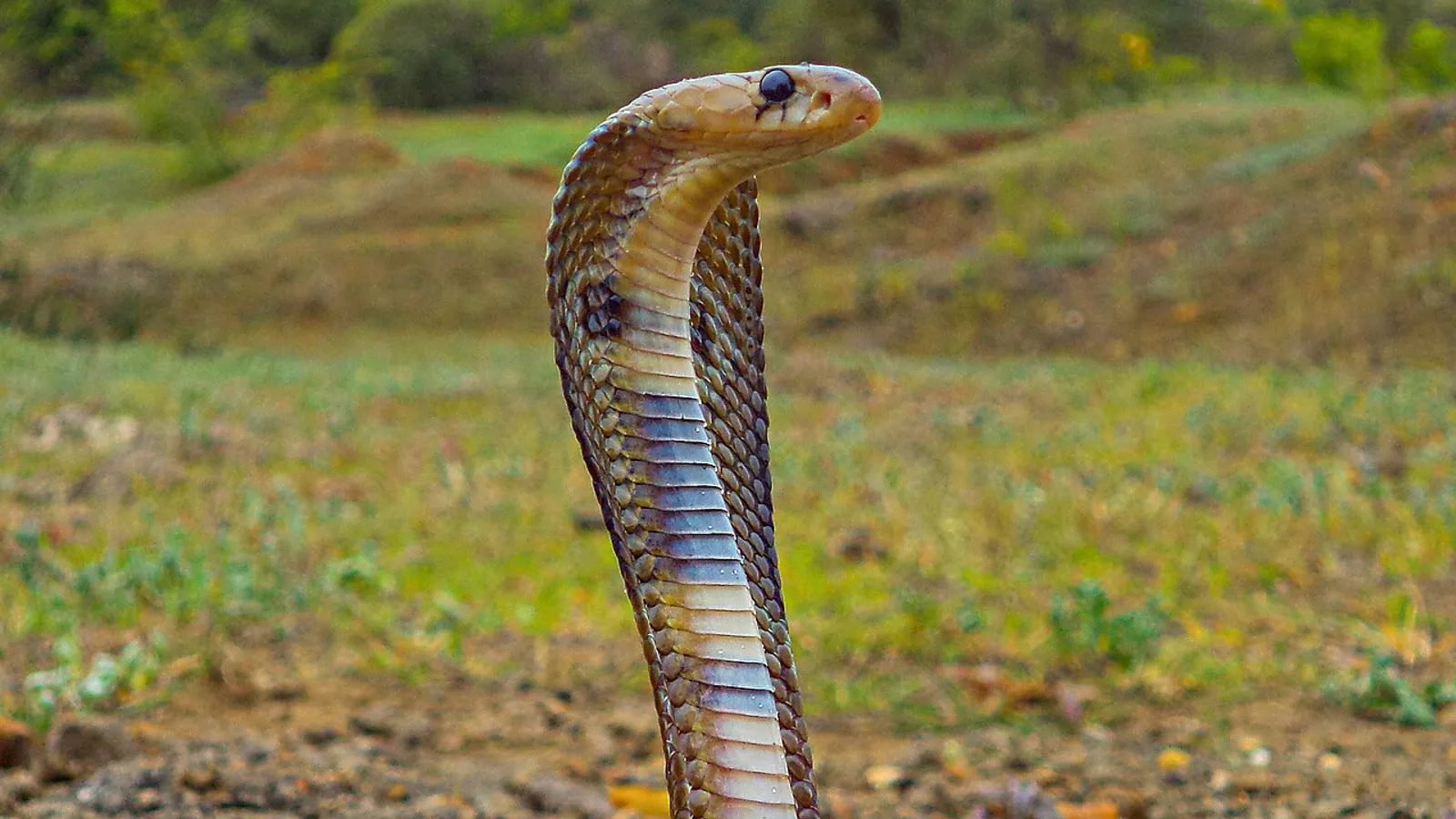
— Where the name comes from
Naja comes from the Sanskrit nāga, the divine serpent of Indian mythology; “cobra” is from the Portuguese cobra de capelo, “snake with a hood”, for the fold it spreads in threat. It is the snake of the charmers and of the Indian gods, sacred and feared at once.
— Facts
- Group
- Reptiles · Reptilia
- Order
- Squamates
- Habitat
- Fields, forests, rice paddies, villages and their surroundings
- Range
- The Indian subcontinent
- Size
- 1–1.5 m, up to 2.2 m
- Diet
- Carnivore — rodents, frogs, other snakes
- Lifespan
- 20 years and more
— Characteristics
- 01
It raises the hood by spreading the ribs of the neck when threatened.
- 02
The hood often bears a “spectacle” pattern, two joined marks.
- 03
It is among the four snakes responsible for most fatal bites in India.
— What sets it apart
The snake charmer’s cobra is not dancing to the flute at all: it is deaf to airborne sound, and follows with its eyes the swaying of the instrument, ready to strike it rather than be enchanted by it. The whole scene is an illusion. In India the cobra is at once one of the leading causes of death by snakebite and a sacred animal, worshipped in temples and tied to the gods: few animals live such a paradox, adored and lethal within the same culture.
