Boreal owl
Aegolius funereus
— Where the name comes from
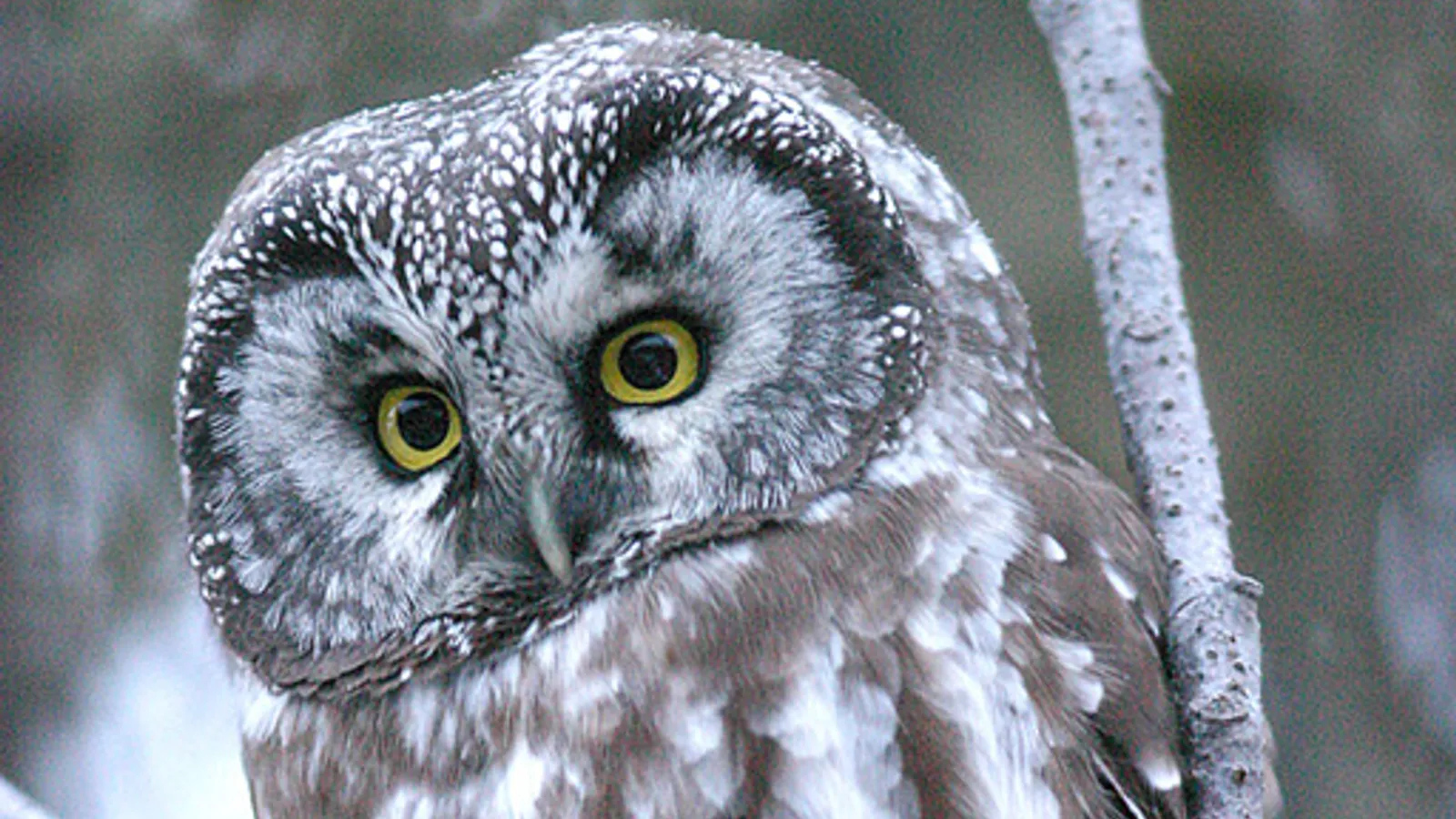
Aegolius comes from aigṓlios, a night bird of ill omen that Aristotle names without describing. Funereus, “funereal”, lays it on thicker: in almost all European tradition the call of an owl announced a death. The Italian name, capogrosso, “big head”, is kinder and speaks of its large round head; in English it is Tengmalm’s owl, after the Swedish physician and naturalist Peter Gustaf Tengmalm, or the boreal owl.
— Facts
- Group
- Birds · Aves
- Order
- Owls
- Habitat
- Boreal and mountain conifer forest
- Range
- Northern Europe, Siberia and North America; in the Alps and the uplands of central Europe
- Size
- 21–28 cm, wingspan 50–62 cm, 90–200 g
- Diet
- Voles and wood mice, shrews, small birds
- Lifespan
- A few years on average, over 10 the record
— Characteristics
- 01
It nests almost only in holes dug by the black woodpecker.
- 02
The female is much larger than the male.
- 03
It hunts in total darkness, guided mainly by hearing.
— What sets it apart
Its skull is lopsided, and on purpose. The ear openings sit at different heights, one higher than the other, so the same rustle reaches the two sides with a tiny difference in the vertical plane too: by comparing the two signals the owl works out the position of a vole in three dimensions, and catches it under a hand’s depth of snow without seeing it. In winter it stores prey in tree holes, and when it finds them frozen it thaws them by brooding them like eggs before eating them.