
Roman snail
Helix pomatia
— Where the name comes from
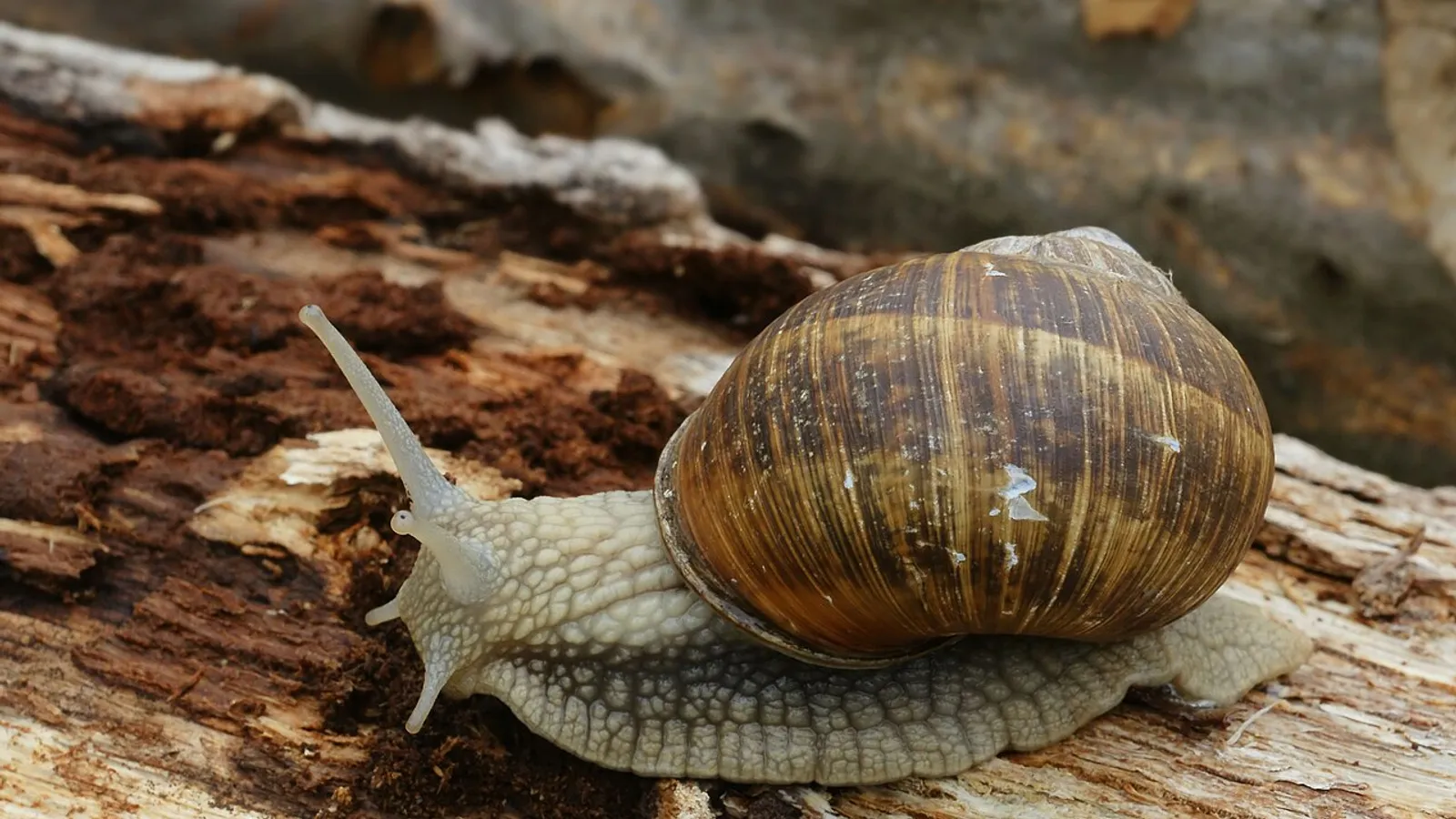
Helix is the Greek hélix, spiral: the geometry of the shell turned into a name. Pomatia comes from pôma, lid: it points to the epiphragm, the chalky plug with which the snail seals the mouth of the shell before withdrawing. The name describes at once how it is made and how it closes.
— Facts
- Group
- Molluscs · Mollusca
- Order
- Land snails
- Habitat
- Damp woodland, hedges, vineyards and gardens on limestone
- Range
- Central and south-eastern Europe
- Size
- 3–5 cm of shell
- Diet
- Herbivore — tender leaves, shoots, fallen fruit
- Lifespan
- 5–8 years, up to 20
— Characteristics
- 01
Hermaphrodite: every individual has both male and female organs.
- 02
It travels on a trail of mucus that lets it crawl even along a blade.
- 03
The shell grows with it, coiling into an ever wider spiral.
— What sets it apart
Before mating many snails drive a tiny chalky dart into one another, the “love dart”, coated in a hormonal mucus that improves the chances of fertilisation: a gesture the ancients romanticised as Cupid’s arrow made flesh. To get through winter or drought the snail seals itself into the shell with the epiphragm and suspends life — aestivation — for months at a time, waiting for the damp to return.
