
White-tailed deer
Odocoileus virginianus
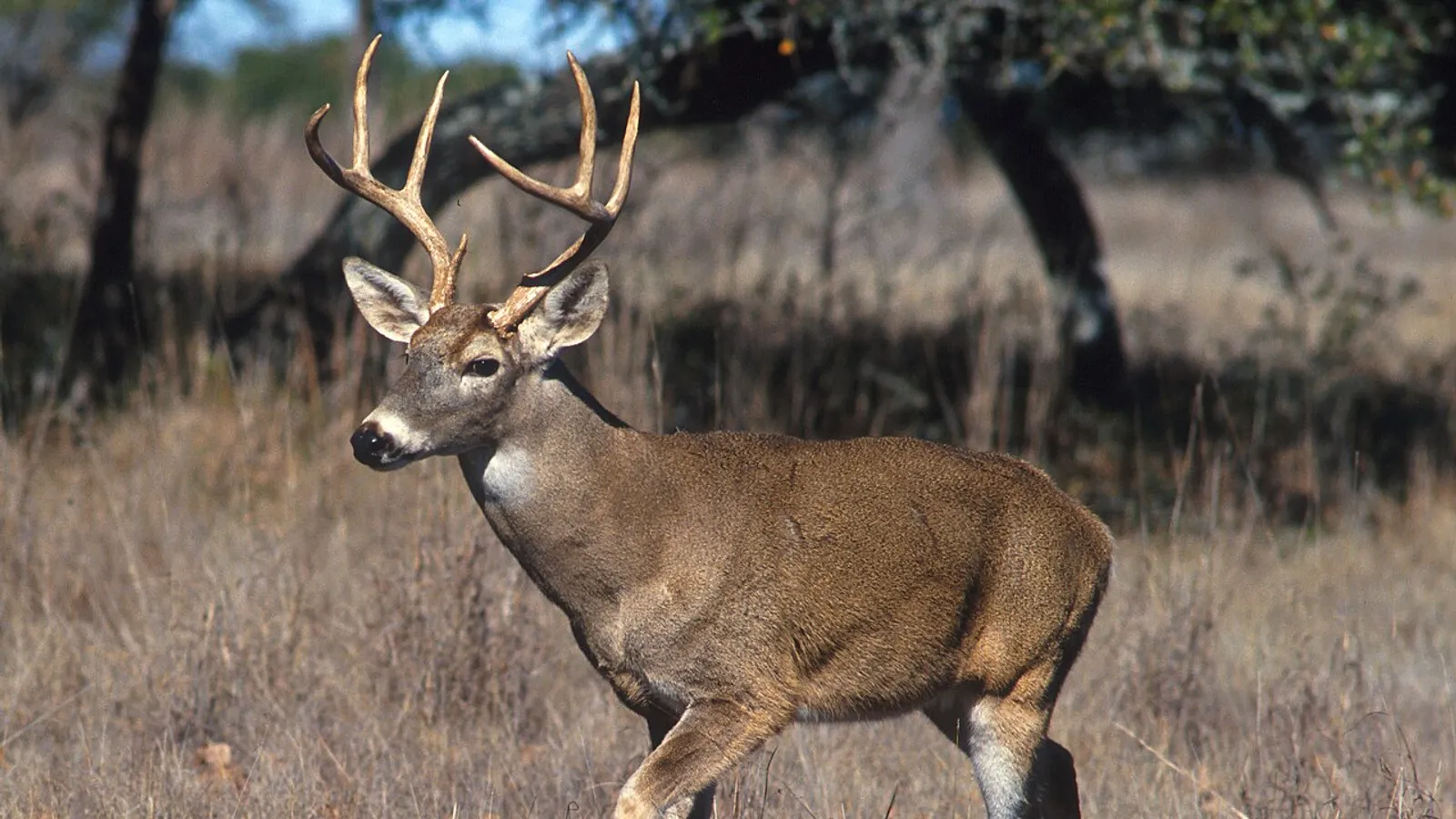
— Where the name comes from
Odocoileus is a name born crooked and never straightened: Rafinesque coined it in 1832 from a hollow fossil tooth, from the Greek odoús, “tooth”, and koîlos, “hollow”, but he botched the transcription — the correct form would have been Odontocoelus. Nobody could fix it, because the rules of nomenclature protect the first published spelling. The commonest American deer carries a spelling mistake carved into its scientific name.
— Facts
- Group
- Mammals · Mammalia
- Order
- Even-toed ungulates
- Habitat
- Woodland, field margins, farmland, residential suburbs
- Range
- From southern Canada to Peru and Bolivia
- Size
- 95–220 cm of body, 25–135 kg
- Diet
- Herbivore — shoots, leaves, acorns, fungi, crops
- Lifespan
- 6–14 years in the wild
— Characteristics
- 01
It raises its white tail like a flag as it flees: a signal to the group.
- 02
From fewer than half a million head in the early 20th century to over thirty million today.
- 03
The buck sheds and regrows his antlers every year, in a cycle of a few months.
— What sets it apart
Its overabundance is an ecological problem we built in a century. Hunted almost to extinction, it was protected, restocked, and freed of its predators: with no wolves and no cougars, with fragmented woods and fields everywhere, it multiplied to densities no forest can bear. In the eastern woodlands of the United States the understorey is browsed to the ground, some plant species can no longer regenerate, and the composition of the forest itself is changing. It is not an invasion: it is a native species from which we removed every check.
