
Mountain goat
Oreamnos americanus
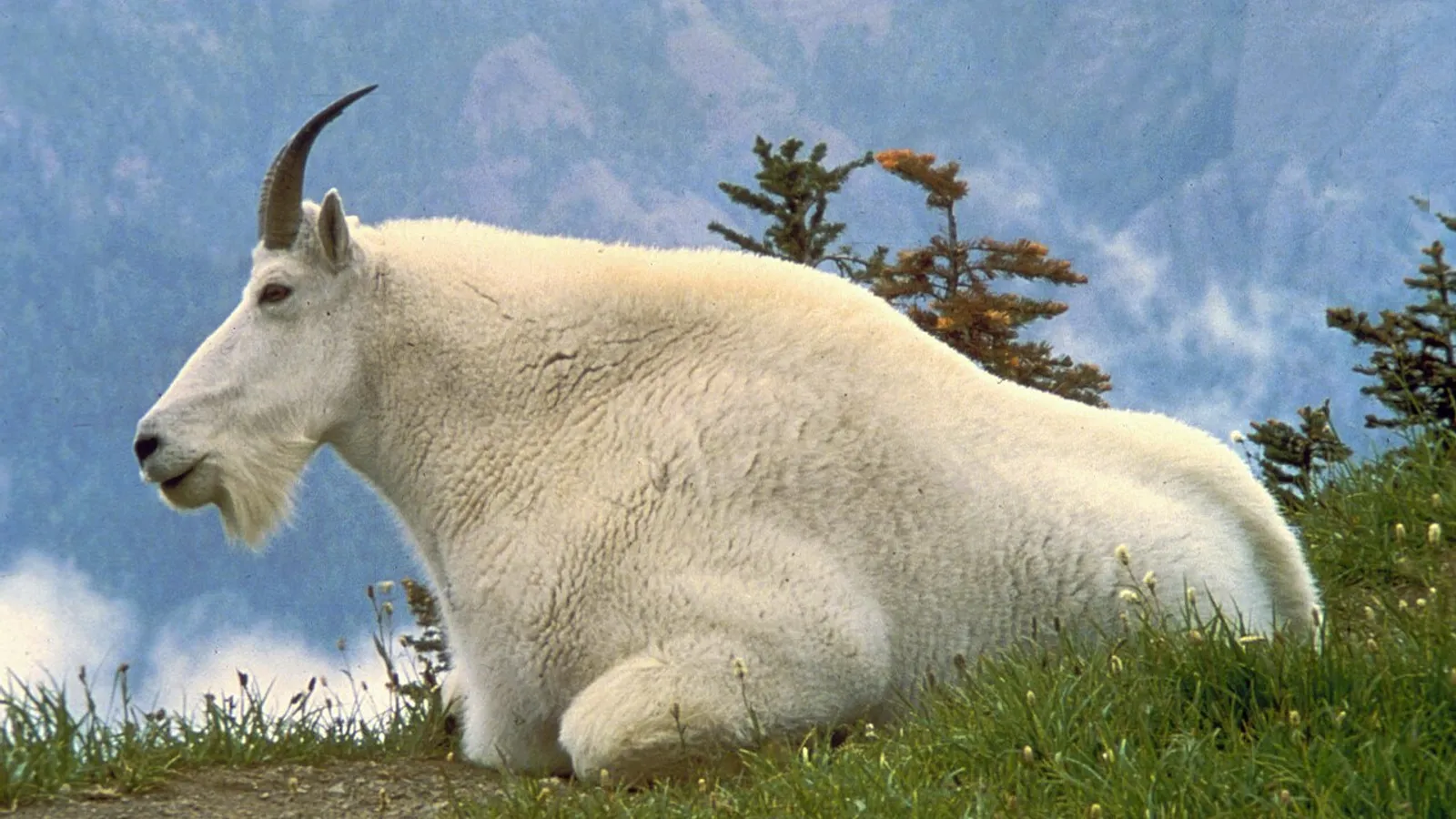
— Where the name comes from
Oreamnos is “mountain lamb”, from the Greek óros and amnós — and the name, for once, is more accurate than the common one: it is not a goat. It does not belong to the genus Capra and is not even especially close to it; its nearest relative in Europe is the chamois. Calling it a goat is a habit of the colonists, who gave it the name of the mountain animal they knew.
— Facts
- Group
- Mammals · Mammalia
- Order
- Even-toed ungulates
- Habitat
- Rock faces and scree above the treeline, up to 4,000 m
- Range
- The mountains of western North America, from Alaska to Montana
- Size
- 120–179 cm of body, 45–140 kg
- Diet
- Herbivore — grasses, lichens, shrubs, conifer needles
- Lifespan
- 12–15 years in the wild
— Characteristics
- 01
The hooves have a hard rim and a rubbery central pad: they bite rock like tyres.
- 02
It climbs slopes of over sixty degrees and crosses ledges a few centimetres wide.
- 03
The winter undercoat is dense enough to withstand −50 °C and winds of 160 km/h.
— What sets it apart
It climbs where no predator follows, and its main problem then becomes another one: salt. The high-altitude diet is poor in sodium, and to get it the animal walks kilometres to lick rocks and mineral springs, taking risks it would otherwise avoid. In North American parks this leads it to seek out human urine along the trails, and to follow hikers — to the point that in some areas visitors are asked to step off the path to urinate, so as not to draw them in.
