
Gunnison's prairie dog
Cynomys gunnisoni
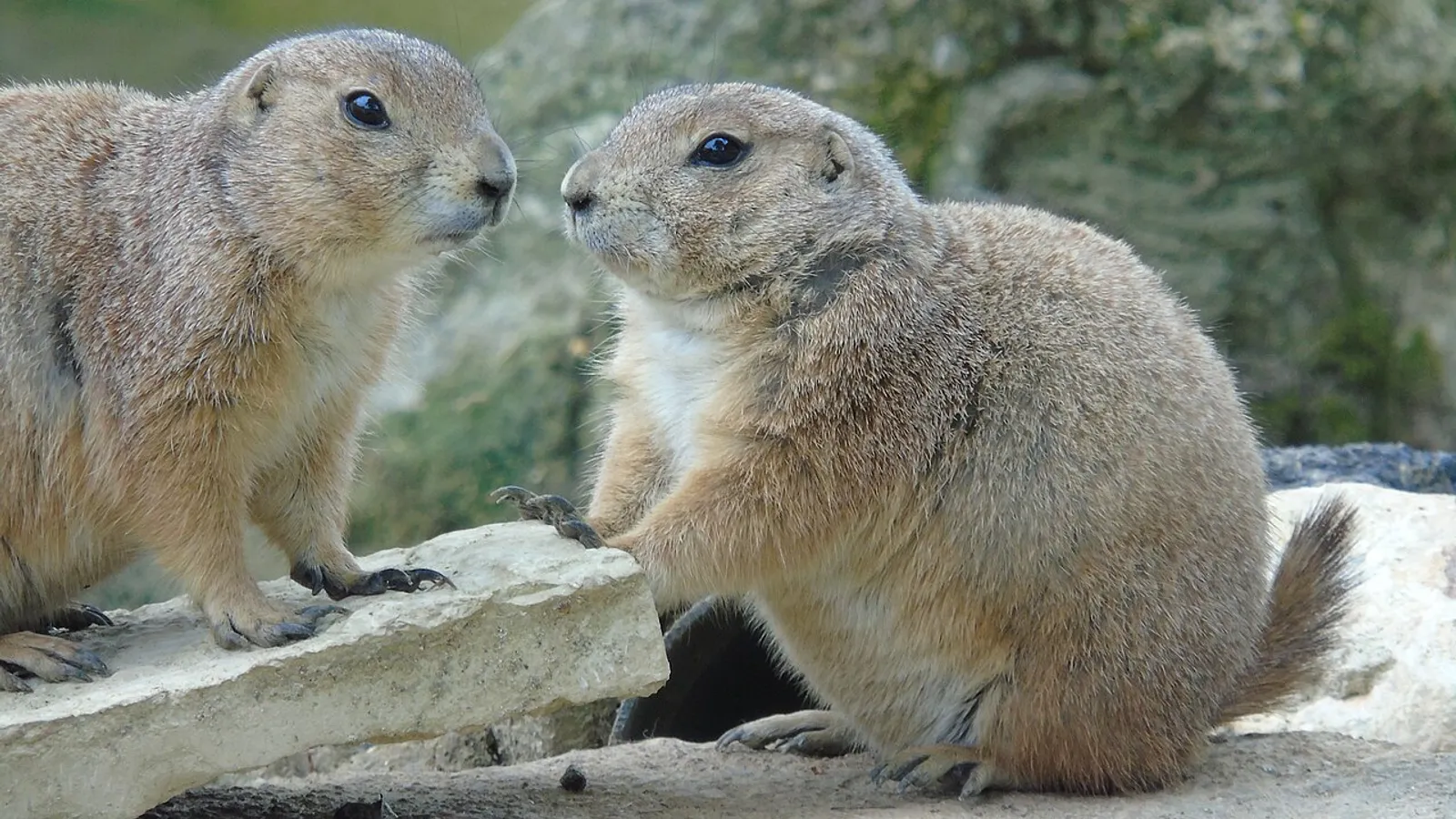
— Where the name comes from
Cynomys is “dog-mouse”, from kýōn and mŷs: the name comes from the call, a sharp bark the first explorers took for a small dog’s. The epithet recalls Captain John Gunnison, a topographer of the American army killed in Utah in 1853 while surveying a railway route to the Pacific.
— Facts
- Group
- Mammals · Mammalia
- Order
- Rodents
- Habitat
- High-altitude grassland and plateaus, between 1,800 and 3,600 m
- Range
- Colorado, Utah, Arizona and New Mexico
- Size
- 30–37 cm including tail, 500–1,300 g
- Diet
- Grasses, leaves, seeds, flowers
- Lifespan
- 5 years in the wild
— Characteristics
- 01
It lives in colonies less hierarchical than the black-tailed prairie dog’s.
- 02
It goes into true hibernation, which the other species in the genus do only partly.
- 03
Sylvatic plague, brought by rats in the 20th century, can wipe out a colony in days.
— What sets it apart
Its alarm calls are the closest thing to a language ever recorded in a rodent. Analysing thousands of calls, Con Slobodchikoff showed that the colony uses different sounds for coyote, domestic dog, hawk and human being, and that within the category “human” the signal varies with the size and the shirt colour of whoever approaches. An alarm that describes who is coming, not merely that somebody is.
