
Linnaeus's two-toed sloth
Choloepus didactylus
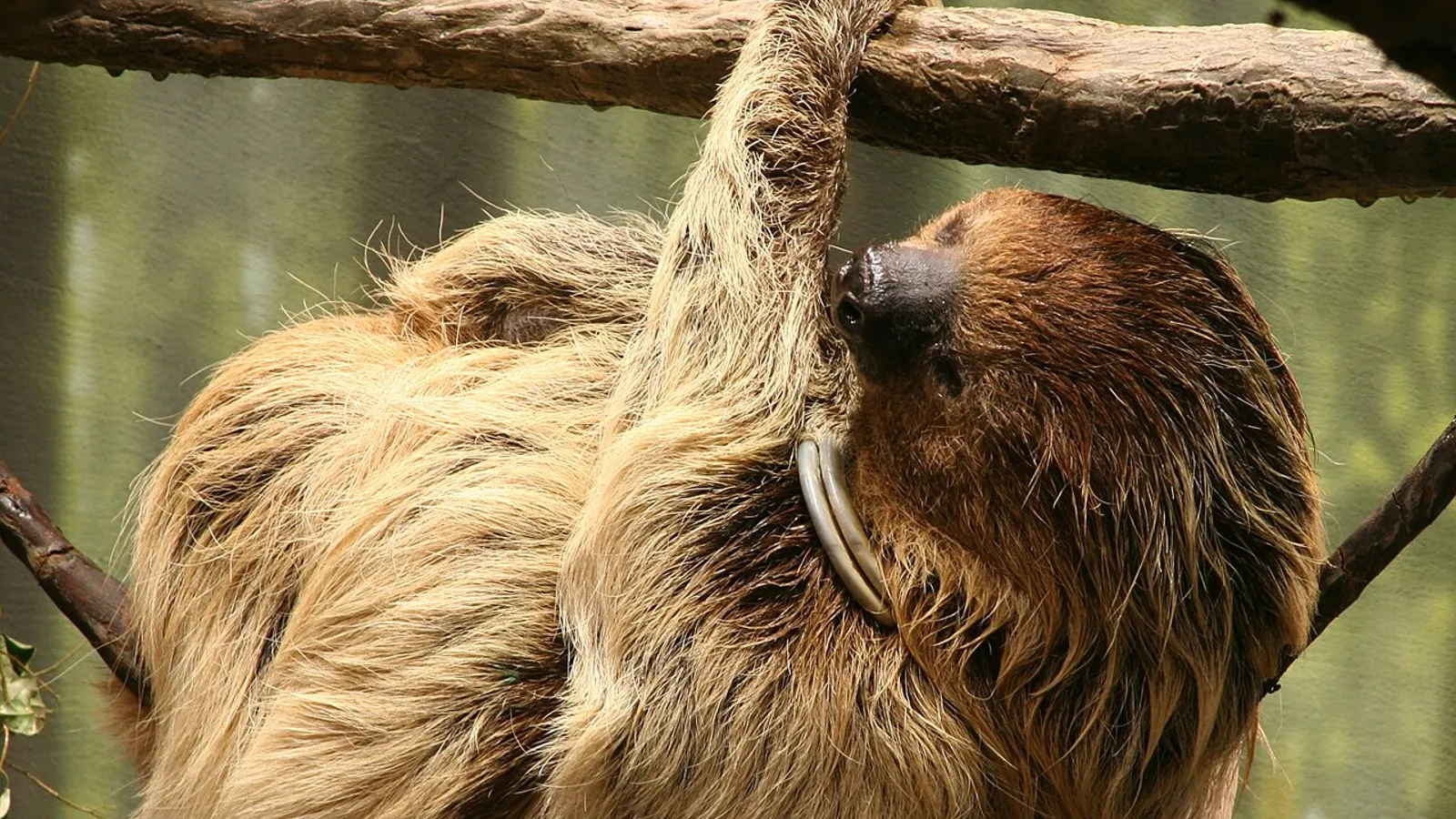
— Where the name comes from
Choloepus is Greek and means “lame foot”, from chōlós and poús, for the impossible gait on the ground; didactylus counts the digits of the forelimbs, two instead of three. The Italian bradipo comes from the other genus, Bradypus, “slow foot”, and has become the name for all of them — and then an insult. None of the names we have given it speaks of what it does: they all speak of what it cannot do the way we do.
— Facts
- Group
- Mammals · Mammalia
- Order
- Sloths and anteaters
- Habitat
- The rainforest canopy, twenty to thirty metres up
- Range
- Northern South America: Venezuela, the Guianas, northern Brazil, Peru
- Size
- 58–70 cm long, 4–8.5 kg
- Diet
- Herbivore — leaves, shoots, fruit
- Lifespan
- 20 years in the wild, over 40 in captivity
— Characteristics
- 01
It digests a leaf in a month and its stomach, when full, can weigh a third of its body.
- 02
It comes down to the ground about once a week, only to defecate, and it is the most dangerous moment of its life.
- 03
Its hair is grooved, and green algae grow there, camouflaging it and housing moths and beetles.
— What sets it apart
Its coat is an ecosystem: green algae that colour and hide it, moths that live nowhere else, beetles, mites, and fungi that have proved active against malaria parasites and some tumour cell lines. The weekly descent to defecate, apparently absurd for so defenceless an animal, lets the moths lay their eggs in the dung: the larvae that hatch will climb back onto a sloth, carrying nutrients that fertilise the algae the animal eats by licking itself. The sloth farms its own garden on its back.
