
Senegal bichir
Polypterus senegalus
— Where the name comes from
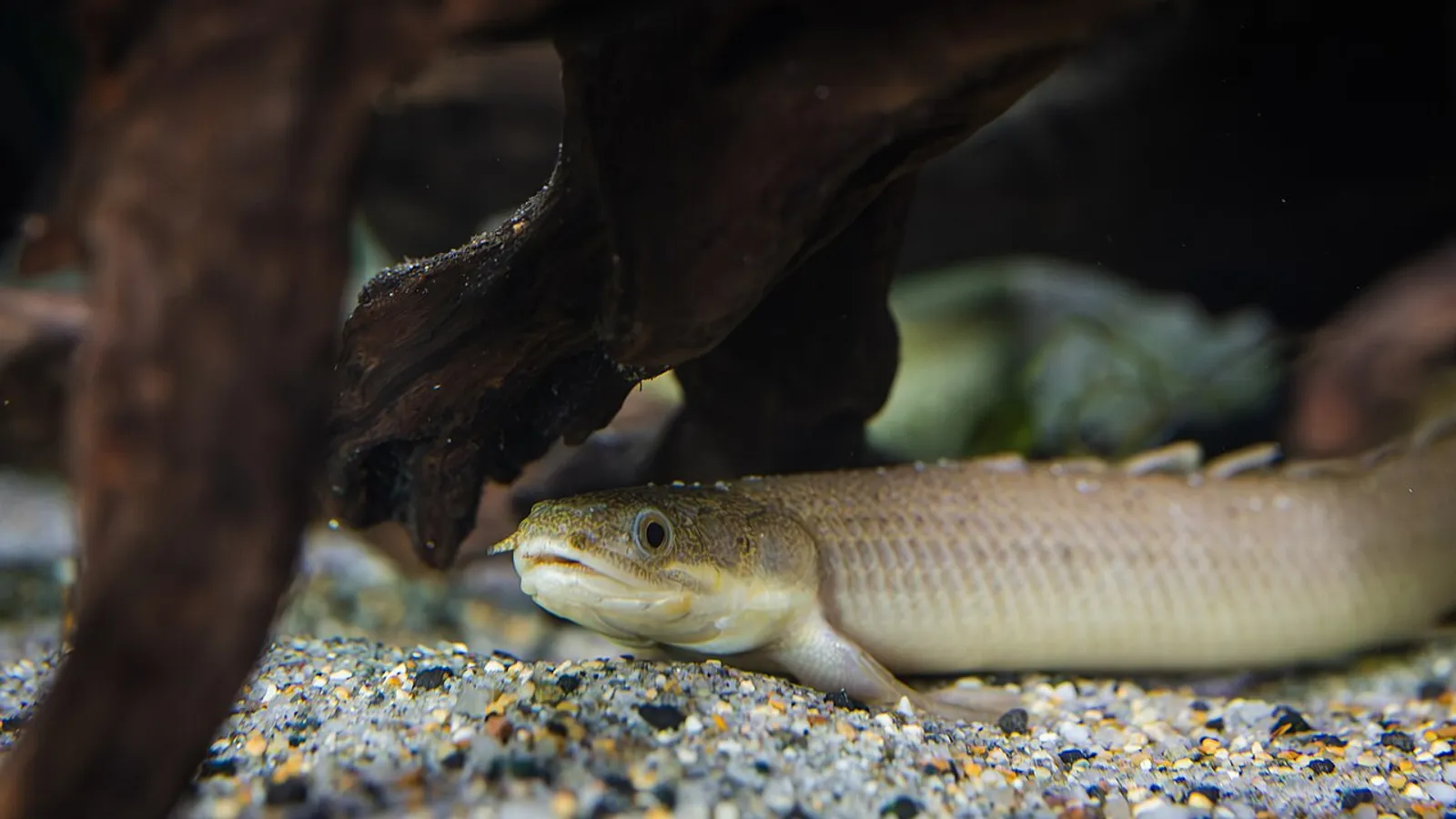
Polypterus is “many-finned”, from polýs and pterón: along its back it carries a row of eight to eleven separate finlets, each held by a spine, found in no other living fish. Senegalus names the Senegal river. Bichir is the animal’s Arabic name in Saharan Africa.
— Facts
- Group
- Fish · Actinopterygii · Chondrichthyes
- Order
- Bichirs
- Habitat
- Swamps, marshes, muddy margins of African rivers and lakes
- Range
- Western and central Africa, the Nile and Congo basins
- Size
- 25–35 cm, up to 50 cm; 100–300 g
- Diet
- Worms, insects, crustaceans, small fish
- Lifespan
- 15 years
— Characteristics
- 01
It breathes air with two true lungs and drowns if it cannot reach the surface.
- 02
It is covered in rigid enamelled ganoid scales, like armour.
- 03
The pectoral fins are fleshy and jointed, and it props itself on them.
— What sets it apart
In 2014 a group of Canadian researchers raised dozens of bichirs out of water for eight months, on barely damp ground, and compared them with siblings raised normally: the terrestrial ones walked better, held their fins closer to the body and had measurably altered pectoral girdle bones. The same species, within a single generation, was producing an animal better suited to walking — a living illustration of how the vertebrates’ move from water to land may have begun.
