Bearded reedling
Panurus biarmicus
— Where the name comes from
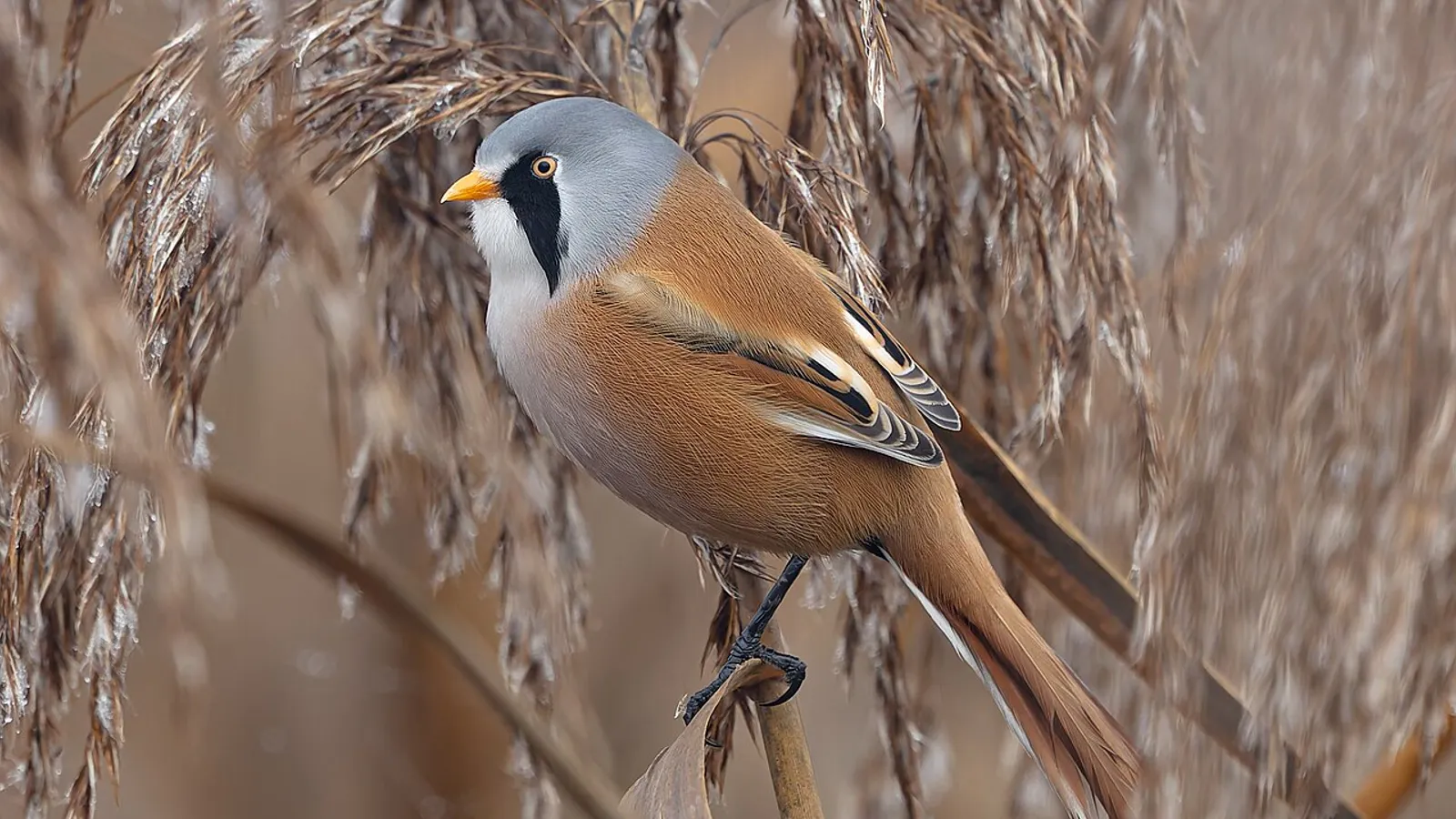
Panurus joins the Greek pân, “all”, and ourá, “tail”: “all tail”, for a tail as long as its body. Biarmicus means “of Biarmia”, the Bjarmaland of the Norse sagas, a legendary region in the north of Russia. The Italian name comes from the male’s black moustaches, two real sideburns (basette) running down beside the bill.
— Facts
- Group
- Birds · Aves
- Order
- Passerines
- Habitat
- Extensive reedbeds in marshes, lagoons and lakes
- Range
- Europe, Central Asia to China; in Italy in a few wetlands
- Size
- 14–15 cm including tail, 12–18 g
- Diet
- Insects in summer, reed seeds in winter
- Lifespan
- A few years
— Characteristics
- 01
The male has a blue-grey head and two large black moustaches.
- 02
It climbs reeds with its legs splayed across two stems.
- 03
Pairs stay together and roost huddled against each other.
— What sets it apart
It changes its digestive system with the seasons. In summer it eats insects, and its stomach is an insectivore’s; with the arrival of autumn it switches to the seeds of common reed, its stomach thickens into a muscular gizzard, and the bird starts swallowing grit to help grind. In spring the process reverses. Despite its English name, bearded tit, it is not a tit, and genetic analyses place it closer to the larks: it is the only member of a family of its own.