
Great barracuda
Sphyraena barracuda
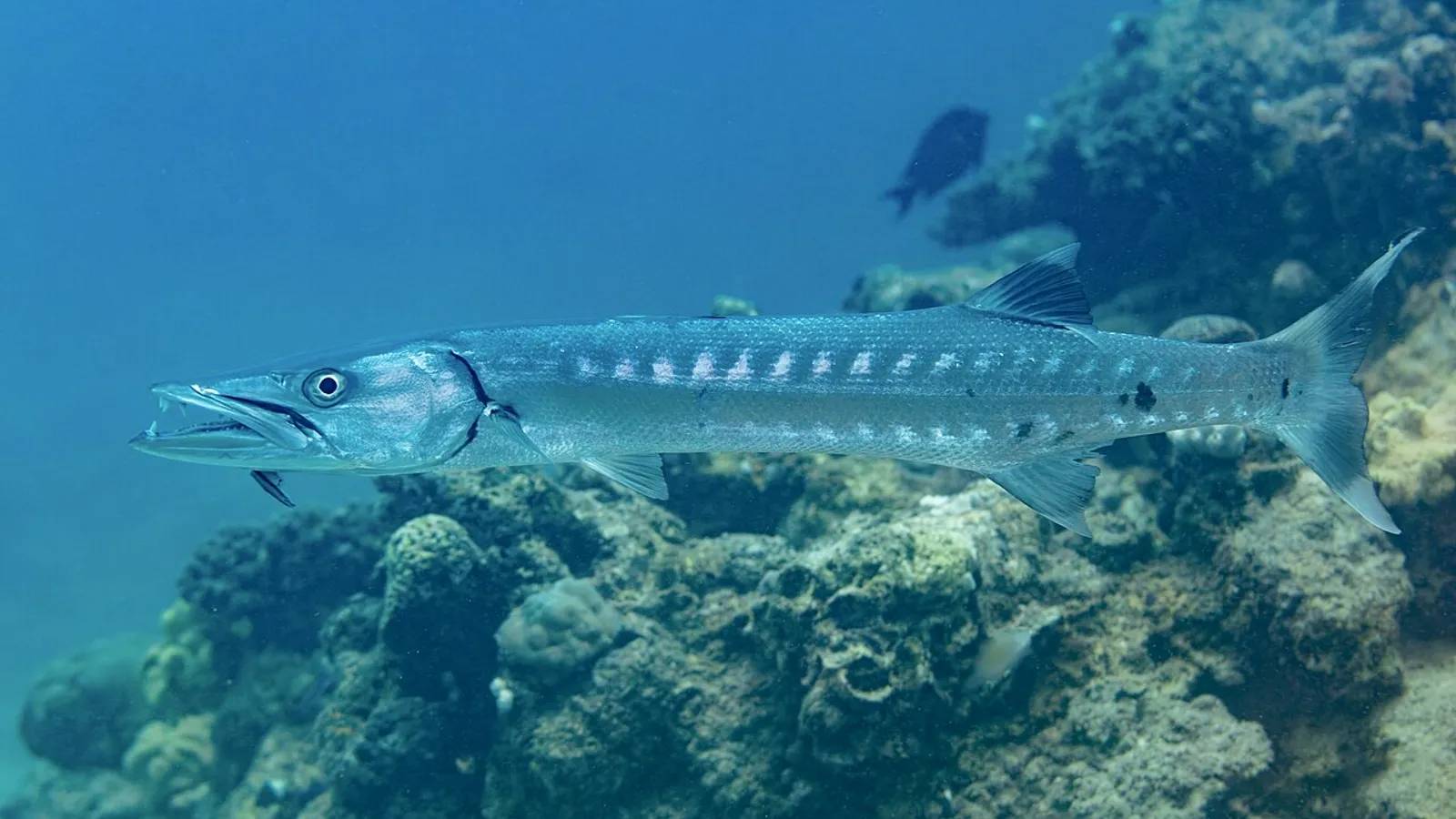
— Where the name comes from
Sphýraina in Greek is “hammer fish”, from sphŷra: it alludes to the elongated body and pointed head. Barracuda comes instead from Caribbean Spanish, and its origin is debated — perhaps an indigenous word, perhaps barraco, “protruding tooth”. Both suggestions end at the same place: the mouth.
— Facts
- Group
- Fish · Actinopterygii · Chondrichthyes
- Order
- Perch-likes
- Habitat
- Coral reefs, lagoons, open sea down to 100 metres
- Range
- Tropical seas worldwide, except the eastern Pacific
- Size
- 100–150 cm, up to 200 cm; 10–25 kg, record 46 kg
- Diet
- Fish, cephalopods
- Lifespan
- 14 years
— Characteristics
- 01
It accelerates to forty kilometres an hour within a few metres.
- 02
The young school among mangroves, the adults are solitary.
- 03
It has teeth of two sizes: small ones to hold, large ones to cut.
— What sets it apart
It does not attack people, but it does attack things that glitter. Nearly every documented bite involves divers wearing watches, bracelets or bright knives in murky water: at close range a moving metallic flash is indistinguishable from a fish’s flank. The barracuda strikes once, realises the mistake and leaves, which is why the wounds are clean and single. The real risk it poses is different: its flesh accumulates ciguatoxin, and in the Caribbean the large ones are not eaten.
