
Blue whale
Balaenoptera musculus
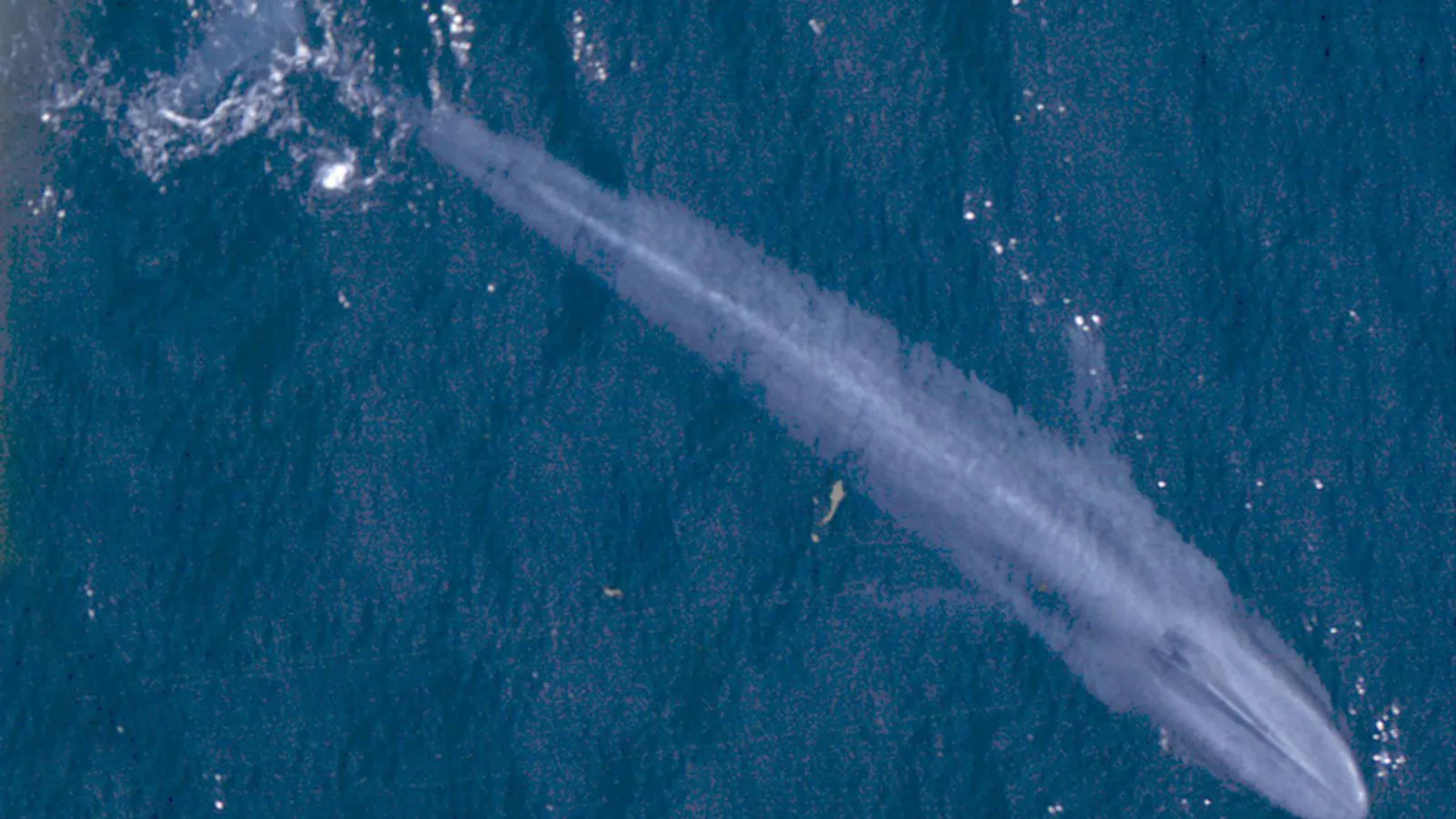
— Where the name comes from
Balaenoptera joins the Latin balaena, whale, to the Greek pterón, fin. The specific name musculus means “little mouse” in Latin: a joke by Linnaeus, who gave the largest animal that has ever existed the name of the smallest.
— Facts
- Group
- Mammals · Mammalia
- Order
- Cetaceans
- Habitat
- Open ocean, from the surface down to 100 m
- Range
- All oceans, migrating between the poles and the tropics
- Size
- Up to 30 m and 180 tonnes
- Diet
- Filter feeder — up to 4 tonnes of krill a day
- Lifespan
- 80–90 years
— Characteristics
- 01
The largest animal that has ever lived, dinosaurs included.
- 02
The heart weighs as much as a small car and beats 8 times a minute when diving.
- 03
Filters the water through baleen plates of keratin, not with teeth.
— What sets it apart
Its calls reach 188 decibels, louder than a jet engine, but at frequencies around 10–40 Hz that the human ear barely catches. They are the most powerful sounds produced by any living thing and, before ships’ propellers filled the oceans with noise, they are thought to have crossed entire ocean basins.
