
Snakelocks anemone
Anemonia viridis
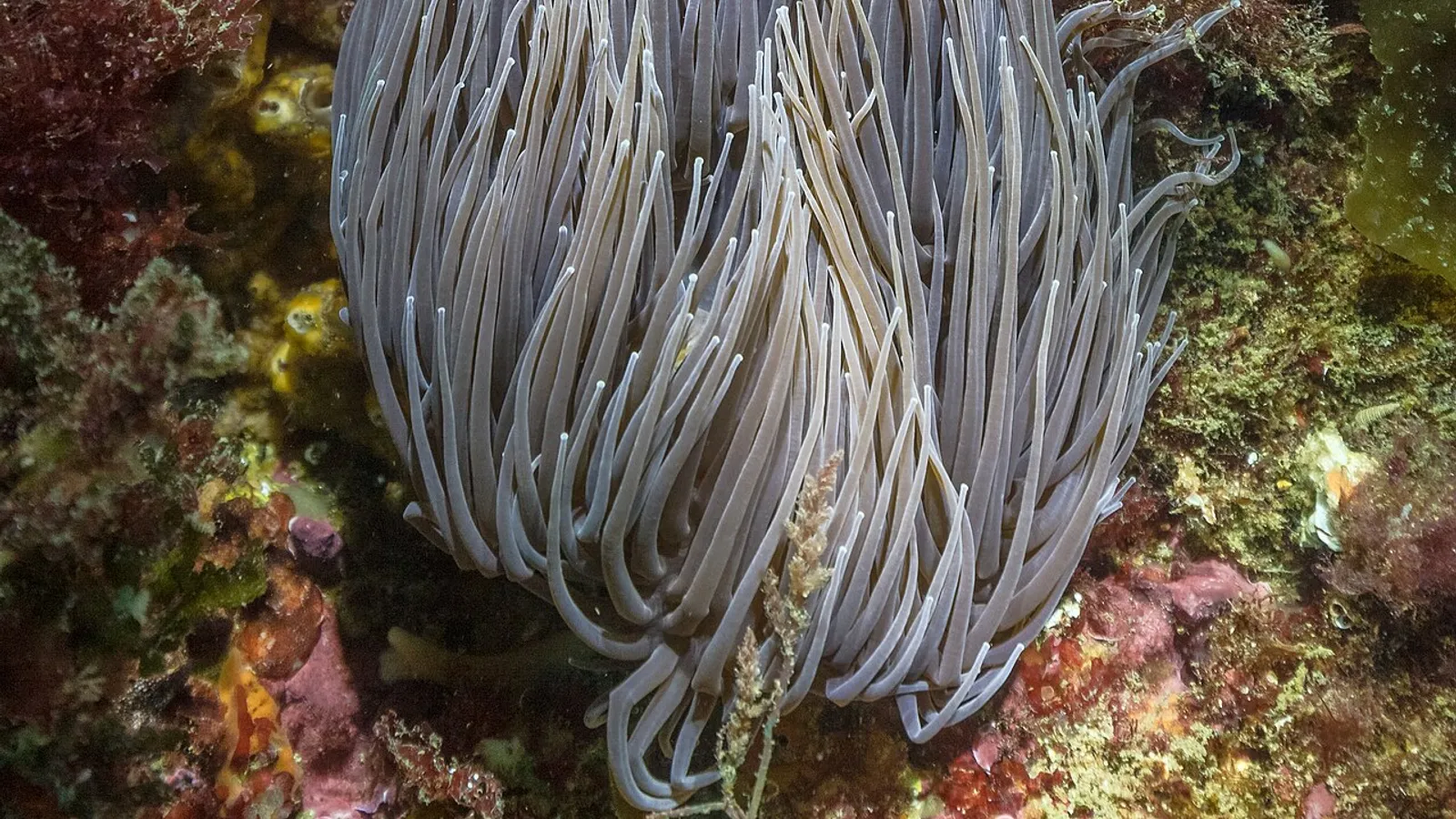
— Where the name comes from
Anemṓnē is the flower, the anemone, and it comes from ánemos, the wind: the Greeks said its petals opened at the wind’s breath and were carried off by it. The name has passed from air to water without changing meaning — here too there is a corolla swaying in a current. Viridis is the green, which in this species comes from the algae it houses in its tissues.
— Facts
- Group
- Cnidarians · Cnidaria
- Order
- Sea anemones
- Habitat
- Well-lit rocks and posidonia, down to 20 metres
- Range
- Mediterranean and eastern Atlantic
- Size
- Up to 20 cm across with tentacles extended
- Diet
- Small animals caught, and symbiotic algae
- Lifespan
- Many years
— Characteristics
- 01
It does not retract its tentacles, which stay permanently extended.
- 02
The purple tips of the tentacles are the areas richest in stinging cells.
- 03
It houses symbiotic algae that supply part of its nourishment.
— What sets it apart
The stinging cells of cnidarians are the fastest weapon known in nature. Each cnidocyte holds a pressurised capsule with a coiled, barbed filament: brushed, it opens and the filament turns inside out like the finger of a glove, accelerating to over five million g in less than a millionth of a second — an acceleration no muscular mechanism could generate, because it is pure elastic and osmotic energy released at once. It is single-use: the cell destroys itself in firing and must be remade. The sting felt on touching this anemone is the sum of thousands of those firings.
